News directly from Cornell's colleges and centers
From Spoonies to sperm cells, genomics connects Cornell research
By
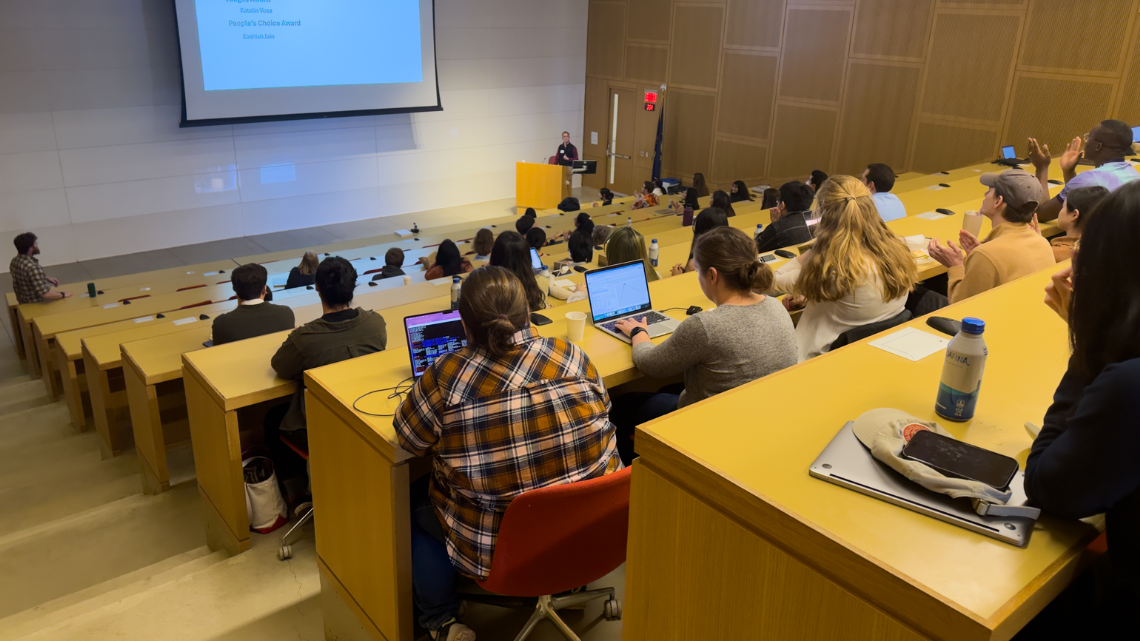
From endangered Arctic shorebirds to human fertility and chronic inflammation, Cornell researchers are increasingly using the same genomic tools to answer some of biology’s biggest questions — a theme that took center stage at the 2026 joint symposium hosted by the Cornell Center for Vertebrate Genomics and the Cornell Center for Immunology.
The trainee-led symposium brought together early-career researchers and Cornell faculty working across genetics, immunology, developmental biology and computational biology. Speakers highlighted how tools such as single-cell sequencing, spatial genomics and multiple genomics approaches are allowing scientists to study biology in unprecedented detail across disciplines. The symposium also highlighted how shared genomic technologies are increasingly creating overlap between fields that once operated separately.
“Bringing together these biologists created opportunities for conversations that might not otherwise happen,” said Brent Basso, a computational biology graduate student in the Charles Danko and John Lis labs, event organizer and member of the Center for Vertebrate Genomics’ Trainee Executive Committee. “The symposium was designed to encourage grad students, postdocs, and undergrad researchers to exchange ideas and build collaborations that can lead to new ways of thinking about biological research,”

The Center for Vertebrate Genomics studies how genomes shape health, disease and evolution across vertebrate species, while the Center for Immunology focuses on how the immune system functions in health and disease. Both promote cutting-edge, collaborative, and inter-disciplinary research across campus, conducting activities to foster academic and research interactions between Cornell researchers.
Researchers in both fields increasingly rely on the same genomic tools to study questions of development, disease and evolution.
The symposium opened with a keynote from Patrick Murphy, associate professor in the Department of Molecular Biology and Genetics in the College of Agriculture and Life Sciences (CALS), who studies how DNA packaging influences development. Using zebrafish models, Murphy described how proteins can activate or suppress genes during embryonic development.
Rachel Davis, a graduate student in the Goodman Pathogen Genomics lab, presented conservation genomics research on the critically endangered spoon-billed sandpiper. Her team is working with conservation groups in Russia near the “Spoonies” nesting areas in the Russian Arctic, where a head-start program incubating spoon-billed eggs has increased survival rates sixfold. By building a more complete reference genome, a map of the species’ genetic material, Davis said the project aims to help conservation programs track inbreeding and genetic diversity in a rapidly shrinking population.
Several presentations explored fertility, reproduction and developmental biology, including how ovarian cells respond to hormonal signals that trigger ovulation, how meiosis produces sperm and eggs, and how Polycomb proteins suppress incorrect genes during sperm development.
Graduating undergraduate senior Nina Maurer presented research on how disruptions in developmental signaling pathways may affect immune activity and tissue structure in the epididymis, an organ involved in male fertility.
Maurer’s presentation, the symposium’s only undergraduate talk, earned an honorable mention during the awards ceremony. The people’s choice poster award went to Mandi Kurtz, a researcher in Yi Athena Ren’s lab, for research on how neonatal overfeeding alters ovarian signaling. The faculty poster award went to Yu-Hsiang Liao (also of the Ren lab) for research on macrophages in luteolysis, the dissolving of the corpus luteum. Kashish Jain of the Ren lab won people’s choice for best presentation for her mapping of genomic regulation during ovulation. Katalin Voss of the Applied Phylogenetics Lab was the faculty choice for best presentation of her work with avian immunoglobin.
“Whether the research focused on fertility, immunology, evolution or conservation, the common thread was using genomics to ask deeper biological questions,” said William Lai, assistant research professor in the Department of Molecular Biology and Genetics in College of Arts & Sciences and Director for the Center for Vertebrate Genomics.

Symposium organizers from left: Deborah Fowell, Brent Basso, William Lai, Akshayakeerthi Arthanarisami, Olivia Lang, Jenna DeRario, and Saloni Dhopte
Several presentations challenged long-held assumptions about immune-cell behavior. Connor Kean, a graduate student in the Grimson lab, presented evidence that naïve CD8-positive T cells may be predisposed toward different immune responses before infection begins. Other researchers explored how natural killer cells expand during viral infection and how genomic tools can reveal differences in immune-cell activation and gene expression linked to diseases like myalgic encephalomyelitis/chronic fatigue syndrome, or ME/CFS.
“The students and postdoctoral researchers didn’t just present the science — they organized the entire symposium from the ground up,” said Deborah Fowell, professor of immunology, department chair in the Department of Microbiology & Immunology in the College of Veterinary Medicine, and director of the Center for Immunology, “That kind of experience builds leadership, collaboration and institutional skills that are just as important as the research itself.”
Another major theme focused on how emerging genomic technologies can help scientists better understand disease and evolution, including research on bird immune systems and the relationship between zinc and the human gut microbiome. Olivia Lang, a postdoctoral computational biologist in the Epigenomics facility in the Cornell Institute of Biotechnology, demonstrated technology capable of measuring RNA, proteins and cell structure simultaneously.
Together, the symposium showed how shared genomic technologies are increasingly uniting once-separate biological fields, allowing researchers to connect questions of health, disease and evolution across every scale of biology.
Henry C. Smith is the communications specialist for Biological Systems at Cornell Research and Innovation.
Media Contact
Get Cornell news delivered right to your inbox.
Subscribe