News directly from Cornell's colleges and centers
‘Red Alert’ tomatoes face real-world test at Aurora farm
By
A field of tomato plants at Cornell’s Musgrave Research Farm is testing whether a living sensor can reveal nitrogen stress under unpredictable growing conditions. Developing it into a practical agricultural tool will also require input from growers and potential users.
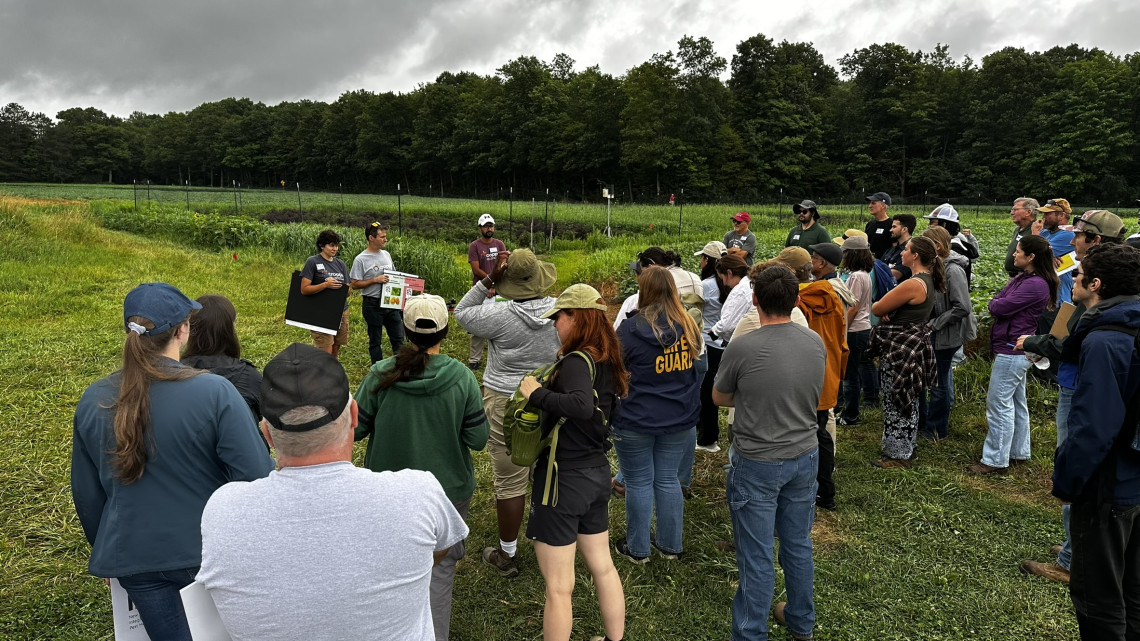
Visitors saw the experiment July 30 during the 2026 Aurora Farm Field Day, showcasing Cornell research on crop health, soil management and digital agriculture.
“It’s an opportunity to have stakeholders and potential future collaborators come and actually see our technology, and to capture their ideas and questions,” said Abraham Stroock, director of the Center for Research on Programmable Plant Systems (CROPPS) and Gordon L. Dibble ’50 Professor in the R.F. Smith School of Chemical and Biomolecular Engineering.
Visitors encountered CROPPS’ “Red Alert” tomatoes—genetically engineered sentinel plants which leaves and flowers produce betanin, the red-purple pigment found in beets, when deprived of nitrogen. The signal could help farmers identify nutrient shortages and apply fertilizer more precisely, potentially reducing costs and environmental impacts.

Mosher
“It’s pretty unprecedented to have a nitrogen sensor like this that can show continuous nitrogen variation in real time,” said Sam Mosher, a doctoral student in the Kelly Robbins lab and a CROPPS trainee leading the field trials.
Visitors asked whether consumers would reject fruit from color-changing plants, whether purple intensity corresponds to nitrogen concentration and whether the platform could detect phosphorus deficiencies, water stress or other conditions.
Mosher explained that the tomato biosensors are considered ‘sentinels’ – watching out for nitrogen deficiencies but are not intended to enter the food supply. Researchers envision placing sentinel plants alongside production crops. Stroock said the system could work in other species, including maize, or detect conditions such as water stress, and that CROPPS is pursuing the research required for these extensions of the technology.
The questions highlighted issues to address before deployment, including how growers would interpret the signal, how many sentinel plants a field would require and how people might perceive these genetically engineered sensors.
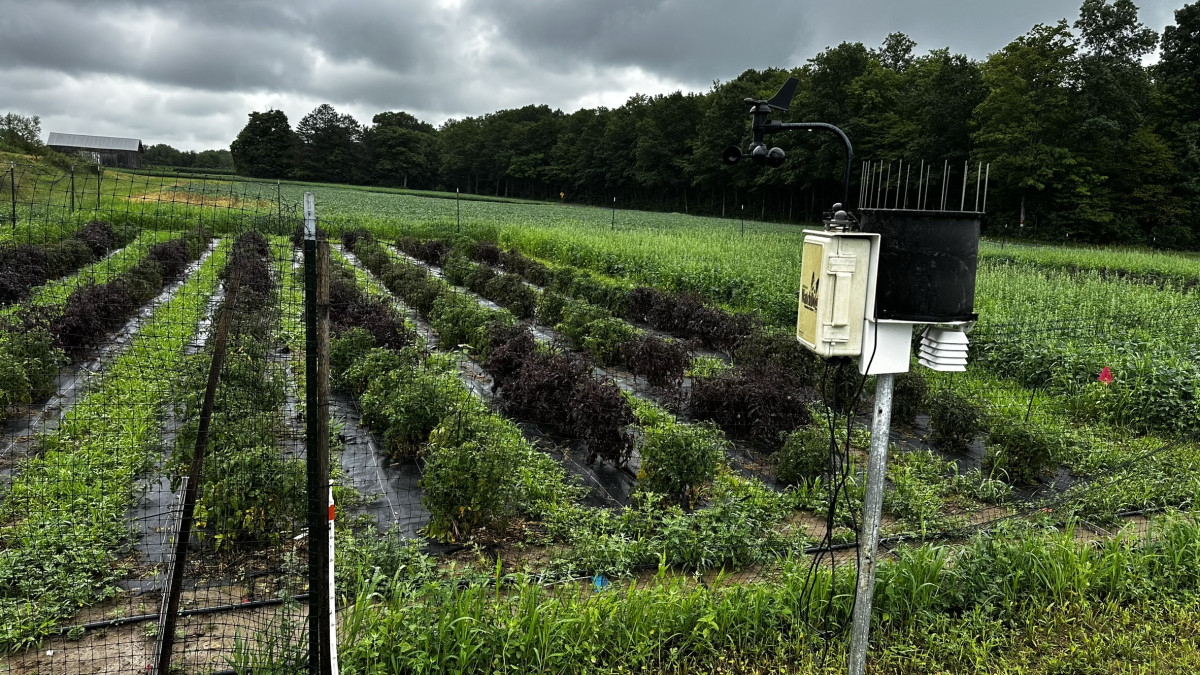
The trial marks CROPPS’ second field season testing Red Alert plants at Musgrave, which manages containment through field protocols, equipment sanitation and careful spatial planning. Last year, tomatoes planted among corn reliably distinguished low-nitrogen conditions from conditions with adequate nitrogen. A secondary aim was to use the tomato nitrogen reporter plants to predict yield in corn, but the two crops’ management needs proved difficult to reconcile.
Margaret Frank, a CROPPS co-principal investigator and associate professor in the School of Integrative Plant Science in the College of Agriculture and Life Sciences (CALS), said she was shocked by how clearly the 2025 plants distinguished the nitrogen treatments, given the highly heterogeneous and challenging nature of field trials. “I didn’t think it would succeed. But the grad students proved me wrong,” she said.
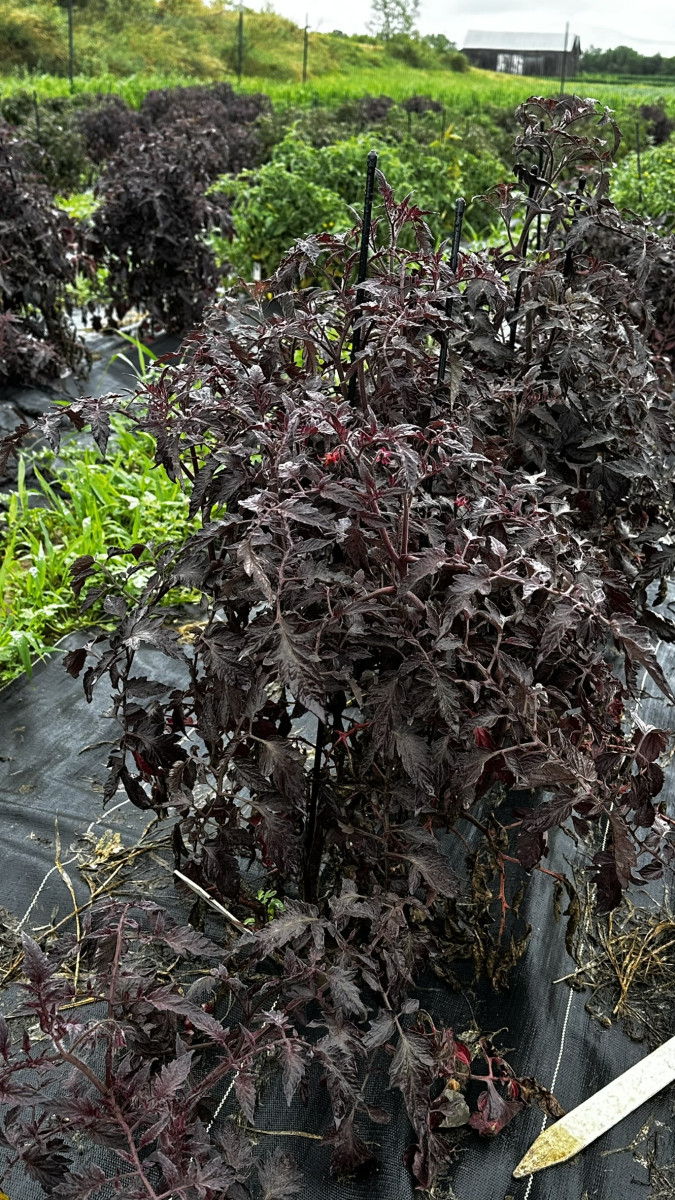
This year, the tomatoes have their own plot alongside nonengineered plants and are receiving three nitrogen treatments: low, standard and a recovery treatment that begins with low nitrogen before receiving a standard amount.
Preliminary observations produced a more complicated picture. “This was a challenging year for the field, with plants experiencing powdery mildew and some hot early days that made phenotyping difficult,” said Elizabeth Jones, assistant director for research at CROPPS. “But these are some of the challenges that commercial growers experience all the time in their fields. Even so, we did see recovery in plants that experienced early stress, with green leaves emerging after nitrogen was added in mature plants, especially in a new line that we were testing.”
Mosher found this to be an important observation, as experiments in the greenhouse do not usually grow plants to maturity.
Mosher has taken both soil and leaf samples to analyze for nitrogen levels. “If nitrogen is found to be a driving factor in the local coloration differences, it would make this new line a promising nitrogen sensor candidate because of its quick and easily visible coloration response,” Mosher said.
The team is measuring color with low-flying drones and handheld spectrophotometers. Because soil nitrogen measurements can be costly and vary across a field, researchers hope sentinel plants could provide a more continuous record of the nitrogen available to crops. This season’s results show why repeated field testing is necessary—and why questions from growers, scientists and other visitors matter during development.
Henry C. Smith is the communications specialist for Biological Systems at Cornell Research and Innovation.
Media Contact
Get Cornell news delivered right to your inbox.
Subscribe