Can AI boost open-mindedness? Team wins $1.49M grant to find out
By Linda B. Glaser
A $1.49 million award from the John Templeton Foundation will enable Cornell researchers to explore whether artificial intelligence can be used to understand and increase open-mindedness.
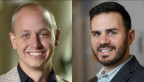
The foundation awarded the three-year grant to principal investigators Gordon Pennycook, associate professor of psychology and Dorothy and Ariz Mehta Faculty Leadership Fellow in the College of Arts and Sciences (A&S), and David Rand ’04, the Henrietta Johnson Louis Professor of management and professor of information science in the Cornell Ann S. Bowers College of Computing and Information Science; professor of marketing in the Cornell SC Johnson College of Business; and professor of psychology (A&S).
“Understanding what makes people open to changing their minds – and how, when, and why they do so – is central to fostering a more adaptable and cohesive society,” they wrote in their grant proposal.
Being open-minded doesn’t always mean changing one’s mind; rather it’s the willingness to engage seriously with new evidence and to revise beliefs when appropriate, the researchers said.
The project has two major components, investigating the topic from psychological and philosophical perspectives.
At the psychological level, they’ll seek to better understand the underlying cognitive and social mechanisms that reliably produce change in belief in the cases where open-mindedness demands it. They will develop behavioral and AI-based assessments of open-mindedness, using dialogues between participants and large language models (LLMs) to understand open-mindedness and whether LLMs can facilitate it.
At the philosophical level, they define open-mindedness as virtuous when it is either motivated by, or produces, societal goods like true beliefs and knowledge. Here their goal is to generate a new analysis of the intellectual virtue of open-mindedness and examine ethical questions about autonomy raised by AI.
The research will continue Rand and Pennycook’s previous research on using evidence-based dialogues with AI to decrease conspiracy believers’ confidence in their beliefs.
“The ultimate goal of this research is to give people the tools to lead a more epistemically virtuous life that is less inhibited by close-minded tendencies that hold us back from truly learning from each other and the world,” the researchers wrote.
The grant will support an interdisciplinary collaboration with philosophers Neil Levy of Macquarie University and Heather Battaly of the University of Connecticut, and with psychologists Thomas Costello of Carnegie Mellon University and Tennelle Porter of Rowan University.
Linda B. Glaser is news and media relations manager for the College of Arts and Sciences.
Media Contact
Adam Allington
Get Cornell news delivered right to your inbox.
Subscribe