Reeve Parker, professor emeritus of literatures in English, dies at 89
By Kate Blackwood
A. Reeve Parker, professor emeritus of literatures in English in the College of Arts and Sciences (A&S), died Sept. 16 in Ithaca, New York, at age 89.
A scholar of British Romanticism, he taught at Cornell from 1967-2009, when he retired, serving as chair of the department for multiple terms starting from 1978 to 1984. His scholarship extended to interests in French Enlightenment and Revolutionary history and literature, especially theatre, and intertextual dynamics. His passion before and after retirement was teaching at Cornell’s Prison Education Program.
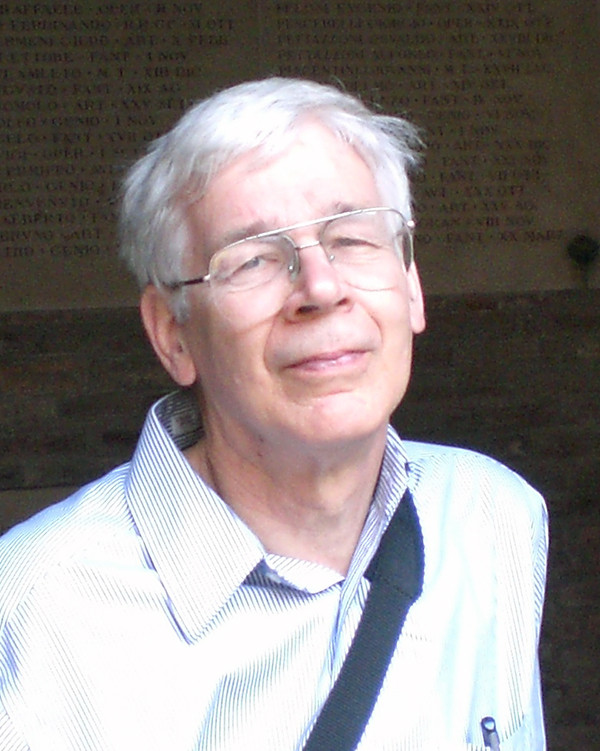
Reeve Parker
“An erudite scholar of British Romanticism who helped sustain the Cornell English Department’s prominence in the study of Romanticism, but who wore his learning lightly, Reeve Parker was a remarkable colleague, an effective and supportive mentor to younger faculty, an admired leader and administrator, and always a calming force in an occasionally fractious department,” said Jonathan Culler, the Class of 1916 Professor Emeritus of English and Comparative Literature (A&S).
Parker was born in Bryn Mawr, Pennsylvania, in October 1936. He attended Princeton University, graduating in 1958. With a Rhodes Scholarship to Magdalen College, Oxford University, he completed an additional bachelor’s degree in 1961 and a master’s degree in 1964.
He completed his Ph.D. at Harvard University in 1965 and taught there for two years before joining the Cornell faculty as an assistant professor. He became a full professor in 1979.
Cynthia Chase, professor emerita of literatures in English (A&S), said Parker was a supportive mentor when she joined the department in 1975.
“He increased my love of English Romantic poetry by teaching me about the poets’ intense engagement with the French Revolution. Reeve demonstrated what could be achieved by sensitivity to intertextual relationships as well as granular historical research. In conversations under the trees on the Arts Quad, I learned from Reeve the history of the 1790s in Paris,” she said. “My interest today in stage performance finds a resource in his final book, ‘Romantic Tragedies: The Dark Employments of Wordsworth, Coleridge, and Shelley’” (published by Cambridge University Press in 2011).
Parker also wrote the book “Coleridge’s Meditative Art” (Cornell University Press, 1975) and many essays, articles and public lectures.
In addition to scholarship, Parker took a stand for issues he believed in, on campus and in the community, Chase said.
Kenneth McClane ’73, the W.E.B Du Bois Professor emeritus of literatures in English (A&S), met Parker in 1969, when McClane was a Cornell freshman and Parker was editing a downtown Ithaca newspaper, bringing students and residents together to advocate for better housing, schools and government programs.
Through the Cornell Prison Education Program, Parker taught his students at Auburn Correctional Facility to write well and to read carefully literature written by William Blake, Fyodor Dostoevsky and Adrienne Kennedy, McClane said. Parker also encouraged his students to find their voices and make contributions through their own writing, he said.
“He found his true passion educating those at the margins,” McClane said. “For Reeve, everyone was a fount of endless possibilities, and his students, no matter their individual struggles, found the world newly luminous.”
Parker is survived by his wife, Mary Jacobus, professor emerita of literatures in English (A&S) at Cornell and Cambridge universities; by his two older children from his first marriage, Hannah and Jonathan Parker; by his children from his second marriage, Frances and Josiah Jacobus-Parker; and by five grandchildren, two of whom are students at Cornell.
Kate Blackwood is a writer for the College of Arts and Sciences.
Media Contact
Get Cornell news delivered right to your inbox.
Subscribe