Freeville Organic Research Farm is now 'certified organic'
By Susan S. Lang
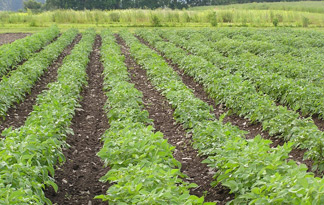
Cornell's Freeville Organic Research Farm is now an official, certified organic farm, adhering to standards set by the Northeast Organic Farming Association of New York.
"The decision to pursue certification was made by the farm's advisory committee over the winter and spring, due to researcher and farmer interest," said Marguerite Wells, coordinator for the farm, which is part of Cornell's Department of Horticulture. "The certification now qualifies the farm for certain research funding opportunities, which require certified organic land, ensures our public transparency and demonstrates our adherence to organic principles, as defined by the National Organic Program."
The Freeville Organic Research Farm is a 30-acre spread adjacent to the Homer C. Thompson Vegetable Research Farm in Freeville, N.Y., about 10 miles northeast of Cornell's Ithaca campus.
The farm is a site for interdisciplinary research aimed at optimizing organic vegetable production systems for the Northeast. Current projects include potato, pepper and cucumber plant breeding and variety trials.
"Proper variety choice is one of the primary tools an organic farmer can use to prevent pest problems and ensure good yields under organic management," said Wells. "With fewer chemical tools, choosing varieties that will thrive under organic systems is crucial."
Researchers also are conducting an organic systems trial to compare types of tillage and fertility systems. One system, for example, relies heavily on compost for fertility, while another depends on cover crops for fertility. Two other systems mimic these first two with slight differences. Free learning modules that describe these organic systems, as well as other information, are available at http://www.organic.cornell.edu.
A host of other organic research projects also are under way, says Wells, who added that consistent demand for organic research plots has led to the opening of three additional fields this fall and the preparation of two more for spring 2007.
Media Contact
Get Cornell news delivered right to your inbox.
Subscribe