Everything you ever wanted to know about rodent societies -- but never thought to ask -- is in new book
By Susan S. Lang
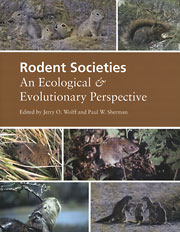
Squirrels, mice, chipmunks, hamsters and gerbils are just a few of the more than 2,000 types of rodents, which represent 44 percent of all mammal species. From the 150-pound water pig (capybara) down to the wee pygmy mouse, weighing a mere 3 ounces, wherever you live, a rodent is not far away.
So says evolutionary biologist Paul Sherman, a Cornell professor of neurobiology and behavior who is co-editor of the new book, "Rodent Societies: An Ecological and Evolutionary Perspective" (University of Chicago Press), with Jerry Wolff of St. Cloud State University.
"Rodents inhabit all continents except Antarctica and occur in all types of habitats, including grasslands, woodlands, deserts, rain forests, tundra and swamps," says Sherman.
His large-format, 610-page book -- with its 61 contributors and more than 150 illustrations -- is intended as a comprehensive and technical reference book for students and senior scholars in the fields of behavior, ecology, genetics, psychology and conservation biology interested in the social biology of rodents.
It focuses on the social and reproductive behavior of rodents because, says Sherman, "Rodents are some of the most social mammals on the Earth," pointing to the naked mole-rat, beaver and prairie dog as prime examples.
The contributors largely use the highly diverse and well-studied order of rodents as model systems to explore such questions of cross-disciplinary interest as: Why do individuals sound an alarm when a predator appears nearby? (to warn kin and to confuse predators); why do some rodents commit infanticide? (to obtain food and appropriate breeding territories); why are beavers one of the few monogamous mammals? (because pairs must cooperate to build and maintain dams, lodges and food larders).
The chapters are organized around the themes of sexual behavior; life histories and behavior; behavioral development; social behavior; anti-predator behavior; comparative socio-ecology; and conservation (about 30 percent of rodent species are threatened or endangered, Sherman says).
Media Contact
Get Cornell news delivered right to your inbox.
Subscribe