CU researchers explain why climate-change issues should be a top target for federal extension funding
By Lauren Chambliss

Since 1970, New York's average temperature has risen nearly 2 degrees Fahrenheit, and computer models predict it will rise another 3 to 12 degrees more by the end of the century, according to Cornell experts.
Global climate change is not a theory, it is a fact, said Art DeGaetano, associate professor of earth and atmospheric sciences, speaking May 9 in the Statler Ballroom at a daylong conference to establish priorities for federal funding.
"It is like taking New York and moving it to Richmond, Virginia," said DeGaetano.
The conference, organized by the Cornell University Agricultural Experiment Station, the New York State Agricultural Experiment Station in Geneva and Cornell Cooperative Extension (CCE), brought together more than 100 faculty members, researchers, extension specialists, public policy officials, farmers and community representatives from upstate New York, Albany, New York City and Washington, D.C., to assess the most pressing areas for federal funding. The two agricultural stations and CCE direct about $5 million in applied federal research funds.
Attendees also viewed exhibits about some projects already under way, including energy conservation, battling invasive species and rural community revitalization.
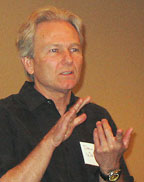
David Wolfe, Cornell professor of horticulture who studies climate-change effects on plants and ecosystems, said that some of the most compelling evidence that temperatures are rising can be seen in New York's lilacs, which are blooming four days earlier than in the 1960s.
"We know that climate change is happening, said Wolfe. "What we are only just now discovering is how the living world is responding and changing."
Global climate change presents both challenge and opportunity for New York, the speakers asserted. For example, 1.5 million acres of underused and unused agricultural lands could grow crops for biofuels, though Wolfe warned about degrading the soil in the process. New York's grape industry -- already booming -- may do even better with warmer winters that often cause less vine and root damage. On the other hand, apples, dairy cows and some fish are negatively affected by warmer temperatures.
Wolfe also noted some of the new approaches in responding to climate change include increased monitoring of relevant ecological responses, looking at potential economic impacts and creating new support tools for farmers, regional and state planners, policy-makers and citizens.
For instance, farmers will need new climate-based tools to determine whether to invest in new irrigation systems or drainage systems, while state transportation and emergency-preparedness officials will need to prepare for excessive runoff from potentially heavier rains.
As New York's land-grant university, Cornell can proactively respond to such challenges as climate change with applied research and extension programming, said Mike Hoffmann, director of the Ithaca experiment station. Feedback from the conference attendees -- who included officials from the Federal Reserve Bank of New York to the Maple Growers Association -- help direct applied research where it is needed most, said Hoffmann.
Lauren Chambliss is the communications specialist at Cornell's Agricultural Experiment Station.
Media Contact
Get Cornell news delivered right to your inbox.
Subscribe