Helping world's poorest workers drives research, new book by ILR's Gary Fields
By Mary Catt
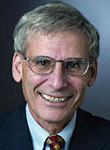
As a graduate student 40 years ago, Gary Fields started down a path that continues today, he says: "Help the poorest workers in the world improve their earning opportunities and, hence, their standards of living."
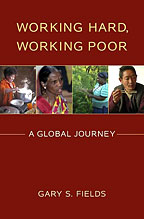
In his new book, "Working Hard, Working Poor: A Global Journey" (Oxford University Press), Fields, professor of economics and the John P. Windmuller Chair of International and Comparative Labor, writes about living with families in South Africa, China, Kenya, Mexico and other countries.
In the book, Fields also discusses such developing world issues as own-account work and household enterprises, agricultural work, casual employment and informal work, and explores such policy issues as stimulating economic growth, harnessing the energies of the private sector, increasing paid employment and raising the returns to self-employment. The book not only shows how people in poverty work and what has been effective in helping the poor earn their way out of poverty but also how readers might help.
The research informs his international labor policy research and has reaped endorsements of economic sciences Nobel Prize laureates Joseph Stiglitz and George Akerlof. The latter writes: "'Working Hard, Working Poor' addresses the world's greatest economic problem. Even in this time of cell phones, international email and globalization more generally, a full half of the world's population has less than $2.50 per day in purchasing power. There is not enough wage employment for those who want to work. Gary Fields, with great sensitivity, puts us in their shoes (insofar as they have them) and shows how we can increase and improve employment to alleviate their suffering. We all have a moral responsibility to read and to understand his message."
It also puts him face to face with people such as Kalavati, one of the globe's 3 billion working poor. Her hourly earnings from rolling bidis, a type of cigarette, are less than 7 cents.
Fields and an academic colleague lived in India with Kalavati and the extended family she supports. Eloquently, she confided her resoluteness against despair, Fields said, recalling her words:
"I'm tired of my life. I struggle, struggle, struggle in my working life and my personal life … I have to be strong. I have to earn. Otherwise, everything will fall to pieces … With courage, I can maintain this life. I cannot lose my courage."
Fields, who reflects on his time with Kalavati and on his life's work, hopes his book inspires people to learn about impoverished workers and contribute to making their lives better.
The 240-page book, with its 37 photos, is intended for general readers interested in global poverty, students in courses on economic development, and professional economists concerned with labor and poverty.
Mary Catt is assistant director of communications at the ILR School.
Media Contact
Get Cornell news delivered right to your inbox.
Subscribe