Cornell is spending $1.56 million to make gorges safer
By Susan Kelley
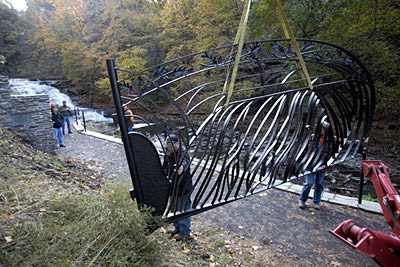
Cornell has committed more than $1.56 million to date to make Cornell's gorges safer, with another $800,000 pending approval. In addition, the university has committed to spend $150,000 annually on trail maintenance, and support is forthcoming for educational programs and recreational alternatives.
"In these tight budget times, this funding highlights the priority that the university has put on making the gorges safer and accessible," said Todd Bittner, director of natural areas at Cornell Plantations.
The funds will allow recommendations formulated by the Gorge Safety Steering Group and approved by President David Skorton to become a reality. Skorton appointed the steering group in August 2011 following three deaths in the gorges that summer.
One key recommendation that has been instituted was to form a Gorge Safety Committee comprising faculty, staff and students. The committee has met twice and has begun to institute plans in four areas: infrastructure, education, alternatives and enforcement.
Cascadilla Gorge trail presents a unique challenge to gorge safety, said Bittner, who chairs the committee. Due to a lack of sustained maintenance, the trail was so unsafe that the university closed it in 2009. Since then Cornell has spent $1.2 million to repair the lower section of the trail. The repairs include fixing stairs and railings, building a new staircase under the Stewart Avenue Bridge so the trail avoids hazardous rock overhangs, and shoring up a 150-year-old retaining wall below Cascadilla Hall. The lower section of the trail was reopened in 2010.
However, annual flooding continues to damage the trail. "We're trying to hit a moving target," Bittner said.
The remaining funds include $200,000 for additional trail repairs between Stewart and College Avenues, with another $300,000 pending approval by the Cornell University Board of Trustees. The goal is to reopen the trail this fall, Bittner said.
The support also includes $160,000 in emergency funding, with another $500,000 pending the board's approval, to address the highest priority safety issues in Fall Creek Gorge. Those priorities include new railings, fences, gates and signs that clearly delineate the boundaries of safe areas that are open to the public and restricted, unsafe areas. Trespassers who enter the restricted areas will be subject to ticketing and arrest.
The money will also fund development of four safe destinations, including scenic overlooks, in the campus gorges. "We plan to put amenities there so that folks can have a place to enjoy and experience these magnificent natural landscapes," Bittner said.
Education efforts include a gorge stewards program set to start in the summer through which students will be trained to share information with their peers about regulations, the hazards of swimming in the gorges, and the locations of alternative places to swim or recreate. The funding covers a gorge safety video being produced by a student group that will be shown during orientation in August.
To educate students about additional recreational opportunities, a new interactive map will include Cornell Plantations' gardens and natural areas as well as the region's waterfalls and hiking, biking and running routes. By late summer a pilot program will shuttle students to such alternative, legal swimming spots as Robert H. Treman State Park.
Enforcement efforts include the new signs, which will say that violators who trespass into restricted areas will be subject to ticketing and arrest. The signs will be up in time for Commencement.
"We are very cognizant of how treasured the gorges are," Bittner said. "We are working to strike the balance between maintaining their character and providing for their safe and responsible use."
Media Contact
Get Cornell news delivered right to your inbox.
Subscribe