New account of Wittgenstein's 1949 visit focuses on details
By Paul Bennetch
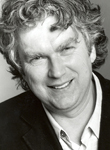
More than 60 years after the fact, the story of Austrian philosopher Ludwig Wittgenstein's 1949 visit to Cornell has been retold in greater detail than ever before by two Cornell professors in a recent joint paper that also stresses the importance of details in narratives.
Trevor Pinch, professor of science and technology studies, and Richard Swedberg, professor of sociology, discussed their paper, which is under review, to a packed Guerlac Room in the A.D. White House Feb. 27.
Delving into hitherto unused and unpublished sources, Pinch and Swedberg gave a detailed account of Wittgenstein's 10 weeks in Ithaca in the summer of 1949; the influential philosopher (1889-1951) came at the request of his former student Norman Malcolm, then a Cornell professor of philosophy.
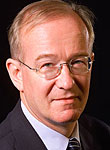
Swedberg said that he and Pinch conducted this research because of their "strong sense of local patriotism -- we live in Ithaca" and their "love for Wittgenstein; he is an extremely handsome and inspiring thinker."
In their research, Swedberg said, they discovered that later in life Malcolm was surprised to learn that Wittgenstein's "On Certainty" (published in 1969) had been developed in large part during his time in Ithaca, yet Wittgenstein had never mentioned it to him.
"The sense that you get with Wittgenstein," Swedberg said, "is that he had his own thoughts, and he was not telling people about them," appearing, in hindsight, quite uninterested in his host's thoughts on topics they intensely discussed that summer.
Swedberg and Pinch also shared smaller details, like how Wittgenstein "whistled for [Malcolm], with striking accuracy and expressiveness, some parts of Beethoven's Seventh Symphony" during a train ride, or that Wittgenstein did not care what he ate at the Malcolm home, so long as he ate the same thing every day, according to Malcolm's recollections.
One episode that Pinch and Swedberg considered carefully was Wittgenstein's only appearance at an official event: a meeting of the Philosophy Club at Cornell where many faculty and students were unaware of Wittgenstein's presence in Ithaca.
One of three firsthand accounts of the meeting was by novelist William H. Gass, Ph.D. '54, then a graduate student in philosophy. "Old, unsteady, queerly dressed, out of date, uncomfortable in space," Gass wrote of Wittgenstein. "He struck me as some atheistical, vegetarian nut …"
According to another account by a graduate student, when Sage Professor of Philosophy Gregory Vlastos finished presenting a paper, "[Professor Max] Black then turned to the man I had mistaken for the janitor and said, 'Dr. Wittgenstein, would you care to comment?' Jesus! There was a great gasp."
Using these accounts to investigate the importance of telling details, Pinch and Swedberg said that the narratives all differ in their descriptions of Wittgenstein's appearance and his speech yet agree on one point: "'the audible gasp' when it was revealed that the tramp/janitor/strange man was in fact Ludwig Wittgenstein, arguably then the world's greatest philosopher."
Pinch and Swedberg suggest in the paper that telling details are ones that "can be told to some rhetorical effect in recalling or describing events."
Some details are telling even when contradictory, like those pointing out Wittgenstein's unusual dress and appearance. Others, like the "audible gasp," Pinch said, are telling because they truthfully communicate an emotional impact that could not otherwise be explained.
The talk was sponsored by the Society for the Humanities and co-sponsored by the Institute for German Cultural Studies at Cornell.
Paul Bennetch '12 is a writer intern for the Cornell Chronicle.
Media Contact
Get Cornell news delivered right to your inbox.
Subscribe