Musicologist writes on cross-cultural movement of danzon
By Daniel Aloi

The danzón first emerged as a distinct form of music and dance among black performers in 19th-century Cuba. By the early 20th century, it had exploded in popularity throughout the Gulf of Mexico and Caribbean basin, and its influence and growth continue today.
Associate professor of ethnomusicology Alejandro L. Madrid explores the historical and contemporary significance of the cultural phenomenon in his new book, “Danzón: Circum-Caribbean Dialogues in Music and Dance” (Oxford University Press), written with Robin D. Moore of the University of Texas at Austin.
Madrid and Moore combine archival research, ethnography and oral history in their study of danzón and its emergence, influence and continuing re-signification on the dance floor and in the concert hall from the end of the 19th century to the early 21st century.
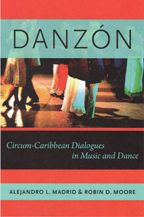
A hybrid complex music and dance form that fused European contradance and African elements, danzón influenced later Latin dance traditions and the development of early jazz in New Orleans.
Engaging a variety of theoretical discussions – from questions of genre, performance practice and dance style to issues of race and gender, nostalgia, identity and nationalism, and diasporic culture – the authors look at danzón’s changing meanings over time and its relationship to other musical forms.
Madrid joined the Cornell faculty in 2013 and is a member of the graduate fields of music and of media and performing arts. His research focuses on modernity, tradition and globalization in music and expressive culture from Mexico, its border with the United States and the Caribbean.
This is his seventh book. His previous works include award-winning works about avant-garde and modernist music in Mexico and electronic dance music along the U.S.-Mexico border, and a textbook, “Music in Mexico."
Media Contact
Get Cornell news delivered right to your inbox.
Subscribe