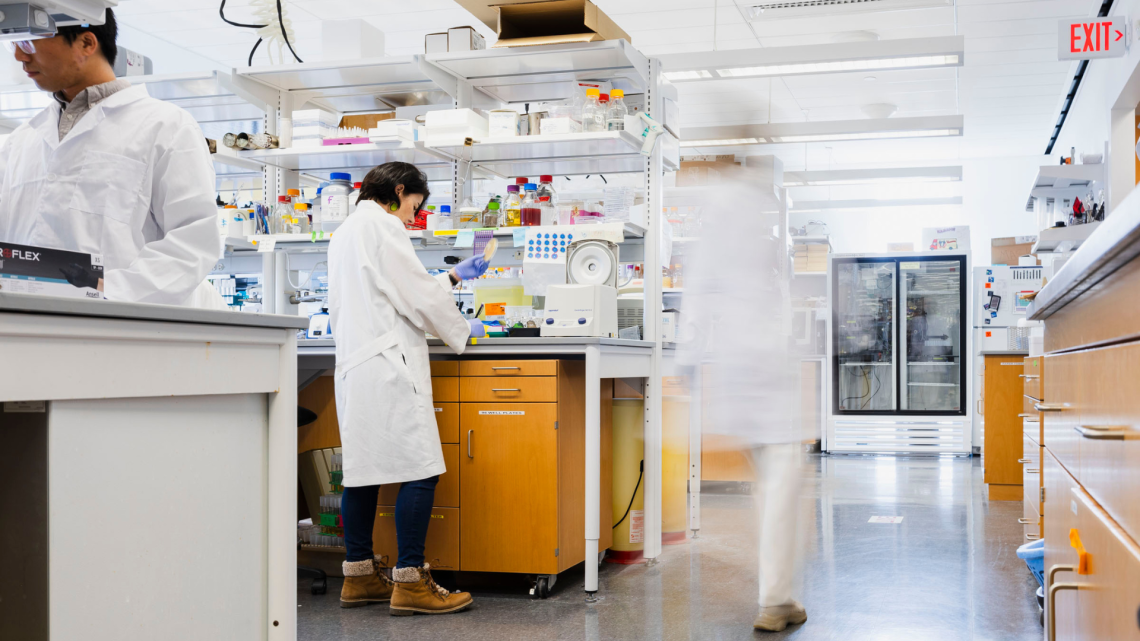
The Weill Institute Emerging Scholars Symposium is a one-day event where exceptional senior Ph.D. students and postdocs in cell and molecular biology programs and related disciplines are invited to Cornell’s campus to share their research with the Cornell life sciences community.
News directly from Cornell's colleges and centers
Eight named in 2025 cohort of Weill Institute Emerging Scholars
By Stephen D'Angelo
The Weill Institute for Cell and Molecular Biology at Cornell has selected eight outstanding graduate and post-doctoral students as recipients of this year’s Weill Institute Emerging Scholars Award, recognizing their exceptional achievements in molecular and cell biology science.
Now in its second year, the national program invites applications from senior Ph.D. and postdoctoral students at institutions across the United States and Canada. Selected scholars are chosen through a competitive process based on the strength of their research, leadership potential, and dedication to fostering research communities.
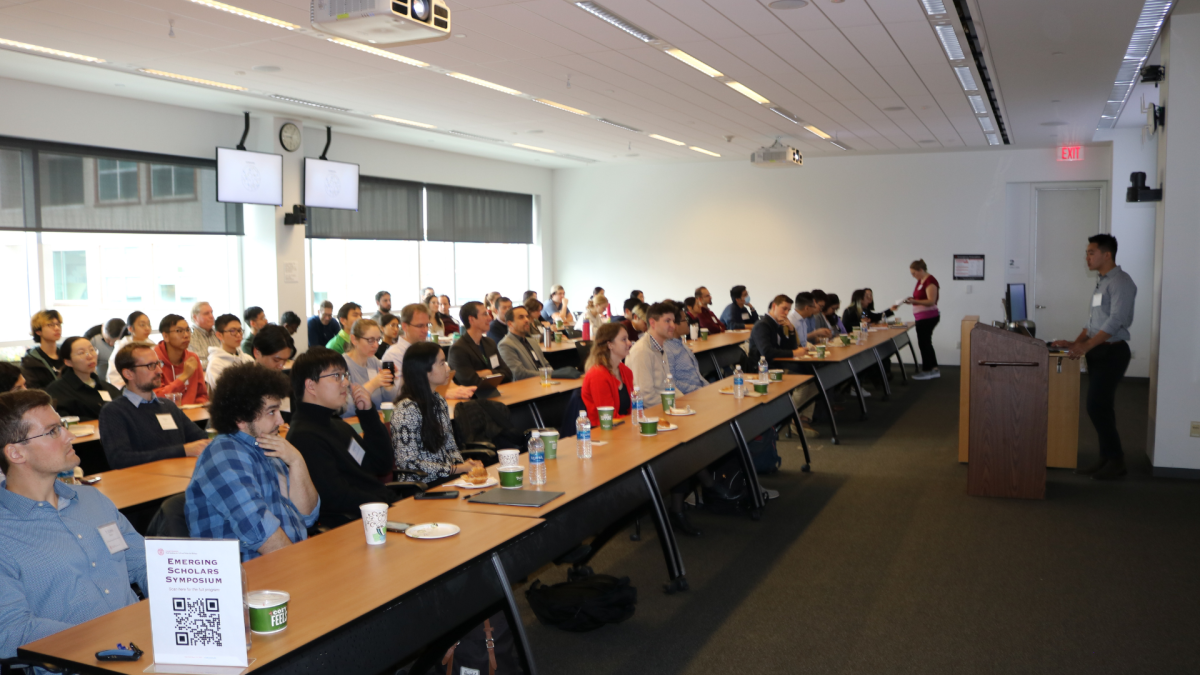
The Weill Institute Emerging Scholars Symposium allows awardees to showcase their research and academic achievements.
The 2025 Emerging Scholars visit Cornell’s Ithaca campus for a two-day program, October 13–14. The visit includes the Weill Institute Emerging Scholars Symposium on Oct. 13, where awardees present their research and engage with faculty, postdoctoral scholars, and graduate students across the life sciences. The following day, they attend the 8th Biennial Weill Institute Symposium, a flagship event featuring lectures from internationally recognized leaders in molecular and cell biology.
“The Weill Institute Emerging Scholars program highlights the next generation of scientific leaders in our field,” said Brian Crane, director of the Weill Institute and the George W. and Grace L. Todd Professor in the Department of Chemistry and Chemical Biology in the College of Arts and Sciences. “This year’s scholars represent a diverse array of research interests and personal experiences, and we’re excited to welcome them to Cornell to share their work and build new connections.”
The Emerging Scholars award and program is designed to celebrate scientific excellence, provide professional development opportunities, and facilitate collaboration and dialogue between emerging and established researchers.
The program is part of the Weill Institute’s broader mission to foster interdisciplinary collaboration, accelerate discovery, and translate basic research into new knowledge and solutions that benefit human health, Crane said. As a hub of life science research at Cornell, the Institute supports cutting-edge work across molecular biology, genetics, and cell signaling through integrated research, training, and outreach efforts, he said.
2025 Weill Institute Emerging Scholar recipients and their research presentations:
Dylan Calhoon – graduate student in the Garcia-Bermudez lab, UT Southwestern
Dissecting the role of lipid uptake in tumors
Sneha Kabaria – graduate student in the Galloway lab, MIT
DIAL: Programmable promoter editing for precise control of transgene expression
Hongyi ‘Richard’ Li – graduate student in the Shapiro lab, Caltech
Engineering acoustically targeted gene delivery to the brain for noninvasive neuromodulation
Emily Siniscalco – graduate student in the Eisenbarth and Craft Labs, Yale University
Gut germinal centers generate linked mucosal and systemic antibody responses through sequential class switch recombination
Athanasios Litsios – postdoctoral fellow in the Andrews lab, University of Toronto
The spatiotemporal proteome of the eukaryotic cell division cycle
Joseph Lobel – postdoctoral fellow in the Ingolia Lab, UC Berkeley
Unstructured-function relationships in proteins driving mRNA turnover
Mengxiao ‘Mandi’ Ma – postdoctoral scholar in the Rohatgi lab, Stanford University
Physiological and pathological roles of regulated N-glycosylation in the endoplasmic reticulum
Todd Douglas – postdoctoral associate in the Crews lab, Yale University
An atypical E3 ligase safeguards the ribosome during cellular stress
More information about the program and this year’s cohort of Emerging Scholars is available on the Weill Institute website.
Stephen D'Angelo is the communications manager for biological systems at Cornell Research and Innovation.
Media Contact
Get Cornell news delivered right to your inbox.
Subscribe