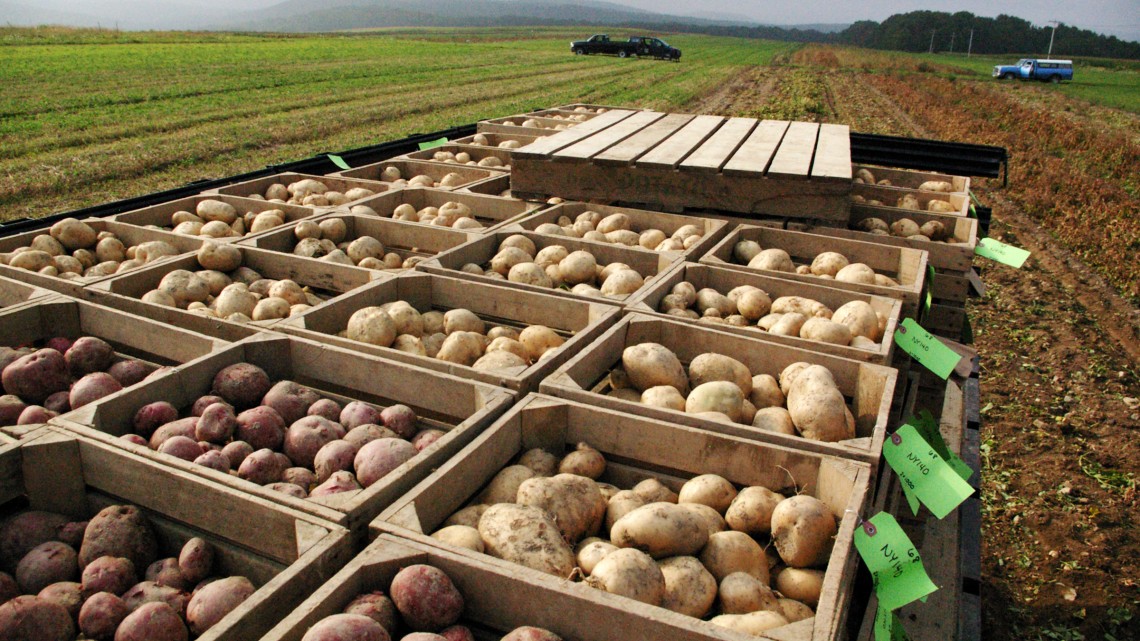
Potato varieties from Walter De Jong's breeding program at Cornell AES' Campus Area Farms.
News directly from Cornell's colleges and centers
160 years of Cornell potato breeding with national impact
By Krisy Gashler
Boil them, mash them, stick them in a stew – potatoes are the most-consumed vegetable in New York and the U.S., accounting for $100 billion of the U.S. economy. Although New York’s share of total potato production has decreased over time, with most crops now being grown in the west, the Empire State still punches above its weight in supporting the national potato industry, thanks to Cornell University’s 160-year-old potato breeding program and its network of farmer and processor collaborators, who work hand-in-hand to develop new varieties grown across the country.
Cornell’s outsize impact on the potato industry stems from having developed over 50 varieties, including the most-grown variety used nationwide for making potato chips, and varieties resistant to the invasive golden nematode (a devastating potato pest), said Walter De Jong, professor of plant breeding and genetics.
Media Contact
Get Cornell news delivered right to your inbox.
Subscribe
