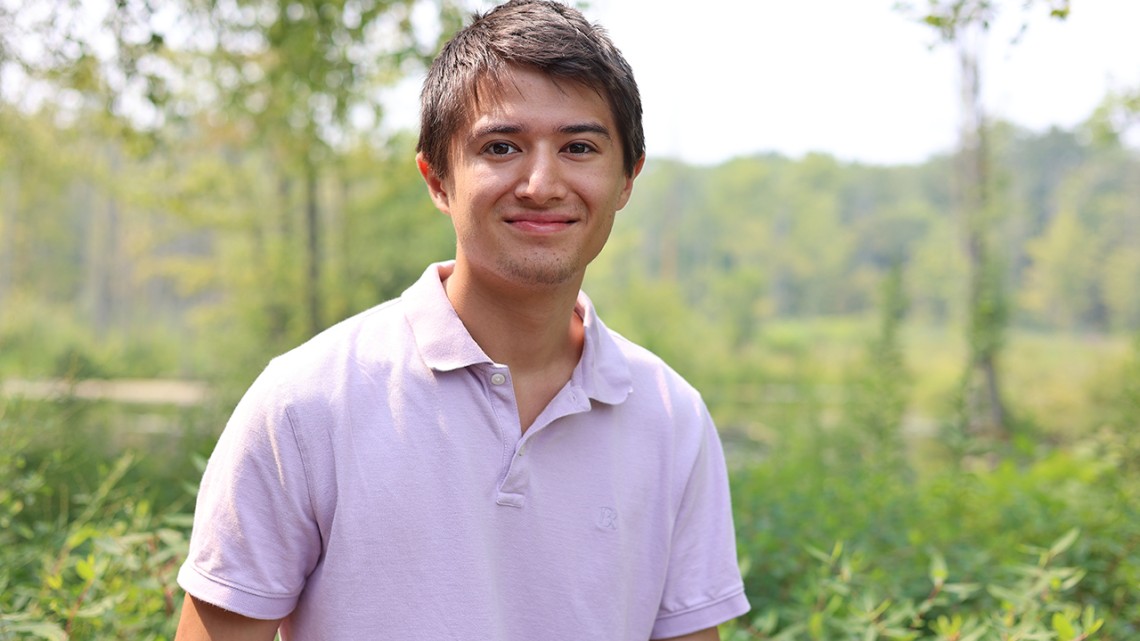
During his summer internship, Brooks School student Everett Smith ’27 explored how wetlands policies affect not only avian populations and migration patterns but also the human communities that depend on those ecosystems.
News directly from Cornell's colleges and centers
Brooks student combines love of birds and climate policy research during summer internship
By Giles Morris
Everett Smith ’27 started birding when he was just 7 years old. Growing up in the Netherlands, his family would travel to the U.S. during the summers to stay with relatives by the Chesapeake Bay. Back then, the ospreys captured his imagination.
This summer, Smith turned his lifelong passion into purpose through a new internship program jointly offered by the Cornell Brooks School of Public Policy and the Cornell Lab of Ornithology. Under the guidance of Brooks School professor Sheila Olmstead, Smith explored how wetlands policies affect not only avian populations and migration patterns but also the human communities that depend on those ecosystems.
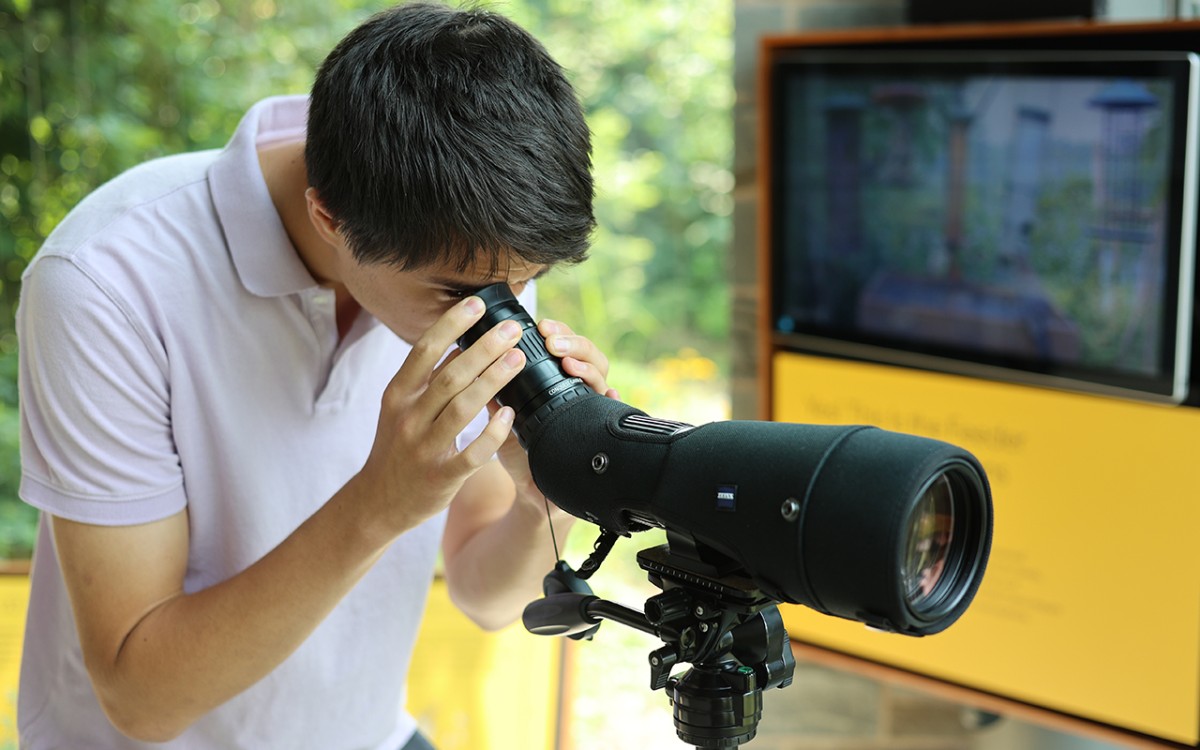
“I’ve always known how important bird populations are for healthy ecosystems,” Smith said. “But I didn’t realize how interconnected we as humans are to them, how healthy bird populations are really indicators of healthy human environments.”
As part of his research, Smith worked with faculty across disciplines, including Amanda Rodewald, the Garvin Professor and Faculty Director of the Center for Avian Population Studies at the Cornell Lab of Ornithology; and Cathy Kling, a Tisch University Professor in the Charles H. Dyson School of Applied Economics and Management and the Brooks School who is an expert on the social costs of water pollution.
“The idea of the program was for Everett to work within a couple of teams of researchers working on different projects related to public policy and birds. He has looked at how different states are protecting wetlands that provide important avian habitat, explored city-level policies that expand urban greenspace and affect avian species’ abundance in cities, and even had a chance to dig into some data from the Lab’s amazing eBird database to support statistical analysis,” Olmstead said. “It was exciting to see his growth through the program and what this type of faculty collaboration could look like for our students.”
“With so many threats to birds and other species being linked to social, economic, and political issues, conservation can be successful only if we understand and engage in those arenas. These kinds of internships are essential to training future leaders who can navigate those complexities,” Rodewald said.
The internship was funded through a gift by John Foote ’74, longtime resident of Ithaca’s Forest Home neighborhood, lecturer in the Brooks School, and board member of the Cornell Lab of Ornithology. John is also a member of the Brooks School Dean’s Advisory Council.
“I’m enormously grateful to John Foote for his vision in making this internship possible,” said Ian Owens, executive director of the Cornell Lab of Ornithology. “John’s commitment to both the Brooks School and the Lab has created a unique opportunity for students to connect cutting-edge science with real-world policy. That combination is exactly what’s needed to train the next generation of leaders who will protect birds, people, and the environments we share.”
For Smith, the highlight wasn’t just the research, it was the environment.
“Working with bird data in policy research at one of the world’s leading ornithological research centers was an extraordinary experience,” he said. “The Lab of O’s resources and global datasets show how studying bird populations provides vital insights into environmental change. It gave me new ways to think about how we can use this knowledge to inform policy decisions.”
Smith still loves raptors, including the osprey and the Eurasian eagle-owl, but his appreciation for the tricolored heron has deepened through his research. As he puts it, learning about wetlands policy isn’t just academic, it’s about protecting the habitats we all depend on.
Media Contact
Get Cornell news delivered right to your inbox.
Subscribe