News directly from Cornell's colleges and centers
Wildfire smoke, regenerative ag: Cornell Atkinson-EDF research aids people and planet
By Krisy Gashler
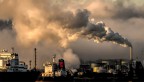
In the past 20 years, extreme wildfires have more than doubled, causing destruction to those directly impacted and spreading air pollution across borders and even continents. Outdoor air pollution, and the disease it engenders, is estimated to cause roughly 8 million deaths globally each year. A team of scientists from Cornell and Environmental Defense Fund (EDF) are working to understand how air pollutants from dust and wildfires have changed over time, from 1850 to today, to improve predictions of future air pollution. They’ll also calculate respiratory disease, mortality risk and economic impact for a range of air quality scenarios, with a special focus on Latin America.
Their work will draw from, and then inform, the Community Earth System Model, a state-of-the-art climate model used by the Intergovernmental Panel on Climate Change, among others. Natalie Mahowald, the Irving Porter Church Professor in Engineering in the Department of Earth and Atmospheric Sciences in Cornell Engineering, has been developing and using the model and its forebears for 30 years. Mahowald is leading the new research, alongside Adwoa Aboagye-Okyere, a Ph.D. student in Mahowald’s lab, Alistair Hayden, assistant professor of practice in the Department of Public & Ecosystem Health in Cornell’s College of Veterinary Medicine, and Fiona Lo, EDF climate scientist.
The team was one of four to receive 2025 funding from the Cornell Atkinson Center for Sustainability and Environmental Defense Fund as part of their annual joint research program. The 2026 call for joint proposals is accepting applications until January 12.
Previous research by some of these collaborators examined the effects of dust and wildfire smoke on health outcomes in Africa and in New York. The 2023 Canadian wildfires caused respiratory-related emergency room visits to “skyrocket” hundreds of miles away in New York City, and even countries in Europe and Asia had bad air quality days driven by those wildfires, Aboagye-Okyere said.
“Coming from a region in Ghana where dust, fires and pollution are part of daily life, I’ve seen firsthand how they affect people’s health and livelihoods,” Aboagye-Okyere said. “If we can understand what’s driving poor air quality, we can take measures to mitigate that or at least protect vulnerable people.”
“In some places, the source of the poor air quality is local and it is possible to mitigate aerosols, for example by reducing agricultural burning,” Mahowald said. “In other places, the source may be outside their jurisdiction, so the only actions can be planning for bad air quality days.”
Projects address mangroves, rice, decarbonized energy
All of the funded research projects aim to support EDF and Cornell Atkinson priorities like reducing greenhouse gas emissions and climate risk, accelerating energy transitions, and supporting the health of humans and natural systems.
Alison Eagle, EDF senior scientist II in climate-smart agriculture, has collaborated on multiple projects with Cornell investigators, including on strategies to reduce methane emissions from rice farming, using crop switching to reduce risk in water-stressed regions, and understanding the overall climate benefits of regenerative agriculture and improved fertilizer management.
“This partnership with Cornell helps expand EDF’s science capacity to answer key questions and fill research gaps we would not otherwise be able to address,” Eagle said. “The projects I’ve been part of are helping us to right-size expectations for greenhouse gas mitigation in agriculture, to target interventions in regions and cropping systems with the most potential for impact, and to understand broader life-cycle implications of actions such as improved nitrogen fertilizer management. I think EDF scientists bring real-world implementation questions to the Cornell research teams in a way they might not otherwise be able to access – which means publications and other outputs are more impactful, practical, and directly useful for decision-makers.”
The other projects receiving support in 2025 are:
Overcoming baseless baselines to drive GHG mitigation in rice systems. Researchers are: Eagle, Andrew McDonald, associate professor of soil and crop sciences in the College of Agriculture and Life Sciences (CALS), and Hari Sankar Nayak, a postdoctoral associate in McDonald’s lab.
Coupling critical flow physics to biogeochemistry, policy and local communities for the resiliency and restoration of mangroves and their blue carbon. Researchers are: Edwin “Todd” Cowen, professor of civil and environmental engineering in Cornell Engineering, Gemma Carroll, EDF senior ocean climate scientist, Kristin Kleisner, EDF associate vice president of oceans science, Alejandro Orfila, director of the Mediterranean Institute for Advanced Studies (IMEDEA), Seth Schweitzer, Cornell research associate in civil and environmental engineering, and Johann Delgado, a PhD student in Cowen’s lab.
Power-to-X Pathways for a Decarbonized Energy Future: An Integrated Analysis and Decision-Making Framework. Researchers are: Lindsay Anderson, professor and chair of biological and environmental engineering in CALS, Thomas Brindle, EDF director of legislative and regulatory analysis, U.S. region, Jerry Murphy, professor and chair of civil engineering at University College Cork, and Luis Fernández Intriago, EDF labor economist.
New for 2026, EDF and Cornell Atkinson are accepting proposals for “rolling fast-grants,” which will provide flexible funding to support EDF and Cornell teams in addressing time-sensitive, short-term opportunities with concrete deliverables. Additionally, Cornell Atkinson and EDF offer continuing support for collaborations through “impact” grants, also financed through EDF and the Innovation for Impact Fund through the Dave and Patricia Atkinson Foundation. Awards in those categories this year aim to fully account for the greenhouse gas emission benefits of regenerative agriculture, examine whether Kansas farmers switching to sorghum could save water, and understand how adding weathered rock to soil – which captures and stores carbon naturally – affects soil organic carbon, a key indicator of soil health and fertility.
Krisy Gashler is a writer for the Cornell Atkinson Center for Sustainability.
Media Contact
Get Cornell news delivered right to your inbox.
Subscribe