News directly from Cornell's colleges and centers
Redbones and racial nuance in Louisiana Lumber War
By Kate Blackwood
In the early 20th century, lumber workers in the Piney Woods region of the American South banded together across racial lines to form the Brotherhood of Timber Workers (BTW) union.
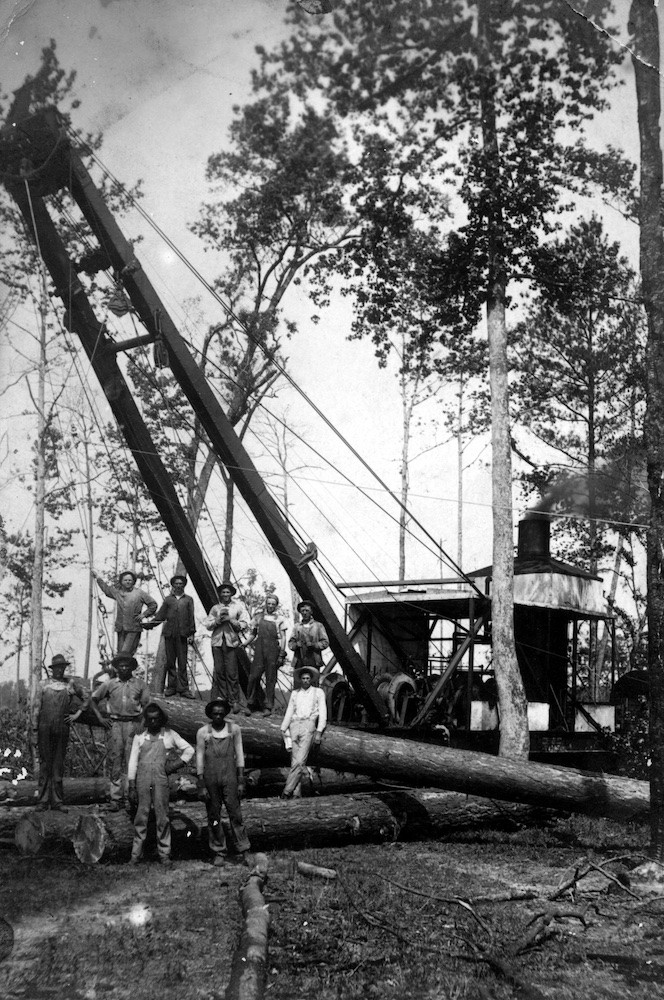
“Woods workers” posing with a large crane near Carson, Louisiana, 1920.
“At a time of Jim Crow segregation, the BTW brought together people across polarized racial lines. But these lines are not as polarized as we necessarily think,” said Kendall Gordon Artz, Klarman Postdoctoral Fellow in Africana studies in the College of Arts and Sciences. “The BTW had to overcome a lot more nuances and racial meanings than simply Black and white.”
In “The Redbones are Running the Union: Precarious Whiteness and Racial Contingency in the Lumber War,” published in American Quarterly in September, Artz argues that racial nuances local to western Louisiana played a big role in the 1910s Lumber War – even though company records, government census data or even newspaper reporting don’t show it. He wants to push beyond the assumption – one replicated by scholars – that company rosters and state records hold all there is to know about racial expression.
“In reality, race is much more fluid on an everyday basis,” he said.
Read the full story on the College of Arts and Sciences website.
Media Contact
Get Cornell news delivered right to your inbox.
Subscribe