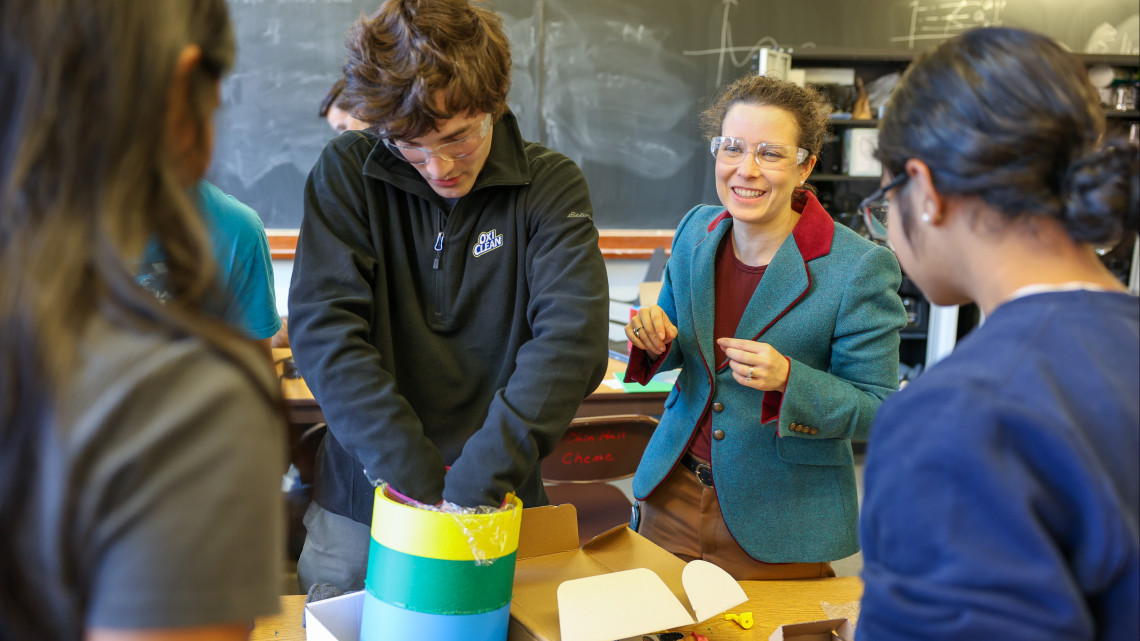
Allison Godwin, the Dr. G. Stephen Irwin ’67, ’68 Professorship in Engineering Education Research, has established herself as a rapidly rising star in engineering education research – a burgeoning field that focuses on designing effective education systems and learning experiences within engineering.
Revolutionizing engineering education: The rise of a new research pillar
By Reeve Hamilton
In 2021, an unexpected email landed in Allison Godwin’s inbox inquiring about her interest in a new position. She wasn’t actively looking for a professional change, and she might not have read it at all had she not been on sabbatical with more time for such things than usual.
A tenured faculty member at Purdue University, Godwin had established herself as a rapidly rising star in engineering education research – a burgeoning field that focuses on designing effective education systems and learning experiences within engineering. As a research field, scholars study how engineers learn, the impacts of educational practices, and how to expand participation in engineering, among other topics. Godwin’s expertise is in engineering identity development, practices for inclusive education, and engineering workforce development.
Given that the school reaching out didn’t have a single tenure-track faculty in Godwin’s field, she was inclined to hit delete. But she didn't. Instead, she forwarded the note to a trusted advisor. “I wonder if they know what they’re doing,” Godwin mused. The response she received not only shifted her perspective; it changed her career trajectory.
“You should talk to them,” the advisor said. “It’s Cornell.”
The conversations that followed paved the way for Cornell Engineering’s newest and fastest-growing research field, and work that is poised to revolutionize engineering education – certainly on the Cornell campus, and potentially far beyond it.
“Cornell Engineering’s primary objectives are to develop the people and knowledge necessary to forge a better future,” said Lynden Archer, the Joseph Silbert Dean of Engineering. “Our investment in engineering education research is not just a high priority, but a priority that aligns with our values and goals.”
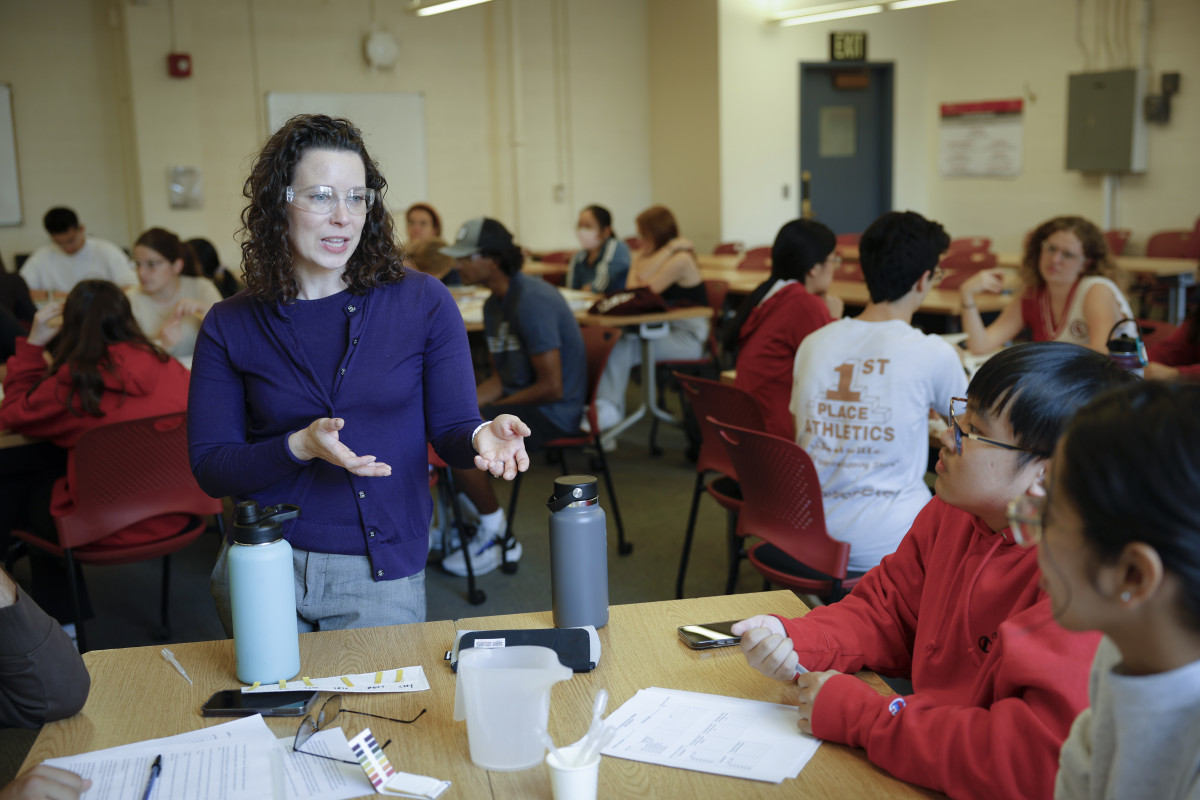
Allison Godwin, the Dr. G. Stephen Irwin ’67, ’68 Professorship in Engineering Education Research.
When Godwin first received the outreach from Cornell’s Robert Frederick Smith School of Chemical and Biomolecular Engineering, she didn’t know that interest in engineering education research had been gaining steam in the school for some time, and it was beginning to spread throughout the college.
For decades, The R.F. Smith School has prided itself on its commitment to undergraduate education. Through a strategic planning process that began in 2020, the faculty had affirmed that they were determined to preserve that legacy. The question was how to do it in a meaningful way. While not immersed in the field of engineering education research themselves, some faculty members had stayed in touch with a former star student who had gone into the field. Leaders in the school began to wonder what it would mean to have someone on the faculty.
“We had this ‘aha moment,’” said Susan Daniel, the Lisa L. Walker 1986 Distinguished Professor of Chemical and Biomolecular Engineering and the William C. Hooey Director of the R.F. Smith School. “Chemical and biomolecular engineering includes such diverse expertise, from energy to biology, so our faculty constantly lean on each other for advice and collaboration when we’re doing research in areas like sustainability and biological processes. Wouldn’t it be fantastic to have colleagues in our building who could provide guidance that ensures that we are as excellent and effective in advancing our education mission?”
Daniel and her colleagues saw how such an addition would augment the robust teaching supports that already existed in the college, such as those provided by the McCormick Teaching Excellence Institute – which Daniel credits for honing her own teaching skills as a young professor. “These are strong practitioners and mentors, who bring the best practices into the classroom and implement them effectively,” she said. “What the engineering education research people are doing is upstream, creating that new knowledge about how to educate successful engineers. We want to create a holistic approach that includes both researchers and implementers.”
Digging a bit deeper, they realized that Cornell already had two faculty members in discipline-based education research fields – Natasha Holmes, the Ann S. Bowers Associate Professor in the Department of Physics, and Michelle Smith, distinguished professor in the Department of Ecology and Evolutionary Biology. The upshot for Daniel and her colleagues was that this meant processes had already been established for evaluating and granting tenure to people in such positions. It also meant that they had experts they could add to their search committee who were more versed in the topic. Daniel said that, when Cornell successfully recruited Godwin, it “kind of sent a shockwave” through the field.
The number of engineering education research faculty in Cornell Engineering has grown quickly following Godwin’s arrival, as has the field’s stature within the college. After one year, Godwin was named the Dr. G. Stephen Irwin ’67, ’68 Professor in Engineering Education Research, becoming Cornell’s first endowed professor in engineering education research. She was also named the associate faculty director of the Cornell NanoScale Science and Technology Facility to lead workforce development efforts.
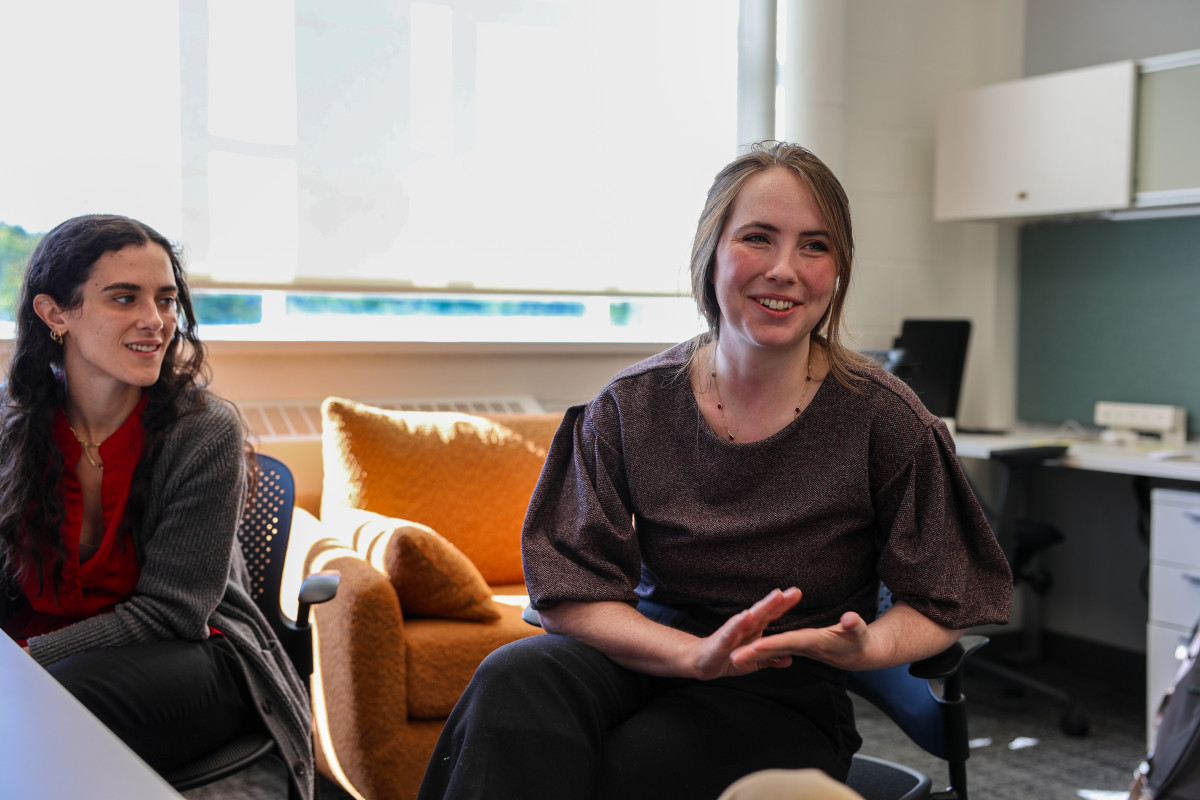
Alexandra Werth, assistant professor, is the Meinig School of Biomedical Engineering’s first engineering education research faculty member.
“It has been one of the greatest thrills of my deanship to see this critical research area taking shape in a college known for our commitment to educating exceptional engineers and problem-solvers,” Archer said. “We anticipate that this momentum will continue as we build a cohort of teaching excellence faculty, which is an essential part of our strategic plan, Cornell Engineering 2030.”
In fall 2023, Alexandra Werth joined the Nancy E. and Peter C. Meinig School of Biomedical Engineering as its first engineering education research faculty member. Werth was fresh off a postdoc at the University of Colorado Boulder, where she played a pivotal role in developing, implementing, and assessing the first large-enrollment introductory physics Course-based Undergraduate Research Experience. Known as CUREs, these initiatives involve students in actual research at large scale. The CURE that Werth was involved in resulted in a published paper with more than 1,000 authors, most of whom were the undergraduates in the course. When they first tried to submit it, they broke the journal’s upload system.
In 2024, Alexandra Coso Strong, who had co-developed two degree programs and co-founded the School of Universal Computing, Construction and Engineering Education at Florida International University, joined the R.F. Smith School and Cornell’s Systems Engineering program as an associate professor. In 2025, Jessica Rush Leeker joined the School of Operations Research and Information Engineering as a professor of practice, bringing a background that spans global supply chain roles in industry and leadership as director of undergraduate education at CU Boulder, where she led curriculum reforms and industry-aligned student programs.

Jessica Rush Leeker joined the School of Operations Research and Information Engineering as a professor of practice specializing in engineering education research.
Together, their research reflects the full engineering education pipeline – from sparking early interest in childhood to transforming large university classrooms. Rush Leeker focuses on the earliest stages of that pipeline, examining how young learners form engineering identities and testing whether framing engineering as a helping profession – similar to teaching or medicine – can expand its appeal. “The earlier students see engineering as a way to solve real problems, the more likely they are to stay engaged,” she said. “Early identity development isn’t just a theory. It’s a powerful predictor of long-term participation.”
Werth studies higher education, which, among other traits, often operates on a different scale in terms of class size. “How do you have an interesting and motivating curriculum that is differentiated across all of your students when you have the challenge of these large-enrollment courses?” she said. “Being able to develop curricula that is dynamic enough to work in a lot of different settings, for a lot of students, and give them an amazing experience – that’s a big motivator of my work.”
Coso Strong, meanwhile, focuses on identifying and developing approaches to sustainable and transformative change within educational and other complex systems, as well as faculty and graduate student development. Prior to joining Cornell, she had honed a fairly specific idea of how she hoped to position herself to make an impact.
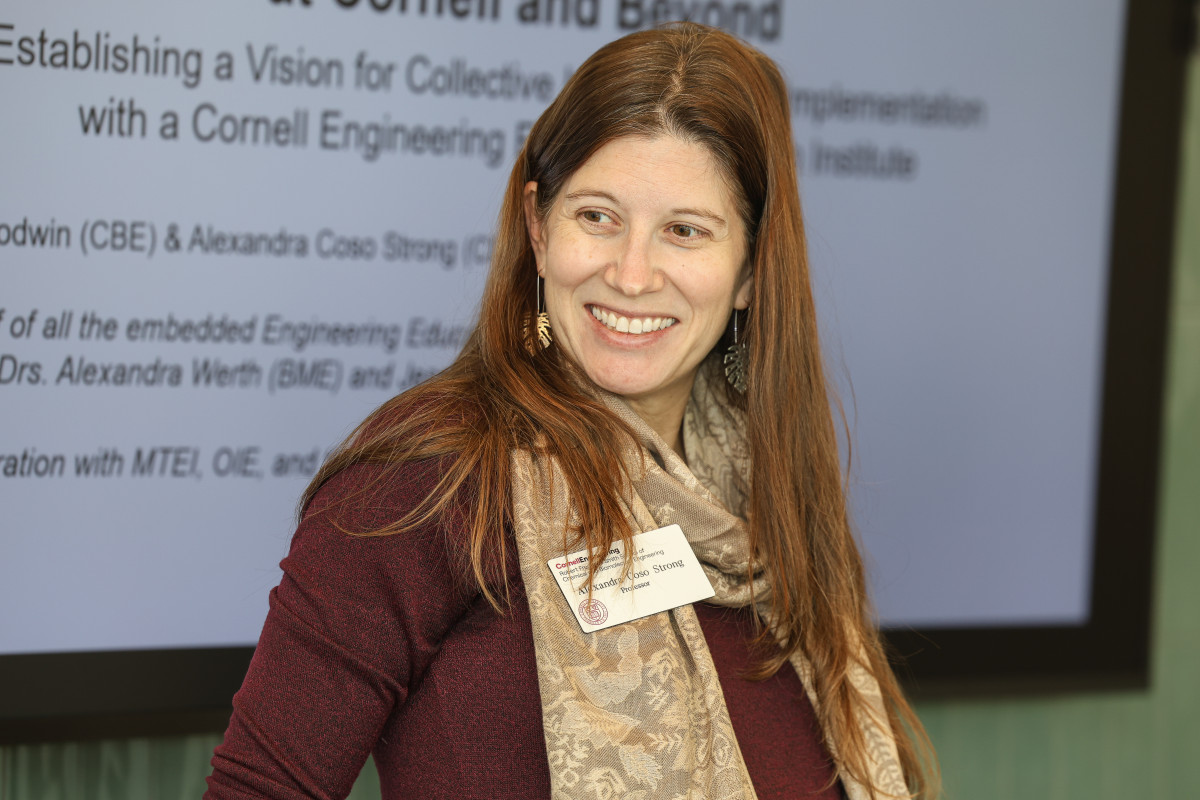
Alexandra Coso-Strong joined the R.F. Smith School and Cornell’s Systems Engineering program as an associate professor specializing in engineering education research.
“I thought it would be really great,” she said, “if a position would become available where I could be embedded in a department, getting to think about these complex systems and work directly with disciplinary faculty, learning from them about the specific methods and approaches they use in their research and learning with them about how we can innovate in the classroom.”
Cornell Engineering’s approach to populating its cohort of engineering education researchers – each new faculty member is fully embedded in other departments – is closely aligned with what Coso Strong envisioned, and it also happens to be somewhat unique. While not being housed with co-workers steeped in engineering education researcher requires more translation work on their part, the faculty members report multiple benefits of the arrangement.
For Werth, the embedded model offers additional perspective and access. “I get to learn so much about the challenges of teaching at all different levels across all different topics from my colleagues, who are the other faculty in the department,” she said. “That allows me to really understand the challenges and innovate in deeply disciplinary spaces that a lot of engineering education researchers have not worked in.”
Godwin noted that the embedded model can also help close the gap between research and application. “Too often, great research is published and nothing actually changes. Here we can ask new questions, get new insights, and then work with our colleagues to translate them into what we do on a daily basis,” she said. “I think there’s really a unique opportunity to do that well here that I haven’t seen in other places. In just a couple years, I’ve seen real change begin to happen, and that’s the most exciting part.”
The extent of that change became clear in the fall of 2025, when the R.F. Smith School became the first Ivy League department to be awarded a Revolutionizing Engineering Departments (RED) grant from the National Science Foundation.
“This grant is confirmation that we’ve not just made the right investments, but we are already pursuing research that promises to transform engineering education practices at Cornell and beyond,” Archer said. “I am confident, in particular, that as others in and outside Cornell start to learn from the technical work our faculty are pursuing, we will see more – and more confident – strides made to revolutionize other engineering departments nationwide.”
The five-year project – led by Daniel in collaboration with Godwin, Coso Strong and others in the R.F. Smith School – will update the undergraduate curriculum, completely overhaul how it is delivered and reshape the school’s culture.
“What I’m really excited about is the chance to bring together research at different scales all in one department,” said Coso Strong. “Typically, you only have the bandwidth to focus on one aspect, such as the student experience or the faculty and staff experience. We’re getting a chance to make change across all these levels and groups.”
The R.F. Smith School intends to use the grant to embrace what Daniel called a “Living Laboratory Ecosystem,” that rewards asking new questions, testing innovative approaches, embracing failure as a learning opportunity, and continuously enhancing and applying new knowledge and methods to tackling local, national and global challenges.
For Daniel, it’s an opportunity to make that broad – potentially national – impact she and her colleagues envisioned when they first embarked on exploring engineering education research. “At the end of this grant, we'll have actually transformed the way that chemical engineers are educated in our program and hopefully inspired others to think about starting their own revolutions and creating their own unique way of educating future engineers,” Daniel said.
While powerful and promising, the RED grant is not the only vehicle for transformation currently revving up at Cornell Engineering. Engineering education research faculty are actively collaborating with their departmental colleagues as well as faculty and staff in Cornell Engineering’s Selander Center for Engineering Leadership, Office of Inclusive Excellence, and the McCormick Teaching Excellence Institute.
Godwin and her colleagues envision an ecosystem that leverages faculty development programs, engineering education research, innovation, and both local and global partnerships to meaningfully advance engineering education. It’s a grand vision – one that may never have come into focus had she not had the time for a second look at that initial message from the R.F. Smith School search committee.
“Some of the best transitions in my life have happened because of serendipitous emails,” she said.
Media Contact
Get Cornell news delivered right to your inbox.
Subscribe