News directly from Cornell's colleges and centers
Weill Institute welcomes Tara Fischer as newest research member
By Stephen D'Angelo
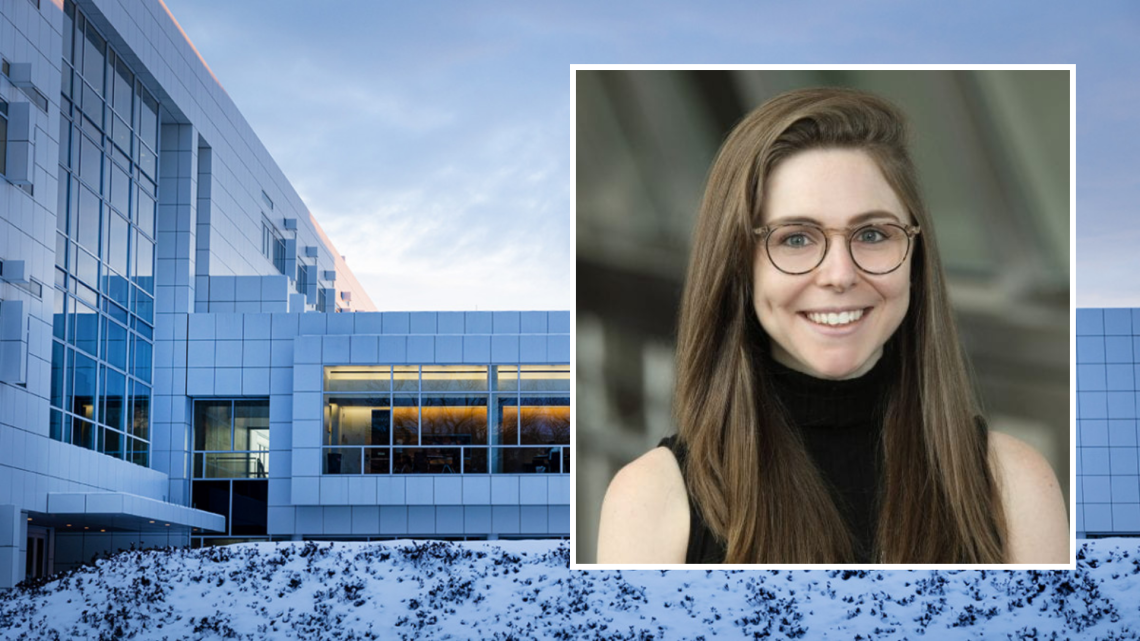
Tara Fischer investigates how cells detect and repair organelle damage, and how these processes influence inflammation and the progression of neurodegenerative disease. She brings this focus to Ithaca as she begins her role as an assistant professor in the Weill Institute for Cell and Molecular Biology (WICMB) and the Department of Molecular Biology and Genetics in the College of Agriculture and Life Sciences (CALS) in January.
“We’re thrilled to welcome Tara to the Weill Institute,” said Brian Crane, director of the Weill Institute for Cell and Molecular Biology. “Her work epitomizes the focus of the Weill Institute, in-depth studies of molecular mechanism to advance a new area of biology with implications for treating disease, we’re excited to see her lab take root and thrive here.”
Fischer’s research centers on how cells monitor and repair damage to their internal organelles, specialized compartments that house essential molecular processes. When organelles lose their integrity, cells activate quality-control pathways that either fix the damage or remove the faulty structure. These same signals can alert the innate immune system to potential infection or injury, linking organelle health to inflammation. When damage goes unresolved, this cross-talk can drive persistent immune activation, a hallmark of several neurodegenerative disorders.
“What excites me most about starting at WICMB is the research and the people,” Fischer said. “As a cornerstone of cell biology research in the U.S., I was initially drawn to WICMB by the fascinating and diverse research amongst the labs in the institute.”
“I felt that my interests in organelle and membrane biology, cellular immunity, and neurodegeneration were perfectly aligned with other groups’ interests, and that it would make for an intellectually rich environment to start my lab in,” she said.
In the first years of her Cornell lab, she plans to focus on two major questions: how cells sense and resolve organelle damage, and how organelle integrity interfaces with cellular immunity. She also aims to dissect how immune proteins, including STING, actively induce organelle damage and how these processes shape host defense. Her long-term vision is to advance understanding of the links between organelle integrity, immune responses and neurodegenerative disease.
“Ultimately, my main hope is that understanding the molecular basis of organelle quality control and the relationship between organelle integrity and cellular immunity will redefine how we treat neurodegenerative diseases,” she said.
Fischer’s scientific path has been shaped by broad training across neurobiology, biochemistry, ultrastructural imaging and molecular cell biology. Her Ph.D. research at UTHealth examined mitochondrial dynamics in the neuropathology of traumatic brain injury and in neurons using cryo-electron tomography.
“Since then, it has been my great interest to discover how the dynamic remodeling of organelles and their membranes contributes to cellular health and disease,” she said.
As a postdoctoral fellow at the NIH, she investigated the molecular mechanisms linking autophagy and ubiquitin signaling to innate immunity, uncovering new roles for STING-associated responses at Golgi membranes.
Fischer is eager to engage with Cornell’s core facilities and research infrastructure. She highlighted the Center for Innovative Proteomics and the Biotechnology Resource Center, including the microscopy and flow cytometry cores, as key resources, and noted the strong staff support within WICMB.
She plans to partner with Cornell experts in lipid chemistry, structural biology and related fields to probe the biochemical basis of organelle quality control, while connecting those findings to questions about neuron–glia communication, host–pathogen interactions and neurodegeneration. She said interdisciplinary work across WICMB, the College of Veterinary Medicine, Neurobiology and Behavior, and her home department of MBG will help catalyze new directions.
“Of course, my favorite part about collaborations is the unpredictable creativity that can come from putting two or more different minds together,” she said. “I hope collaborations can lead us in new directions we haven’t even considered yet,”
Outside of research, Fischer is looking forward to campus life, teaching and community engagement. After years in medical and research centers, she said she is excited to join a university environment and hopes to integrate the philosophy and history of science into her courses and mentoring.
She also plans to join Cornell’s AAUP chapter, reflecting on her long-standing commitment to academic labor advocacy after working with colleagues at NIH to form the NIH Fellows United UAW Local 2750 union. “Working together, we can protect our rights and ensure we have a community where knowledge is shared freely and where everyone has agency in their workplace,” she said.
Stephen D'Angelo is the communications manager for biological systems at Cornell Research and Innovation.
Media Contact
Get Cornell news delivered right to your inbox.
Subscribe