Self-esteem, openness to LGBTQ peers helps all high schoolers
By James Dean, Cornell Chronicle
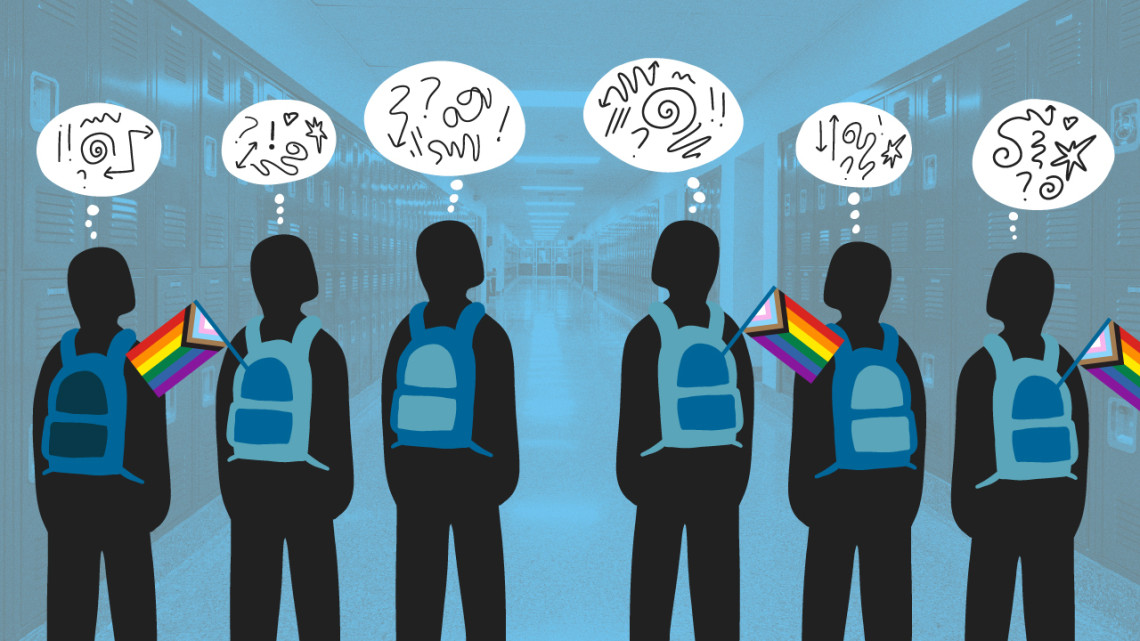
For teens entering high school – an anxious time for many – inclusive environments benefit not only those identifying as LGBTQ but also their majority-group peers, Cornell-led psychology research finds. And especially for LGBTQ students, who start ninth grade more anxious, on average, a strong sense of self can help significantly ease those feelings over time.
Those findings, reported in two new studies that followed more than 400 students through ninth and 10th grade, highlight the value of cultivating self-esteem and openness during a critical period of development, the researchers said.
“There’s a tremendous amount of change during adolescence and the transition to high school, and a lot of those changes can heighten anxiety,” said Robert Klein, a doctoral candidate in psychology. “But having a positive and strong idea of who you are promotes lower levels of anxiety. And we see that a greater openness to engaging with LGBTQ students benefits not only their well-being, but those who are straight and cisgender.”
Klein is the first author of “The Development of LGBTQ Other Group Orientation Among Cisgender Heterosexual Adolescents and Its Relation to Psychological and Social Well-Being,” published March 18 in the Journal of Adolescence; and “Development of Anxiety Symptoms Among LGBTQ and Cisgender Heterosexual Adolescents: The Protective Role of Self-Esteem,” published Feb. 20 in the Journal of Clinical Child & Adolescent Psychology. Co-authors are Victoria Baum, a doctoral candidate in psychology and researcher in the Bronfenbrenner Center for Translational Research; Adam Hoffman, assistant professor in the Department of Psychology and College of Human Ecology; and Hannah Schacter, associate professor of psychology at Wayne State University. All are collaborators in Hoffman’s Promoting Resilience and Identities in Development (PRIDE) Lab.
The typical shift from smaller middle schools to larger high schools is known to be stressful for teens who must confront new social hierarchies and pressures, academic challenges and changes in physical development and emotional maturity. The transition often introduces a more diverse environment, including exposure to more students who identify as LGBTQ.
“Adolescence is a time when people are figuring out who they are and where they fit into the world,” Klein said.
In a first study, the researchers surveyed 367 cisgender heterosexual and LGBTQ teens (average age 14) five times over the first 18 months of high school. LGBTQ participants reported significantly higher anxiety at the start, consistent with theory that predicts greater mental health challenges for minority students concerned about their identities being accepted or rejected.
But unexpectedly, LGBTQ students who started high school with high self-esteem showed the biggest decrease in anxiety during the study period. In contrast, anxiety remained relatively stable among non-LGBTQ students.
“Symptoms of anxiety are universally experienced,” Klein said, “but having strong self-esteem is very protective, particularly for LGBTQ youth.”
The second study, including 287 cisgender heterosexual teens drawn from the same sample spanning 38 schools in Michigan, is the first to apply a theory developed in the study of race and ethnicity, called “other group orientation,” to gender identity and sexual orientation. Understanding majority group attitudes toward LGBTQ adolescents is increasingly important, the researchers said, given the growing numbers of teenagers who openly identify as LGBTQ – as many as 1 in 4, according to a 2023 survey, creating more opportunities for interaction.
To measure the high schoolers’ openness and willingness to interact with LGBTQ peers, the students answered questions over the study period such as, “I like meeting and getting to know LGBTQ people,” and “I often spend time with LGBTQ people.” The results showed a slight increase in openness over time – perhaps resulting from greater exposure to LGBTQ peers and issues, the researchers said. That in turn was associated with the majority-group students feeling more connected to society and that the world is getting better.
The researchers said the findings support school-based efforts to promote self-esteem and affirming environments, particularly for LGBTQ youth reporting elevated anxiety when entering high school. Those efforts could include classroom instruction, peer support groups and antibullying policies. In prior research, Hoffman and Schacter found that writing about positive aspects of their identity bolstered teens’ self-esteem. Related work is now exploring more flexible, in-the-moment approaches. Klein is investigating “micropractices,” such as identity affirmations or mindfulness activities, that could be tapped to boost mental health and well-being throughout a day.
“When you get to high school, sometimes it’s a lot more visible who is LGBTQ, and you might find that friends come out who you want to support,” Klein said. “There seems to be this exposure effect that as people are around these identities more, they become more positively oriented toward them. I think that’s because they’re able to find that common humanity and see that everyone is a person.”
The research received support from the Society for Research in Child Development and Wayne State University.
Media Contact
Get Cornell news delivered right to your inbox.
Subscribe