Susan Henry, former CALS dean and pioneering geneticist, dies at 79
By Krisy Gashler
Susan Armstrong Henry, former dean of the College of Agriculture and Life Sciences and a molecular geneticist whose fundamental breakthroughs in understanding cell metabolism contributed to advances in human pharmaceuticals, died March 7. She was 79.
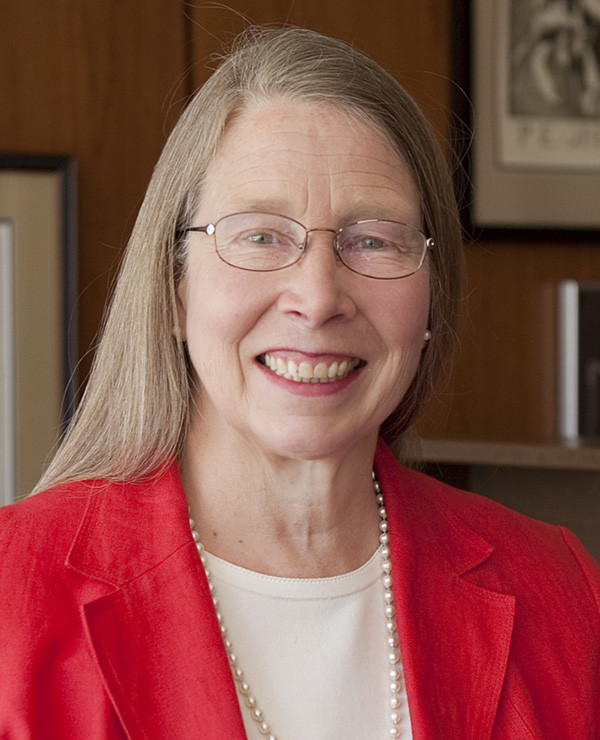
Susan Henry
As the Ronald P. Lynch Dean of CALS from 2000 to 2010, and the first female dean, Henry oversaw a dramatic expansion of undergraduate offerings, including the establishment of four new majors. When she stepped down as dean in 2010, Henry said one of her proudest achievements was successfully gaining accreditation for a CALS undergraduate business program – now the Dyson School of Applied Economics and Management – which has ranked among the top business programs in the country ever since.
Henry also played an instrumental role in the creation of the Weill Institute for Cell and Molecular Biology and helped recruit its founding director, Scott Emr, now the Samuel C. and Nancy M. Fleming Professor of Molecular Biology and Genetics.
“As dean of CALS, Susan’s strong support for our faculty recruitment efforts was critical to the institute’s launch,” Emr said. “Beyond her professional contributions, Susan was a valued mentor and a dear friend. Our frequent meetings provided opportunities to discuss our shared research interests as well as plan the future of the Weill Institute. I deeply miss our time together – especially Susan’s honesty, openness and genuine friendship.”
Henry also stewarded major capital investments during a period of tremendous financial uncertainty. Her tenure as dean included both the Sept. 11, 2001, terrorist attacks and its subsequent economic contraction and the 2008 financial crisis. In spite of those challenges, Henry oversaw completion of the Cornell Teaching Winery, the Riley-Robb Biofuels Laboratory and renovations of Mann Library. She also collaborated with faculty, staff and international partners to establish closer relationships with universities in Europe, Asia and Africa, and dual-degree programs with universities in India.
In her research, Henry pioneered new methodologies for using yeast to understand the genetics of many organisms, including humans, and she made basic discoveries about how cells build their membranes, said Stephen Jesch, who worked as a postdoctoral associate and then senior research associate in Henry’s lab for 15 years.
“Susan was a pioneer in a lot of ways. She was one of the first people to use S. cerevisiae – the same yeast used for baking bread – as a model system for studying biology, and now it’s been used by thousands of researchers all over the world,” said Jesch, now a senior lecturer in molecular biology and genetics. .
For example, roughly 20% of all biopharmaceuticals are derived from S. cerevisiae, including insulin and the vaccines for hepatitis and human papillomavirus.
Among the discoveries Henry made using yeast, one of her most significant is understanding how cells utilize phospholipids – the molecules that make up cell membranes, Jesch said. Henry and her lab unraveled mysteries like how cells know which phospholipids to create, in what amounts and at what times, based on cell growth rates, available nutrients and stress factors. She also defined the “Henry Regulatory Circuit,” the mechanisms cells use to determine whether lipids are used for cell growth or stored as fat, a discovery that has benefited research on human diseases like obesity, diabetes and cancer.
“Susan discovered how all those processes are regulated. It was kind of a tour de force,” Jesch said. “She was one of the smartest people I’ve ever met, and that’s one of the reasons I worked in her lab for so long. I wanted to learn about lipid metabolism, but really, I wanted to learn from Susan. She was one of the founders of this field, and she was also the most generous, kind, loving mentor that you could hope for.”
Henry earned her bachelor’s degree from the University of Maryland in 1968 and her Ph.D. from the University of California, Berkeley, in 1971. She was a postdoctoral fellow at Brandeis University before being hired as tenure-track professor at Albert Einstein College of Medicine and then at Carnegie Mellon University. She came to Cornell in 2000 when she was appointed dean.
Her many recognitions included a merit award from the National Institutes of Health, the Irma T. Hirschl faculty award, membership in a national advisory council of the NIH and chairing an NIH committee focused on research about the health of minority populations.
She was a member of multiple scientific organizations, including the American Association for the Advancement of Science, the Genetics Society of America, the American Society of Biological Chemists and the American Society of Microbiologists. After coming to Cornell, Henry also joined the New York Farm Bureau.
Henry was preceded in death by her husband, Peter Henry. She is survived by her children, Rebecca Alice Henry and Joshua Armstrong Henry, M.S. ‘03, Ph.D. ‘05.
In 2007, Henry and her family established an undergraduate scholarship fund, the Henry Family Undergraduate Scholarship, for CALS students with demonstrated financial need from rural areas, with first preference given to students from New York state. Those who wish to support this scholarship can send a donation to the Henry Family Scholarship, Fund 0004386, Cornell University, Box 37334, Boone, IA 50037-0334.
Krisy Gashler is a writer for the College of Agriculture and Life Sciences.
Media Contact
Get Cornell news delivered right to your inbox.
Subscribe