Kotlikoff among four faculty elected to American Academy of Arts and Sciences
By Susan Kelley, Cornell Chronicle
President Michael I. Kotlikoff and professors Olga Boudker, Cathy Caruth and Francesca Molinari have been elected to the American Academy of Arts and Sciences, the academy announced April 22.
They are among the 252 new members of the academy who were recognized for their excellence and leadership. Founded in 1780 by John Adams, John Hancock and other scholars, the honorary society convenes leaders from across disciplines and perspectives to address significant societal challenges.

Michael I. Kotlikoff
Olga Boudker

Cathy Caruth

Francesca Molinari
“We celebrate the achievement of each new member and the collective breadth and depth of their excellence – this is a fitting commemoration of the nation’s 250th anniversary,” said Academy President Laurie Patton. “The founding of the nation and the academy are rooted in the inextricable links between a vibrant democracy, the free pursuit of knowledge and the expansion of the public good.”
This year’s induction ceremony will take place in October in Cambridge, Massachusetts.
Kotlikoff, a professor of molecular physiology, has served at Cornell for 25 years as a scientist, department chair, dean, provost, and Cornell’s 15th president since March 2025, following eight months as interim president. Previously, he was Cornell’s longest-serving provost, from 2015 to 2024.
Kotlikoff was recruited to Cornell in 2000 as the founding chair of the Department of Biomedical Sciences and chair of the Mammalian Genomics Life Science Initiative in the College of Veterinary Medicine. He served as the Austin O. Hooey Dean of the college from 2007 to 2015. His laboratory’s work in cell signaling and heart repair is internationally recognized and was continuously funded by the National Institutes of Health for more than 35 years.
“Being elected to the academy is a profound honor, and one that carries particular meaning for me at this critical moment for American higher education,” Kotlikoff said. “The academy’s mission to convene minds across disciplines and divides is more important now than ever. I look forward to collaborating with fellow members to continue America’s commitment to scientific discovery and the promotion of evidence-based solutions that benefit us all.”
Kotlikoff earned a B.A. in literature and V.M.D. degree from the University of Pennsylvania and a Ph.D. in physiology from the University of California, Davis.
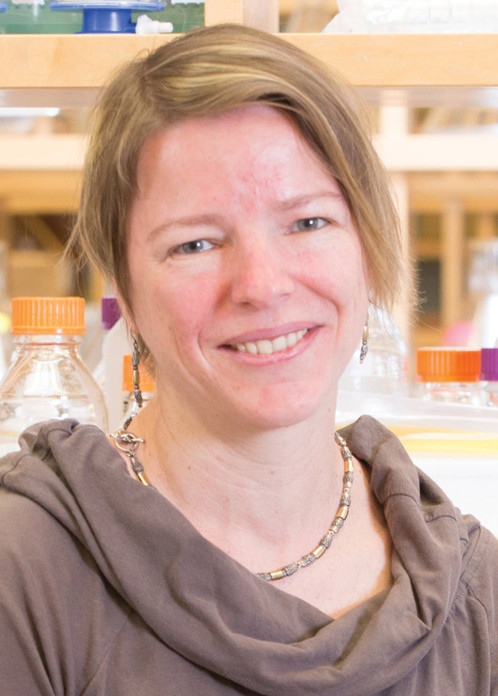
Olga Boudker is professor of biochemistry and biophysics at Weill Cornell Medicine. She is a third-generation scientist and an expert in the molecular study of the brain. Her work centers on understanding how tiny pumps in the brain transport the protein glutamate, which brain cells use to communicate in processes that lead to memory and thought formation. To understand the mechanics of these nanoscopic machines, Boudker’s lab uses ultra-high resolution microscopy and advanced biophysical techniques to “photograph” the pumps and observe their motions.
Her current areas of focus include membranes and membrane proteins, molecular and structural biophysics, and imaging.
Boudker earned a B.S. from Novosibirsk State University (Russia) in 1990; an M.S. from the Weizmann Institute of Science (Israel) in 1993; and a Ph.D. from The Johns Hopkins University School of Medicine in 1999.
Cathy Caruth is the Class of 1916 Professor in the Department of Literatures in English and professor of comparative literature in the College of Arts and Sciences (A&S). She studies ways of conceptualizing trauma, focusing on the languages of trauma and testimony, and is a founder of “trauma studies” in the humanities. She has also written on 19th-century literature, philosophy and literary theory.
She is the author or editor of six books, most recently “Literature in the Ashes of History” (2013) and “Listening to Trauma: Conversations with Leaders in the Theory and Treatment of Catastrophic Experience” (2014). Her books have been translated into 12 languages and she has lectured in 28 countries.
Caruth held professorships at Yale University and Emory University, where she developed an archive of Holocaust testimony and the Nia Project testimony archive. She has held visiting positions at the universities of Cambridge, Agder, Princeton, Toronto and Kansas.
She recently co-launched The Ape Testimony Archive, an interdisciplinary initiative considering language at the intersection of human and nonhuman experience, and works with Laurent Dubreuil, Distinguished Professor of Arts and Sciences (A&S), on art and language in bonobos.
Caruth earned a B.A. from Princeton University in 1977 and a Ph.D. in comparative literature from Yale in 1988.
Francesca Molinari is the H.T. Warshow and Robert Irving Warshow Professor in Economics (A&S). She is also a professor of statistics and data science in the Cornell Bowers Computing and Information Science. She joined Cornell as an assistant professor of economics in 2003.
She researches both theoretical and applied econometrics. Her theoretical work focuses on the study of identification problems and on proposing new methods for statistical inference in partially identified models and in the study of fairness-accuracy properties of algorithms. In her applied work, she has focused primarily on the analysis of decision-making under risk and uncertainty. She has worked on estimation of risk preferences using market level data, and on the analysis of individuals’ probabilistic expectations using survey data.
Molinari is the author of “Random Sets in Econometrics” (2018) and numerous journal articles. She is a fellow of the Econometric Society and of the International Association for Applied Econometrics. A former joint managing editor of the Review of Economic Studies, she currently serves as editor at the Journal of Political Economy.
She earned three degrees in economics: a B.A. in 1997 from the Università degli Studi di Torino and an M.A. in 1998 from CORIPE Piemonte, both in Italy and a Ph.D. in 2003 from Northwestern University.
There are now 178 Cornell-affiliated members of the academy, including geneticist and Nobel Prize winner Barbara McClintock, Class of 1923, M.A. 1925, Ph.D. 1927 (elected in 1959); physicist and Nobel Prize winner Hans Bethe (1962); chemist and Nobel Prize winner Roald Hoffman (1971); astronomer Carl Sagan (1978); and Provost Kavita Bala (2025).
Media Contact
Get Cornell news delivered right to your inbox.
Subscribe