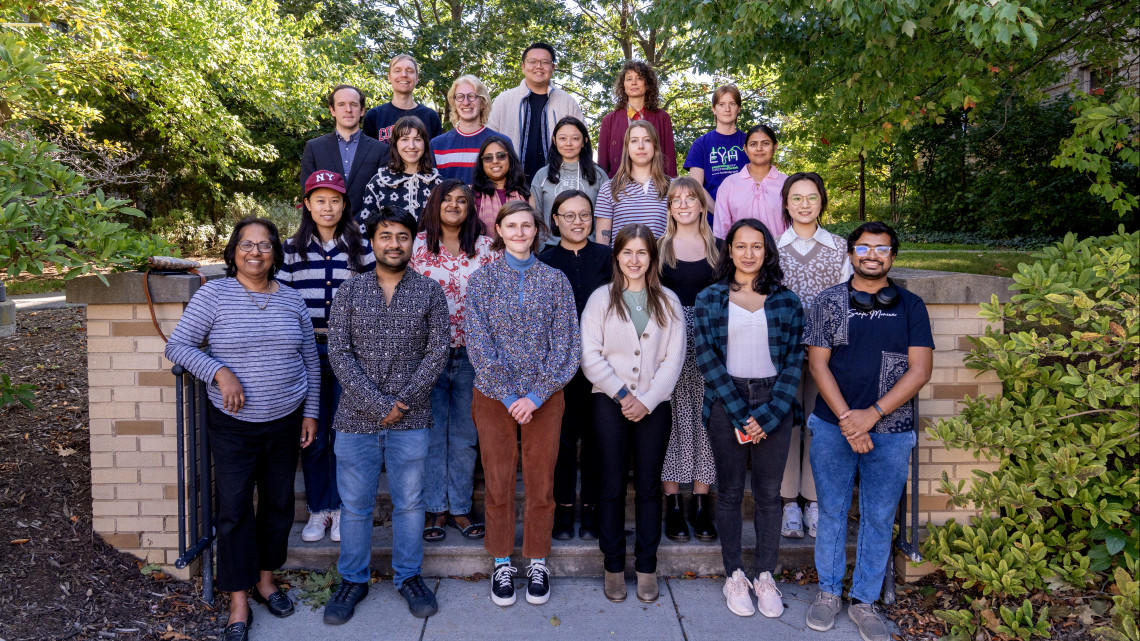
Each academic year, the Center for Teaching Innovation's Graduate Teaching Fellows supports graduate teaching at Cornell. The program celebrated its 15th anniversary with its 2025-2026 cohort, above.
News directly from Cornell's colleges and centers
CTI Graduate Teaching Fellows program marks its fifteenth year
By Carolyn Keller
The professors of the future are in graduate school now, and the Center for Teaching Innovation’s Graduate Teaching Fellows program is marking fifteen years of supporting future faculty.
Each year, the program hosts a cohort of graduate teaching fellows as they deepen their teaching practice and support their graduate teaching colleagues across the university. The 2025-2026 graduate teaching fellows call fifteen different departments home, across four colleges.
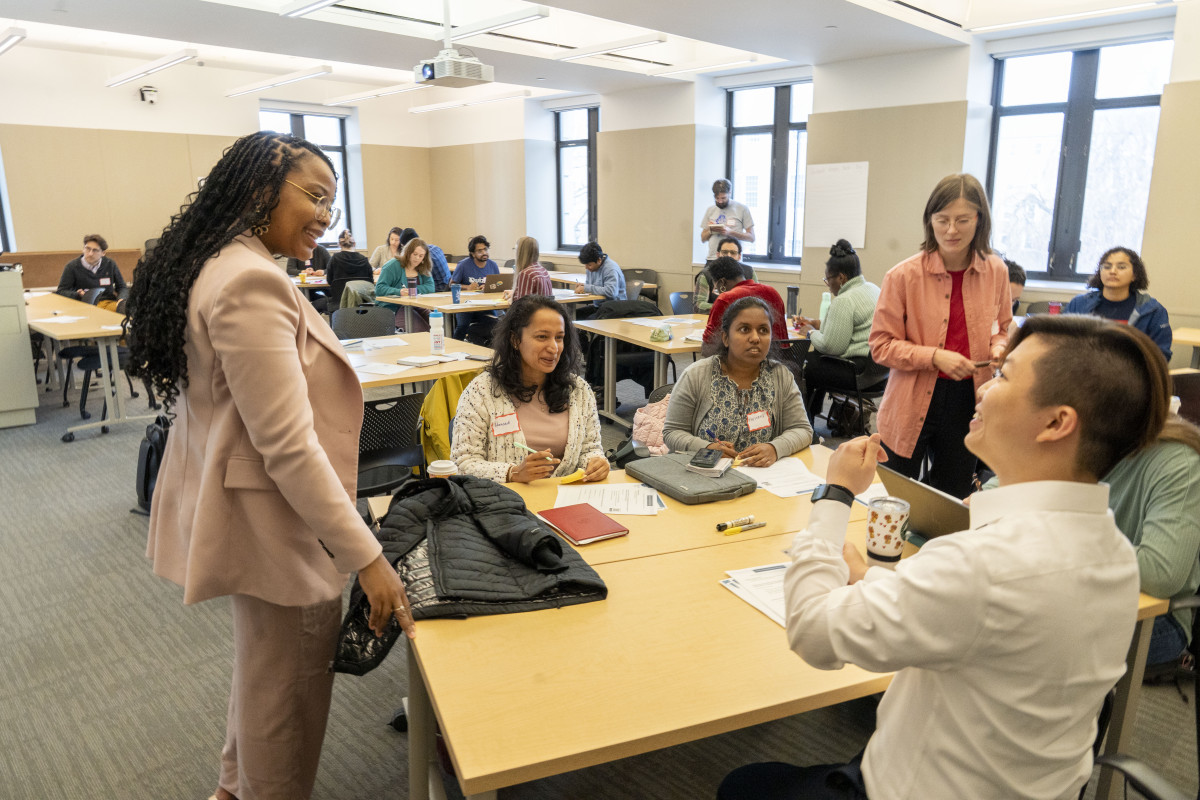
For 15 years, the CTI graduate teaching fellows have organized workshops, institutes and a conference for graduate students at Cornell who are interested in teaching.
While graduate students develop expertise in a specific area of research, they’re also often responsible for teaching labs and discussion sections, and eventually their own classes. Depending on their program and discipline, they may have varying degrees of support as they step into the role of teacher. As many aspire to become the next generation of professors, strong graduate training helps them prepare.
“The core goal was to create a cohort of advanced graduate students who could take on mentoring and leadership roles within the center and help support graduate teaching programming,” said Derina Samuel, CTI’s associate director of graduate programming.
The CTI graduate teaching fellows meet biweekly during the academic year, design and implement the graduate teaching institutes, which are made up of a series of workshops, and organize the annual University-Wide teaching conference. They’re also CTI liaisons in their departments, and are encouraged to start teaching conversations in their departments.
“I have had the opportunity to see and reflect on what thoughtful, effective pedagogy can look like,” said George Du Laney, a PhD candidate in the Department of Chemistry and Chemical Biology in the College of Arts & Sciences, and incoming senior lead fellow for 2026-2027. “The community and resources have challenged and inspired me to consider the principles from which I teach, and this experience will be invaluable to me in my future teaching and mentorship roles."
Consistent Growth

Derina Samuel, CTI's associate director for graduate programming, has shepherded the CTI Graduate Teaching Fellows program for the past 15 years.
Samuel has shepherded the program since its first application cycle, for the inaugural spring 2011 cohort.
“I came from a fellows program myself as a graduate student, and I knew how transformative that experience was,” said Samuel, who graduated from Syracuse University with her PhD in biochemistry.
Initially the program focused on individual workshops but it was the pandemic that pushed it toward the institute model that forms its core today. During the initial lockdown, attendance at standalone Zoom workshops dropped significantly.
“Students needed structure, purpose, and continuity,” Samuel said. “The institutes gave graduate students a theme, a cohort, and something concrete to work toward. That shift made a big difference.”
The institutes include a series of four workshops held over four weeks, with recurring themes that center around pedagogy—such as active learning, course design, and essentials of learning— or preparing graduate students for the academic job market, such as building components of a teaching portfolio.
I-An “Amy” Su, PhD ’25, now an assistant professor of cognitive psychology at the University of Washington–Tacoma, still remembers leading her first workshop.

I-An "Amy" Su, PhD '25, speaks as a panelist at the University-Wide Graduate Teaching Conference that the fellows organize each year.
“I was extremely nervous—I could not imagine being in charge of a one-hour teaching session as an international graduate student, especially as someone who lacked confidence in public speaking in teaching settings,” Su said.
She credits the program’s careful scaffolding and peer mentorship as helping her to become more confident in the classroom. “These experiences not only strengthened my teaching skills but also reshaped my identity as an educator.”
Samuel notes that leading a workshop outside one’s discipline can offer new perspectives on teaching, as well as valuable practice.
“The experience has had a real impact on their careers,” Samuel said. “Many fellows have told me that designing and leading workshops outside their discipline gave them confidence during job talks. Some were hired specifically because of the teaching innovations they could speak about—sometimes even more than their disciplinary research.”
Creating Connections
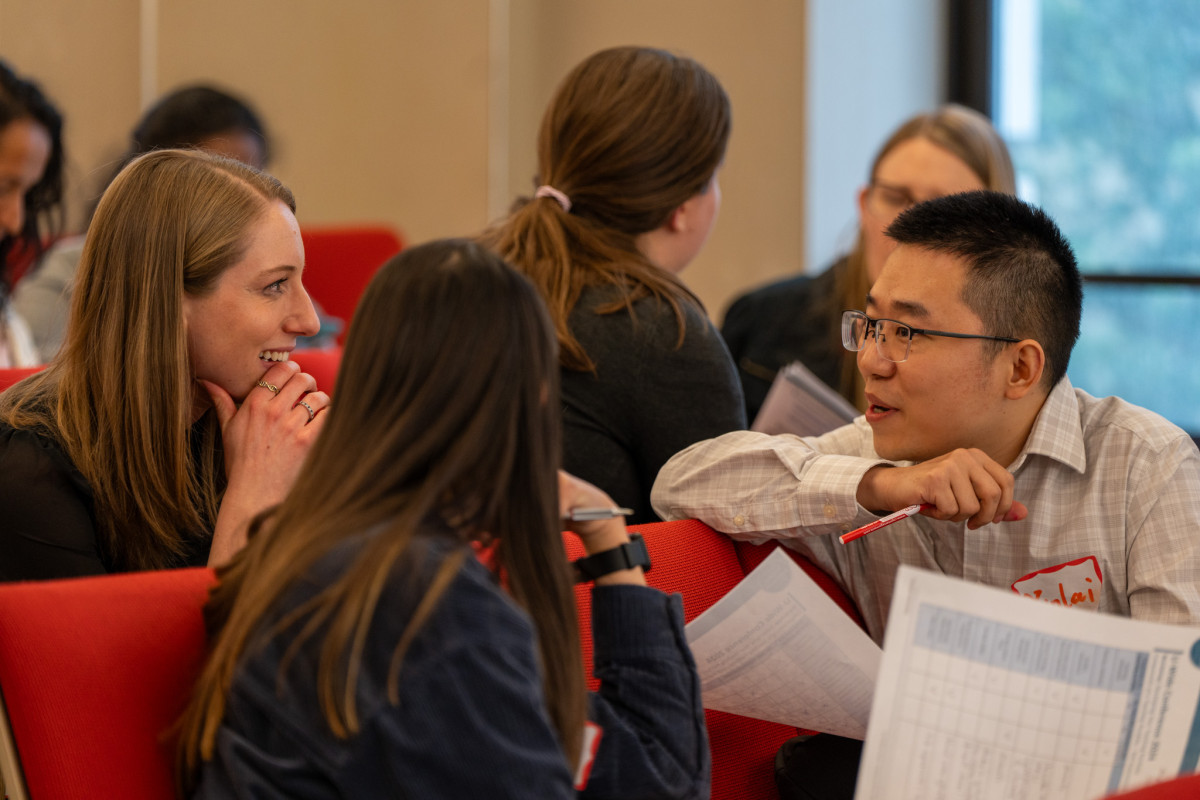
CTI Graduate Teaching Fellow Kim Webb, PhD '24, at left, converses with a fellow graduate student at the annual University-Wide Graduate Teaching Conference.
Samuel noted how impressed she is, year after year, at the quality of the fellows’ work. In the program’s early days, when CTI was still the Center for Teaching Excellence, fellows would co-develop workshops with Center staff. Over time, Samuel has shifted the responsibility of running the workshops to the fellows themselves, who design them independently, then she reviews the materials.
“That shift—telling them ‘we trust you’—has led to tremendous growth,” Samuel said. “Every cohort comes in thinking they don’t know enough—and then they realize they absolutely do. Once they realize they can do this work, the ownership really transforms them and the program.”
That sense of ownership, and the ongoing interdisciplinary collaboration, has helped the fellows build their leadership and mentoring skills, develop their perspectives on teaching, and form connections that will follow them post-graduation.
“It was so rewarding at Cornell to connect with other fellows who experienced the same teaching challenges I faced in graduate school,” said Kim Webb, PhD ’24, who’s now an assistant professor of medicine at the University of Pittsburgh School of Medicine. “Now, those same peers are helping me navigate life and teaching as an early-career faculty member.”
Webb, who was a fellow for three years, added that she’s “already seen how the program has impacted my approach to teaching. When I developed my first course from scratch, I had a clear sense of where to begin as a result of the training and experience I gained as a fellow.”
Finding Community
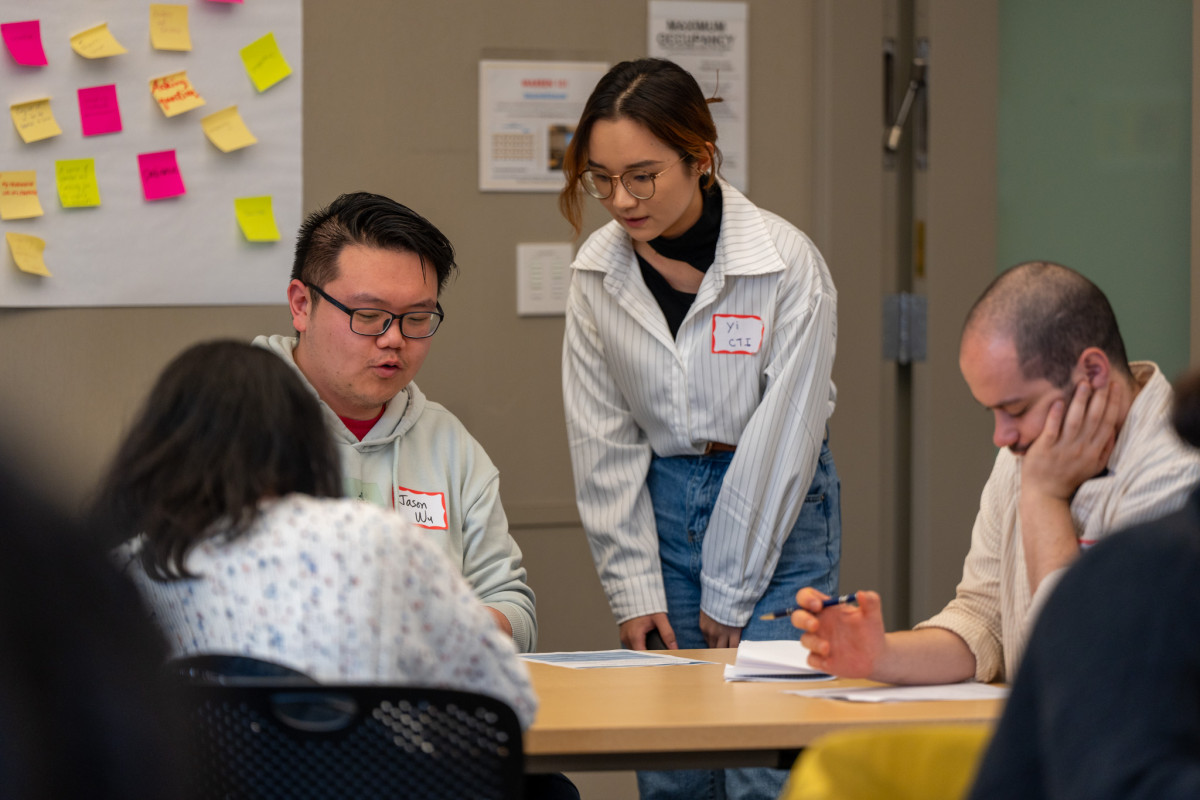
At right, Yi Lu, PhD '26, oversees a session at the annual University-Wide Graduate Teaching Conference, held in April. Lu was senior lead CTI Graduate Teaching Fellow for the 2025-2026 academic year.
Graduate students face very real pressures, including their own research and funding constraints and publication pressure as they work to develop field-specific expertise. Finding community with graduate colleagues who are committed to deepening their teaching practice across disciplines has been a consistent draw for past and present fellows alike.
“In a university where it's easy to get siloed into one's own discipline, CTI created space to learn from and form genuine friendships with people from a remarkably diverse set of fields, an experience I've found deeply rewarding,” said Brian Haggard, a PhD candidate in the Department of Sociology (A&S).
These connections have also provided past fellows with support networks for life after graduation. In recent years, fellows have also organized a teaching portfolio institute geared toward graduate students wanting to develop and polish materials for the academic job market.
“[The Fellows program] has not only provided additional training beyond my department but has also supported me throughout my job application process, offering valuable feedback on cultivating leadership, navigating the academic job market, and connecting with colleagues from diverse fields and educational backgrounds,” said Yi Lu, PhD ‘26.
Lu joined the Fellows program in 2023 and was a senior lead fellow in 2025-26. She’ll be joining the faculty of Western Kentucky University in the fall. “I am grateful to have been part of this community during its continued growth.”
Looking to the Future
The CTI Fellows have extended that community beyond Cornell, into first jobs and contributions to the field of graduate teaching.
“Teaching has always been a passion of mine, so when I first joined Cornell as a graduate student, I started searching for a community who shared my enthusiasm for it,” said Lauren Genova, PhD ’20, a former fellow who’s now an associate professor of chemistry & biochemistry at the University of Delaware.

The editors of "Teaching Gradually" met in 2023, post-pandemic, to celebrate the collection's 2021 publication in person. From left are Derina Samuel, associate director of graduate programming at the Center for Teaching Innovation; John Wyatt Greenlee, PhD ’20; Lauren Genova, PhD '20, and Kacie L. Armstrong, PhD ’20.
During and after her fellows experience, Genova collaborated with Kacie L. Armstrong, PhD ’20, and John Wyatt Greenlee, PhD ’20, two of her colleagues in the CTI Fellows program, and Samuel on the edited volume, “Teaching Gradually: Practical Pedagogy and Classroom Strategies for Graduate Students by Graduate Students.”
Published in 2021, “Teaching Gradually” features the voices and perspectives of 51 graduate students in the United States and Canada and focuses on the graduate teaching experience.
For Dorota Szlek, PhD ‘26, a recent fellow who will be joining the Fashion Institute of Technology –SUNY as an assistant professor of biomaterials in the fall, the CTI Fellows program was “fundamental in shaping me as an educator, not only by providing opportunities to hone the craft of teaching, but also by embracing – and exposing us to – changes in pedagogy approaches, such as the influence of AI.”
Samuel says she’d love to see the program “move beyond workshops and toward department-level change. Fellows are CTI liaisons, and we’ve started encouraging them to host introductory teaching workshops within their departments, sometimes with me co-facilitating.”
In the long-term, Samuel said her goal is to develop a Graduate Teaching Academy that incorporates classroom observation and deeper reflection and peer mentorship possibilities that can help graduate students develop teaching skills in balance with their research as they look to careers post-graduation.
“The fellows bring a lot of enthusiasm, excitement, and love of teaching into their work,” Samuel said. “It’s always wonderful to see a new group bring that energy into the room. All of them are so passionate about teaching, and that’s why they want to be here.”
Media Contact
Get Cornell news delivered right to your inbox.
Subscribe