Schaffer elected dean of faculty
By David Nutt, Cornell Chronicle
Cornell’s faculty members have elected Chris Schaffer, the Meinig Family Professor of Engineering in the Cornell Duffield College of Engineering, dean of faculty. He will begin his three-year term on July 1.
Schaffer will replace Eve De Rosa, the Mibs Martin Follett Professor in Human Ecology in Cornell Human Ecology, who has served as faculty dean since 2021.
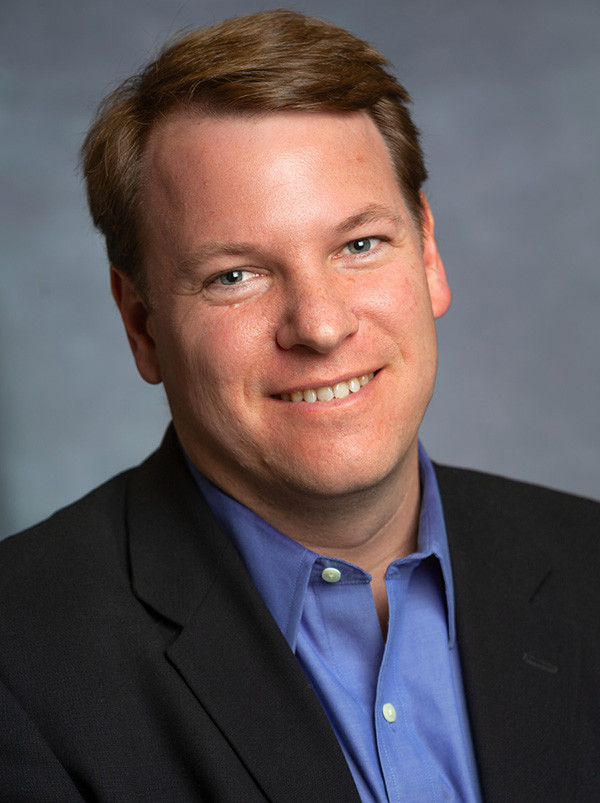
Chris Schaffer
“It has been a privilege to serve as dean of faculty,” De Rosa said. “Chris Schaffer has been an engaged partner in faculty governance, and we have been working closely to support a smooth transition as he takes on leadership of the faculty.”
The dean of faculty represents the interests of the faculty to Cornell’s trustees, administration, students, employees and alumni. The dean also ensures the faculty is fully informed about campus issues and the concerns of each university constituency.
As faculty dean, one of Schaffer’s primary focuses will be addressing the emerging crisis in higher education, he said, specifically the external pressures due to changes in federal government policy, and a declining public trust in “the research and scholarship we conduct and the education we provide.”
“I’m interested in trying to help make the case to the broad public about the value of what we do in higher education, what we do specifically at Cornell, in terms of the research, teaching and graduate training missions, and the public engagement, outreach and extension missions that I think are, among many of our peers, unique to Cornell,” he said.
Part of that solution requires engagement with the public.
“We need to do more to connect with the communities whose research, teaching and service work we intend to contribute to and help,” Schaffer said.
Schaffer’s efforts in the classroom and across campus have earned numerous awards from Duffield Engineering, the American Society of Engineering Education and other organizations.
He has incorporated innovative active-learning approaches into his courses. After realizing that Chat GPT could easily solve the take-home problem sets in his quantitative science engineering class, he had his students each give a 20-minute oral defense of their homework solutions – a way of adapting to the changes in the teaching environment in light of highly capable generative artificial intelligence.
In addition to his interest in pedagogical innovation, Schaffer has led programs that enhance STEM education through graduate student partnerships with local schools and community institutions. These partnerships include including working with the Ithaca Sciencenter to build an exhibit on biomedical engineering that will travel to mid-sized museums across the U.S., a project funded by the National Institutes of Health.
Schaffer has been equally invested in teaching and promoting science policy. In 2012, he was awarded a science and technology policy fellowship from the American Association for the Advancement of Science that enabled him to spend a sabbatical year as a science policy advisor for Sen. Edward Markey of Massachusetts in the U.S. Congress. Upon returning from that sabbatical, Schaffer was motivated to launch several programs that help scientists-in-training who want to contribute to or influence policy decision-making.
“I’ve long been interested in science policy,” he said. “I see the dean of faculty job as applying that interest more broadly to higher education policy.”
After his sabbatical, Schaffer created a project-based learning class in which teams of STEM students explore an issue of their choosing that sits at the intersection of science and public policy, and then strategize ways to effect policy change. That course led to a number of public engagement and outreach activities, many of which are housed in the student group Schaffer advises, the Advancing Science and Policy Club. Two of the most successful projects have been Vaccination Conversations with Scientists, a nonprofit that trains students to have bilateral conversations with community members about the science behind vaccines, and the McClintock Letters initiative, which led to a national op-ed writing campaign to boost public awareness about the value of federally-funded research in the U.S.
Schaffer sees these programs as part of “an ecosystem of really engaged science policy activity here at Cornell.”
A trained physicist, Schaffer earned his bachelor’s degree from the University of Florida in 1995 and his doctorate from Harvard University in 2001, and was a postdoctoral researcher in physics and neuroscience at University of California, San Diego, from 2001-05. He joined the Cornell faculty in 2006. He and his partner, Nozomi Nishimura, associate professor of biomedical engineering in Duffield Engineering, jointly run a research lab that studies the complicated multicellular actions that drive symptoms of neurological disorders, such as Alzheimer’s disease and microvascular stroke, with the aim of developing new therapies, treatments and diagnostics.
Schaffer has been a longtime member of the Faculty Senate and served a three-year term as associate dean of the faculty. He was the senate-nominated representative to the Campus Expressive Activity committee in 2024 and the universitywide committee on reopening research and scholarship activities following the COVID-19 shutdown. He was Cornell’s faculty representative to the National Academies Action Collaborative to Prevent Sexual Harassment in Higher Education for the past five years. He has also been deeply engaged with undergraduate student life, serving as faculty-in-residence in Mary Donlon Hall for six years, and now living in McClintock Hall, where Nozomi serves as faculty-in-residence.
“I’ve long been interested in and engaged with the broad range of issues necessary to support Cornell University’s institutional missions of research and scholarship, of undergraduate and graduate education, and of outreach, extension and community engagement” he said.
Media Contact
Get Cornell news delivered right to your inbox.
Subscribe