News directly from Cornell's colleges and centers
Precollege Partnerships Open Pathways for Local Students
By Shelley Preston
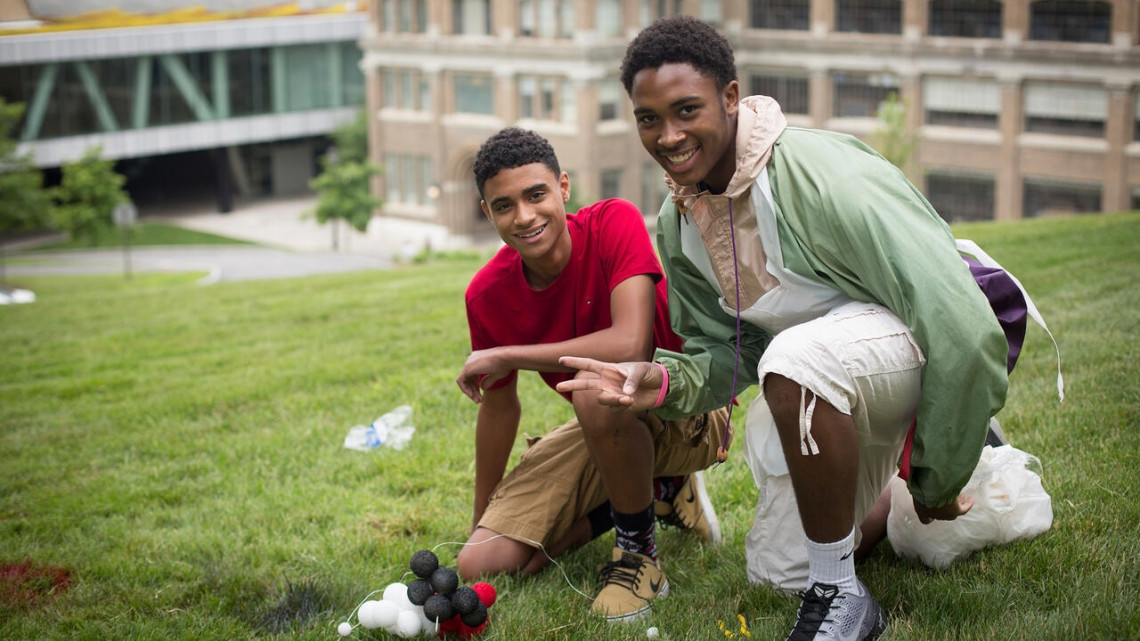
When Aaron Martinez, then an Ithaca High School junior, arrived on Cornell’s campus last summer for the six‑week architecture program, he wasn’t sure what to expect. He had never lived away from home, never worked in a college studio, and never been surrounded by students from around the world. By the end of the first week, he was spending full days drafting and designing, returning to his dorm at 9 p.m.—only to keep working.
“I really loved how intense the program was,” he said. “The scope, the scale, the idea of creating livable environments.” By the time he completed the program, he knew that he wanted to pursue a career in architecture. This fall, he’ll begin an architecture degree at Syracuse University.
Aaron’s path to Cornell Precollege began with the Science and Technology Entry Program (STEP), a New York State–funded initiative that prepares middle and high school students from limited-income households for college and/or introduces students to STEM fields that may not be available in their home districts.
Cornell’s David M. Einhorn Center for Community Engagement houses the STEP program, which partners closely with the School of Continuing Education to identify students ready to enroll in Cornell University courses through Precollege Studies. SCE guides them through registration and provides Provost Scholarships as part of its support for government and nonprofit college‑readiness initiatives. SCE offers similar assistance to students in the Upward Bound program, also based in the Einhorn Center, expanding pathways to Cornell for young people across the region and strengthening the university’s long‑standing commitment to educational access.
A mission rooted in community impact
Cornell’s commitment to local education is broad and longstanding, said Jennifer Tavares, Cornell’s director of Community Relations. She describes the university’s work with STEP, Upward Bound and SCE's Precollege Studies as part of a larger ecosystem of programs designed to strengthen regional educational opportunities.
Cornell, she said, views its public impact mission as ensuring “a significant benefit to the local community and the region,” including through programs that expose high schoolers to academic opportunities, mentorship, and hands‑on learning. These efforts represent “a substantial community benefit…in‑kind work and support” that faculty, staff, and students contribute to area schools.
STEP: Identifying talent early--and helping it flourish
Cornell’s STEP program works with students from 7th through 12th grade, providing academic enrichment and college readiness support. By the time students reach their junior year, STEP advisors know them well enough to identify who is ready for the rigor of a Cornell course.
“We can pretty accurately identify which students will probably be successful,” said Ray Hage, assistant director of STEP the Einhorn Center. Through Provost Scholarships administrated by SCE, STEP students can enroll in SCE’s commuter precollege courses at no cost.
For students like Aaron, the experience is transformative— academically and personally.
“They come out and think, ‘Oh, I really can do this,’” Ray said. “Showing an A in a Cornell course is one of the biggest indicators that the student will be ready for the rigors of college academics.”
Upward Bound: A bridge from rural schools to Cornell classrooms
For students in Tompkins and surrounding rural counties, Cornell’s Upward Bound program provides another pathway to college through SCE’s Precollege Studies Program. The program’s advisors work year‑round in local schools, supporting students academically and identifying opportunities like Cornell’s summer courses.
The progression is powerful, said Upward Bound director Liz Millhollen. Students first build comfort on Cornell’s campus through Upward Bound’s six‑week summer program, then take the next step into true college coursework.
“With the opportunity to take a college course with the Precollege program, they then also feel like they can succeed on a college campus,” Millhollen said.
She points to students like Diella Nino, a Groton High School senior who enrolled in an engineering course. “She jumped at it right away,” Millhollen recalled. Nino was Groton’s 2026 valedictorian and earned a full scholarship to St. John Fisher’s Wegmans School of Nursing.
In the past six years, three Groton valedictorians have been Upward Bound students — many of whom also completed Cornell precollege courses.
“These students don’t need a handout,” Millhollen said. “They need access. When you remove barriers, they rise to the occasion.”
Partnerships for Higher Education Access
Both STEP and Upward Bound leaders emphasized that financial barriers — application fees, tuition, transportation, and the need to work summer jobs — can prevent students from participating in precollege programs. The School of Continuing Education has begun addressing these challenges by underwriting application fees for local students and working with partners to streamline scholarship pathways.
By directing Precollege Studies financial support to students who have spent years preparing for college through structured university‑readiness programs, SCE strengthens the impact of those initiatives and helps make them more attractive to future participants.
It also helps SCE to select great students for its Precollege Programs. SCE’s Senior Associate Dean of Academic Affairs, Daniel Kratochvil, said, “STEP and Upward Bound are the source of some of our best students. We’re extremely pleased to play a role in supporting high schoolers who are aspiring first generation university students.”
Contributing to Local Education
SCE’s work with STEP and Upward Bound is part of a broader university effort to strengthen local educational partnerships—from Big Red Buddies to the Young Engineers and Scientists program to new articulation agreements with community colleges.
SCE is also committed to widening access to Cornell academics by offering for‑credit Cornell courses to local students during the fall and spring semesters, allowing them to engage directly with Cornell faculty, participate in undergraduate‑level coursework, and earn credits that strengthen their academic trajectories.
For SCE, the goal is simple: more local students accessing Cornell’s academic resources, more stories of success, and more pathways into higher education.
“We want to get more local students involved with Cornell,” said SCE dean Mary Loeffellholz, “and give our partners credit for the great work they’re doing in fostering high schoolers.”
Media Contact
Get Cornell news delivered right to your inbox.
Subscribe