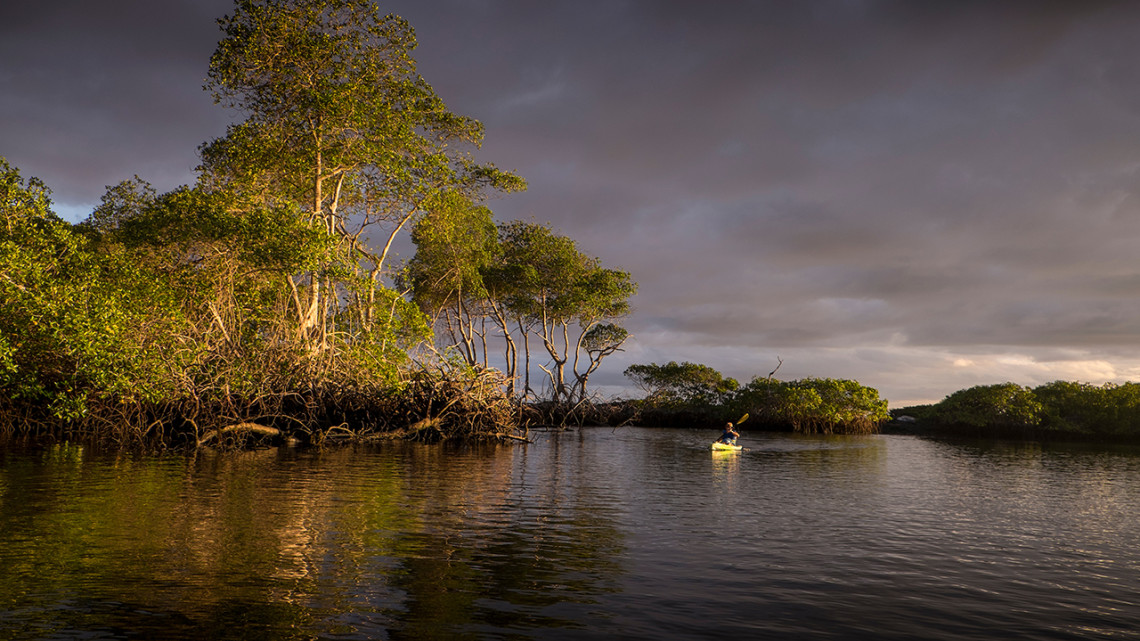
Mangrove trees at sunset, Fernandina Island, Galapagos. Photo: Betty Sederquist/Adobe Stock
News directly from Cornell's colleges and centers
Yang Center for Wildlife Health welcomes three postdoctoral fellows tackling One Health challenges
By Melisa DeGroot
The 2026 cohort of Cornell K. Lisa Yang Postdoctoral Fellows in Wildlife Health is poised to restore mangrove ecosystems in the Galápagos, improve chronic waste disease surveillance, and protect the pollinators that underpin global food systems. By integrating approaches spanning genomics, ecology, biostatistics, and beyond, these fellows aim to generate practical solutions to complex One Health problems.
The Cornell K. Lisa Yang Center for Wildlife Health supports early-career researchers who work with Cornell faculty members and external partners to translate cutting-edge science into real-world impact. Through their research programs, the 2026 fellows are advancing new tools and insights to inform conservation strategies, strengthen disease management, and promote sustainable systems that benefit wildlife, people, and the planet.
Read about these post doctoral projects at the Cornell K. Lisa Yang Center for Wildlife Health.
Media Contact
Get Cornell news delivered right to your inbox.
Subscribe