Chemistry professor honored for work on biodegradable polymers
By Linda B. Glazer
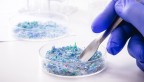
Geoffrey Coates, Tisch University Professor of chemistry and chemical biology in the College of Arts and Sciences (A&S), was named a co-winner of the Balzan Prize for his work transforming renewable feedstocks and recovered carbon dioxide into high-performance, degradable and recyclable materials.
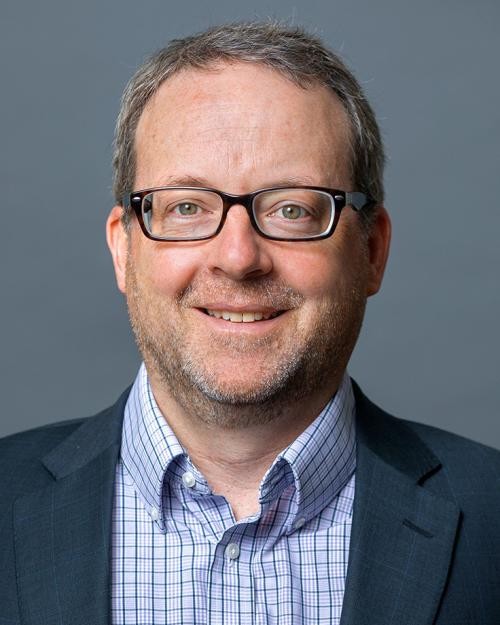
Geoffrey Coates
The International Balzan Foundation awards four annual prizes in subject areas that change each year. Coates received the award in the field of natural sciences under the category of “Biodegradable Polymers from Renewable Sources.” Each subject prize is valued at about $930,000, half of which must be allocated to research projects carried out by young scholars and scientists.
Coates’ teaching and research interests involve science at the interface of organic, inorganic and materials chemistry. The broader impacts of his research include benign polymers and chemical synthesis, the utilization of renewable resources, and materials’ safe and economical energy storage and conversion.
“I am deeply honored to receive the Balzan Prize,” Coates said. “I see it as recognition of a collective effort over the past 29 years, made possible by Cornell’s support and by the remarkable students, postdoctoral researchers, colleagues and collaborators with whom I have had the privilege to work.”
The award committee cited Coates and his co-winner, Marc A. Hillmyer of the University of Minnesota, “for their pioneering and collaborative development of sustainable polymers, combining molecular design and catalysis to transform renewable feedstocks and recovered carbon dioxide into high-performance, degradable and recyclable materials, and for advancing these discoveries from fundamental science to industrial materials and technologies,” the International Balzan Foundation said.
“Geoff’s recognition is an exceptional honor for an exceptional scientist. He is one of the most creative and influential polymer chemists of his generation, and his work has fundamentally reshaped how we think about sustainability in materials science,” said Tristan Lambert, the William T. Miller Professor of Chemistry and Chemical Biology and chair of the Department of Chemistry and Chemical Biology (A&S). “His work has moved the field from promising ideas to real, industrially relevant solutions. It’s the kind of achievement that comes from decades of rigorous, imaginative science, and we are enormously proud to count him as a colleague.”
Coates is especially grateful for the opportunity the prize provides to support younger researchers and pursue ambitious new questions in sustainable plastics. “The award will help us build on this work in ways that are both scientifically adventurous and beneficial to society,” he said.
Coates has received a long list of honors for his work, including the 2026 Benjamin Franklin Prize, the National Academy of Sciences Award for the Industrial Application of Science, the Eni Award, the Gustavus John Esselen Award, the Newcomb Cleveland Prize and the Presidential Green Chemistry Challenge Award.
He is a member of the National Academy of Sciences, the National Academy of Inventors and the American Academy of Arts & Sciences.
Linda Glaser is news and media relations manager for the College of Arts and Sciences.
Media Contact
Get Cornell news delivered right to your inbox.
Subscribe