Applied physicist wins Packard Fellowship to advance slidetronics
By Diane Tessaglia-Hymes
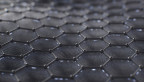
Kenji Yasuda, assistant professor in the School of Applied and Engineering Physics has received a 2026 Packard Fellowship for Science and Engineering from the David and Lucile Packard Foundation. The award honors his groundbreaking work in van der Waals heterostructures, stacks of atomically thin materials that host emergent quantum phenomena at their interfaces.
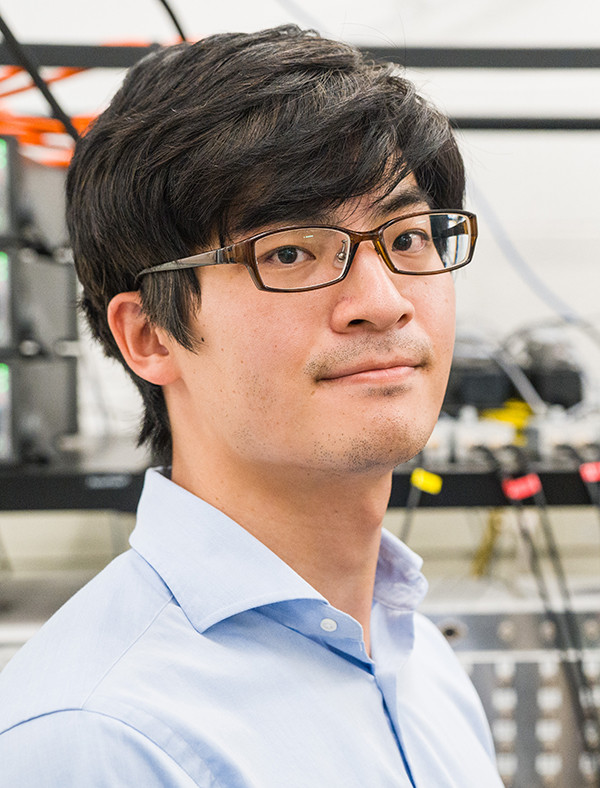
Kenji Yasuda
Yasuda, in the Cornell Duffield College of Engineering, is one of only 20 researchers in this year’s class of Packard fellows, announced Oct. 15. The fellowship aims to allow the nation’s most promising early-career professors to pursue their science and engineering research with few funding restrictions; it comes with $985,800 in unrestricted funds distributed over five years.
“What is exciting about supporting researchers at this early stage of their career is that some of their most important discoveries are impossible to anticipate,” said Richard Alley, chair of the Packard Fellowships for Science and Engineering Advisory Panel. “This year’s fellows combine deep expertise with the curiosity and ambition to take their fields into entirely new directions.”
A central focus of Yasuda’s work is slidetronics: using electrical voltages to slide atomically thin layers relative to one another, reshaping their atomic arrangements and controlling their electronic properties. His group investigates these effects in van der Walls heterostructures and how sliding can be coupled to ferroelectricity, magnetism and superconductivity, linking atomic motion and electronic states to fast, energy-efficient memory and reconfigurable electronics.
“Kenji’s research embodies the unique spirit of our school, where fundamental physics and engineering innovation advance hand in hand,” said Chris Xu, director of the School of Applied and Engineering Physics at the Duffield Engineering. “This honor reflects both his accomplishments and extraordinary promise, and will give him the freedom to pursue bold new ideas at the frontiers of quantum science.”
Yasuda joined the faculty in 2024 after a postdoctoral appointment at the Massachusetts Institute of Technology, where he pioneered the field of artificial ferroelectrics based on van der Waals heterostructures.
“I am deeply honored to receive the Packard Fellowship,” Yasuda said. “I am extremely grateful to my students, collaborators and colleagues, whose contributions made the exciting research possible. With the Packard Fellowship, we hope to pursue ambitious ideas, including controlling more exotic quantum states, understanding friction and motion at the atomic scale, and exploring potential device applications.”
Recent Packard fellows in Duffield Engineering include Peter McMahon, associate professor in the School of Applied and Engineering Physics (2021); Kirstin Petersen, associate professor in the School of Electrical and Computer Engineering (2019); Ilana Brito, associate professor in the Meinig School of Biomedical Engineering (2017); and the late Lena Kourkoutis, associate professor in the School of Applied and Engineering Physics (2014).
Diane Tessaglia-Hymes is communications specialist for Cornell Duffield College of Engineering.
Media Contact
Get Cornell news delivered right to your inbox.
Subscribe