News directly from Cornell's colleges and centers
From farm to kitchen, Ficio is teaching robots about food
By Syl Kacapyr
Whether it’s an apple hanging from a tree or a potato sitting on a chopping block, Ficio wants robots that can think about food the way people do.

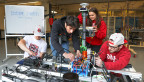
Ficio founder Youhanna Meleka, M.Eng. ’26 (middle) demonstrates the FieldSorter technology at an orchard.
Ficio, a startup founded by Youhanna Meleka, M.Eng. ’26, is developing an AI platform for the food supply chain that can run on different machines and tackle very different jobs – from sorting apples in an orchard to turning potatoes into french fries.
One of the startup’s first technologies under development is FieldSorter.
The FieldSorter system rides through orchard rows and uses computer vision to identify and sort apples with defects such as bruises, punctures or clipped stems. Rather than sending harvested fruit to a packing house and waiting months in controlled storage to determine which apples can be sold as fresh fruit, the system can make that determination in the field. It also records each apple’s grade and links the information to the tree where it was grown, giving farmers a new source of data about their orchards.
“Growers spend a lot of time and money finding out which apples are market-ready and which aren’t,” Meleka said. “We’re helping them make that determination at harvest rather than months later in a packing house.”
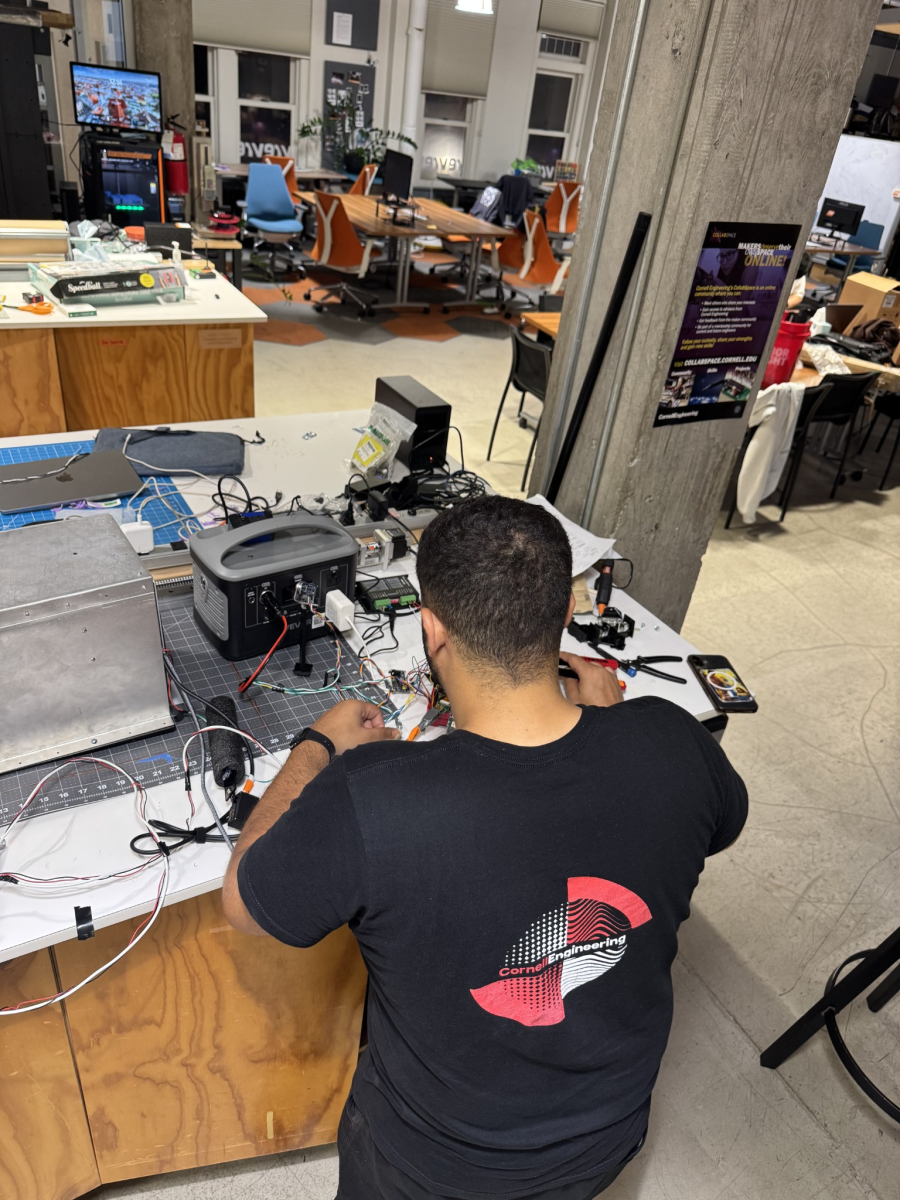
Youhanna Meleka, M.Eng. ’26, works on technology for his startup, Ficio, at Rev: Ithaca Startup Works.
Ficio demonstrated the technology earlier this year at the Cornell AgriTech campus in Geneva, New York, where it was presented to about 300 growers. The company is now working with farms in Ontario and Wayne counties as it prepares for more field pilots and continues refining the system based on feedback.
“Ficio’s technology is very interesting and has the potential to save apple farmers considerable resources,” said Zach Shulman, director of Entrepreneurship at Cornell. “Youhanna is passionate about pursuing the startup and has been making solid connections with researchers and farmers.”
Another Ficio product is using the same AI platform to help kitchens.
FicioPrep is a robotic station engineered to automate food preparation in large-scale eateries, where workers can spend hours chopping, slicing and dicing ingredients for thousands of meals. FicioPrep uses computer vision to recognize ingredients and assess the quality of potatoes before autonomously preparing them into a desired cut – either fries or chips. Meleka said the system will eventually be able to handle a range of vegetables, prepare ingredients on demand and even self-clean from the inside.
“The vision is food prepared fresh, on demand, rather than a person chopping large quantities of food hours in advance,” said Meleka, who demonstrated FicioPrep to managers at Cornell Dining to continue gathering feedback on the prototype. “It would also keep track of how much food is being processed, providing kitchen managers with data about their operations.”
From Cairo to Cornell: A personal mission to improve food supply
For Meleka, Ficio’s mission is rooted in a problem he has been thinking about since childhood.
“I’ve seen food scarcity firsthand growing up in Cairo, Egypt, where in some places food isn’t always abundant,” said Meleka, who gained a background in logistics and manufacturing as a student at Pennsylvania State University and as a global supply manager at Tesla. “There is waste happening throughout the supply chain and our goal is to find a way to get food from the farm to the fork with the least amount of waste, which would then yield improvements in cost and quality.”
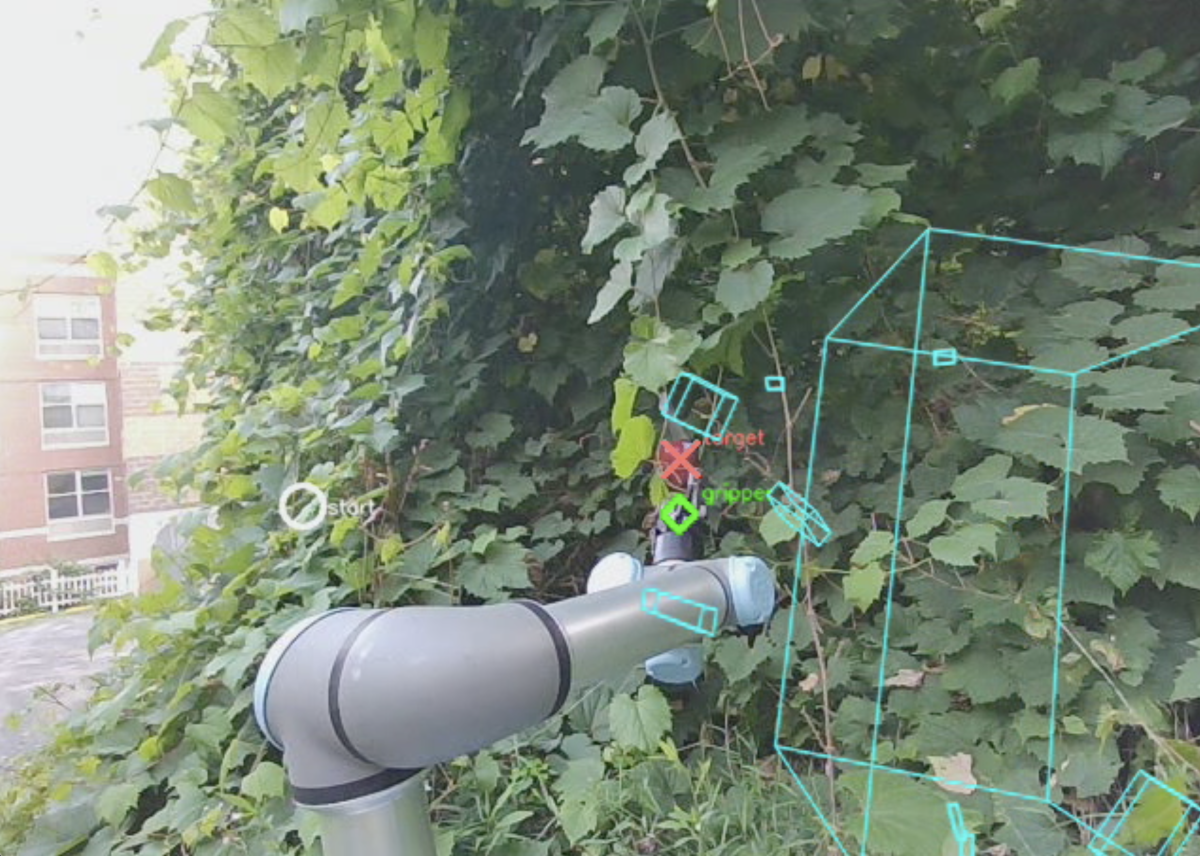
Autonomous picking technology running on FoodMind – an AI model designed by the startup Ficio to learn from different machines and environments.
FieldSorter and FicioPrep are an early step toward that larger vision. Meleka ultimately hopes to market a family of machines that can pick, sort, pack and prepare food, all powered by FoodMind – an AI model designed to learn from different machines and environments.
“The beauty of FoodMind is that we built the software to be hardware-agnostic, so it can work across different applications,” Meleka said. “We originally developed it for food preparation in restaurants, but since it’s a foundational model that is learning across different body morphologies, it can adapt to different tasks without having to start from scratch each time.”
Meleka’s startup journey has been supported by the Master of Engineering Semiconductor and Quantum Materials Pathway at the Cornell Duffield College of Engineering. He said the reason he chose the one-year degree program was for its access to world-class expertise across the university, including in food, agriculture and technology.
The M.Eng. program also offers Meleka access to the university’s entrepreneurship ecosystem, in which he has worked with mentors from Entrepreneurship at Cornell and the Rev: Ithaca Startup Works business incubator, including experts in commercialization, manufacturing and business development.
Ficio also works with industry partner Universal Robots and is a member of NVIDIA’s Inception program, which offers access to the AI chip maker’s latest developer tools and training, among other benefits.
“It’s truly been a journey,” Meleka said. “We started with plastic and wood prototypes and took them to farms, where growers helped us understand what it would take to make our ideas work in the real world. We’ve learned a lot along the way, and every iteration brings us closer to building something that can make a real difference in how food is grown and prepared.”
Media Contact
Get Cornell news delivered right to your inbox.
Subscribe