Archaeologist and art historian Andrew Ramage dies at 87
By Kate Blackwood
Andrew Ramage, professor emeritus in the Department of History of Art and Visual Studies in the College of Arts and Sciences (A&S) died on Nov. 2 in Ithaca. He was 87.
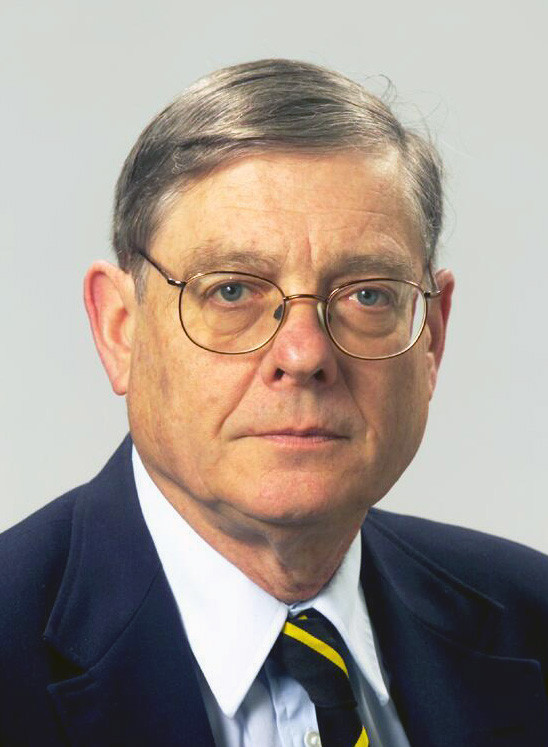
Andrew Ramage
A scholar of ancient coinage, Lydian architecture, and Roman art and architecture, Ramage joined the Cornell faculty as an assistant professor in 1972. He was promoted to associate professor in 1978 and to full professor in 1985, retiring in 2007. He was known for his hands-on approach to fieldwork and research, his collegial spirit and his dedication to his students.
“Andrew Ramage was central to ancient art and archaeology at Cornell for many decades,” said Sturt Manning, Distinguished Professor of Arts and Sciences in Classics (A&S). “A noted expert on an enormous body of material, Andrew was remarkable for his extraordinary modesty, his sense of humor and his good advice, based on a vast breadth of knowledge.”
Ramage was born in London in 1939. He earned a bachelor’s degree in classics and classical archaeology in 1961 at Cambridge University. After moving to the United States to teach Latin and English at Windham College in Putney, Vermont, he went on to earn his Ph.D. in classical archaeology from Harvard University in 1970.
Ramage spent a significant amount of time in the field, working with the Harvard-Cornell Sardis Excavations, in the capital of the ancient Lydian Empire in modern Turkey, from 1965 until 2019. He became assistant field director of the project in 1971 and associate director in 1977.
At Cornell, Ramage was chair of what was then called the Department of the History of Art and Archaeology for two terms and directed the university’s archaeology program for three terms between 1973 and 2000. He brought many of his students to work as excavators at Sardis.
“Working with Andrew was always an adventure. In class or in the field at Sardis, he aimed to challenge us students not only with the material itself, but also with his dry wit,” said Chris Roosevelt, Ph.D. ’03, professor of archaeology and history of art at Koç University, Turkey. “It was in his love of the landscapes of Lydia in western Anatolia that Andrew left his most indelible mark on me, though. Andrew had a keen eye for discovering Lydian burial mounds and other previously undiscovered sites among otherwise inconspicuous landscapes, with an innate instinct for the ancient lay of the land.”
Among Ramage’s major discoveries was finding that what was thought to be a natural hill was actually the monumental city wall that surrounded Sardis. Excavation of this mound revealed that the wall, made of mud brick, was 60 feet thick and sloped to ward off enemies. Ramage also discovered a 6th-century B.C.E. gold refinery – the oldest known refinery and a major contribution to understanding of metallurgy and technology in the time of Croesus, King of Lydia.
Ramage made these and other important contributions to the field of archaeology “in a quiet and unassuming way,” said Jeffrey Rusten, professor emeritus of classics (A&S), often in partnership with his wife, Nancy H. Ramage, the Charles A. Dana Professor of the Humanities and Arts Emerita at Ithaca College.
“Andrew, along with Nancy, maintained and strengthened Cornell’s link with the great excavations of Sardis, providing an amazing opportunity for our students, and represented classical archaeology’s interdepartmental place at Cornell at a crucial time for it to become the flourishing community of today,” Rusten said.
Ramage published articles and several books, many co-authored with Nancy Ramage and many based on archaeological explorations at Sardis. Their well-known textbook, “Roman Art: Romulus to Constantine,” came out in several editions starting in 1991, and was translated into several languages. They published“Twenty-Five Years of Discovery at Sardis” (Cambridge, 1983), to accompany a traveling exhibit funded by the National Endowment for the Humanities.
Andrew and Nancy Ramage co-authored (with P.I. Kuniholm) a “Guide to the Classical Collections at Cornell,” published in 2002 by the Herbert F. Johnson Museum of Art, as well as other volumes.
Ramage is survived by his wife, as well as two children, Joan Ramage Macdonald, Ph.D. ’01, and Michael H. Ramage, and six granddaughters.
The Andrew Ramage Memorial Scholarship Fund has been established in his memory at the Turkish Philanthropy Fund to support Turkish students attending universities in Turkey.
Kate Blackwood is a writer for the College of Arts and Sciences.
Media Contact
Get Cornell news delivered right to your inbox.
Subscribe