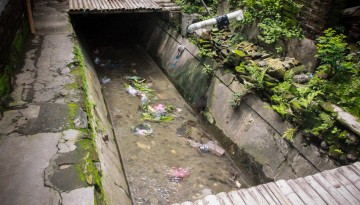
Cities in the “global south” – densely populated urban areas that are part of low-income countries in Asia, Africa and Latin America – should phase out pit latrines, septic tanks and other on-site methods of human waste management, according to a Cornell researcher.
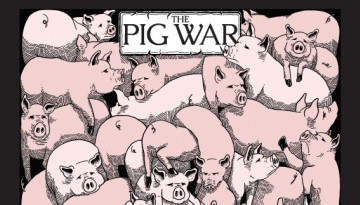
Michael Fontaine, professor of classics in the College of Arts and Sciences, had fun publishing the first translation of 16th-century poet John Placentius’ playful “Pugna Porcorum” (“The Pig War”).
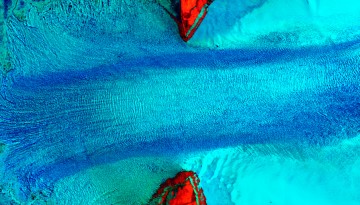
Cornell geologists, examining the desolate Vavilov ice cap on the northern fringe of Siberia in the Arctic Circle, have for the first time observed the rapid ice loss from an improbable new river of ice.
Orbiting 250 miles above the Earth on the International Space Station, astronaut and station commander Luca Parmitano on Dec. 10-11 conducted a Cornell-designed experiment that will help validate numerical models used for a number of industrial and geophysical applications.
Staff, university leaders, industry partners and government representatives attended a Dec. 5 celebration of the launch of the Cornell-Brookhaven ERL Test Accelerator facility, known as CBETA.
Events at Cornell this week and through the winter break include student film screenings, winter solstice celebrations, the Cornell Concerto Competition and Winter Employee Celebration.
Sweet meets heat in “We Cayenne Change the World,” a rich, velvety chocolate ice cream, with a burst of cayenne pepper. Get an extra scoop, as it won Cornell’s annual Food Science 1101 final project.
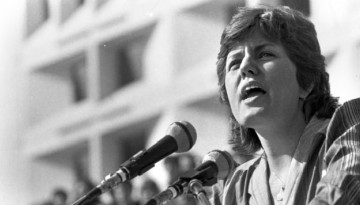
Disarmament advocate Randall Caroline Watson Forsberg’s dissertation is among the works being released under the Einaudi Center’s Cornell Global Perspectives imprint with Cornell University Press.
To nurture cooperation between Ithaca’s community groups and Cornell campus organizations, the ninth Cornell Town-Gown Awards recognized key partnerships at a ceremony held Dec. 7 at Ithaca High School.