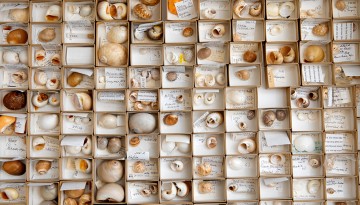
Cornell’s Malacology Collection will get new life online when it is donated to the Paleontological Research Institution, which plans to digitize it and make it available to researchers around the world.
Twenty-six Cornell graduate students have won more than $42,000 in fall 2018 Research Travel Grants, which provide students up to $2,000 to conduct thesis or dissertation research.
After cruising for 205 days over 301 million miles, NASA’s InSight spacecraft – to probe beneath the surface of Mars – landed flawlessly Nov. 26. Cornell’s Don Banfield felt earthly relief.
This year's AAAS electees from Cornell include a renowned artificial intelligence researcher, an emeritus professor who studies animal migration patterns, and a food safety expert.
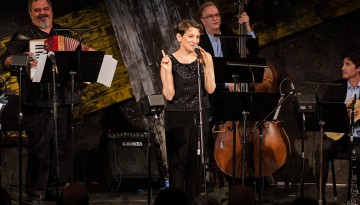
A performance of “Monish: A Musical Tale of Talmud and Temptation,” set to rhyming English verse, will be held at the Center for Jewish History Monday, Dec. 3, at 6:30 p.m.
Natalie Batalha, astrophysicist and planet hunter, will describe Kepler’s legacy and preview planned follow-up missions in the 2018 Carl Sagan Distinguished Lecture Dec. 5.
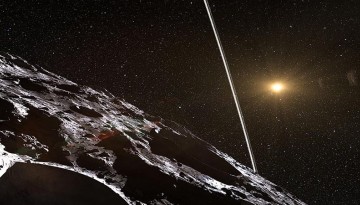
Forget those shepherding moons. Gravity and the odd shapes of asteroid Chariklo and dwarf planet Haumea can form and maintain their own rings, according new research in Nature Astronomy.
“Deep Wounds: Social Determinants of Health Inequality” brought together scholars who take innovative approaches to studying the social foundations of health inequalities.
Faculty members are exploring topics from artificial intelligence to immigration and virtual reality this fall, thanks to funding from Cornell’s Institute for the Social Sciences.