Why does misogyny persist, even in supposedly post-patriarchal parts of the world like the U.S., asks Kate Manne in her book, "Down Girl: The Logic of Misogyny."
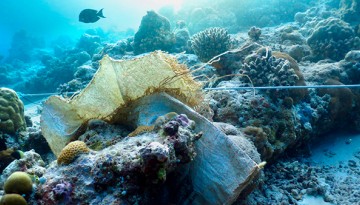
An international research group led by Cornell University has found that plastic trash – ubiquitous throughout the world’s oceans – intensifies disease for coral, adding to reef peril.
The lab of Yimon Aye, assistant professor of chemistry, has developed a new genome-wide method for identifying and analyzing proteins that could be suitable targets for drug delivery.
Toppling a widespread assumption that a “lactation” hormone only cues animals to produce food for their babies, Cornell researchers have shown the hormone also prompts zebra finches to be good parents.
Genes in an area of the brain that is relatively similar in all vertebrates appear to regulate how organisms coordinate and shift their behaviors, a new study finds.
The regulation and function of the oncogene RAS and two related proteins, K-Ras4a and K-Ras4b, are explored in a pair of recent papers from the lab of chemistry professor Hening Lin.