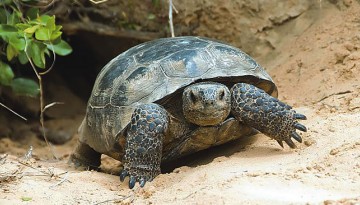
The Department of Ecology and Evolutionary Biology is raising $200,000 to endow the Root-Marks Fund for Field Teaching to fund 2-week formative field study for graduate students in Florida.
A team of Cornell researchers have found new complexities in the superfluid state of liquid helium with implications for the study of superconductivity and theoretical models of the origin of the universe.
Researchers Louisa Smieska and Ruth Mullett are advancing studies of medieval illuminated manuscripts with X-ray imaging at CHESS of the pigment trace elements found in pages in Cornell collections.
A study in which participants were given two choices - healthy and unhealthy - shows that the process by which we make decisions involving temptation is dynamic as opposed to sequential.
A group of five Cornell researchers - representing Engineering, and Arts and Sciences - has won a $1 million grant from the Keck Foundation for its research into topological superconductors.
Physics professor Erich Mueller and grad student Shovan Dutta realize long-theorized quantum state in an array of solitons, which could pave the way for future study into the creation of such states.
By taking a series of near-atomic resolution snapshots, Cornell and Harvard Medical School scientists have observed step-by-step how bacteria defend against foreign invaders.
Cornell astronomers gathered atop Mount Pleasant June 25 at sunset to honor one of their own. The 25-inch reflecting telescope at the university's Hartung-Boothroyd Observatory was named in memory of the late James R. Houck.
The Cornell Center for Materials Research held a symposium to explore using origami to create machines at the micron scale using atomically thin materials June 16-17.