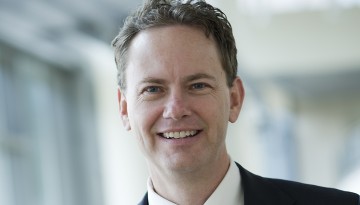
Historian Francis J. Gavin will discuss the importance of the 1970s in U.S. and world history in this year’s LaFeber-Silbey Lecture, Oct. 3 at 4:30 p.m. in Kaufmann Auditorium, Goldwin Smith Hall.
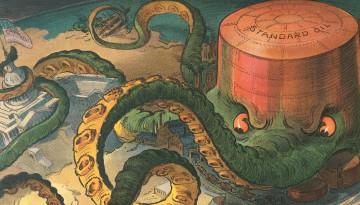
Maps with images meant to stir public sentiment are featured in the new exhibit, “Latitude: Persuasive Cartography,” which opens Oct. 3 in Carl A. Kroch Library’s Hirshland Exhibition Gallery.
A $6 million anonymous gift from alumni will help launch the Humanities Scholars Program in the College of Arts and Sciences, offering a signature learning, research and collaboration opportunity to students from across the university interested in humanistic inquiry.
Events at Cornell this week include pianists Daniil Trifonov and Sergei Babayan, RED Day, films about food, remembering Toni Morrison, and the Coors Conversation Series.
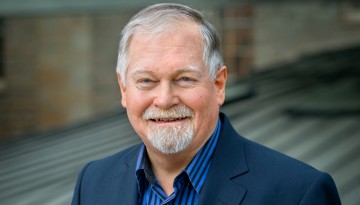
Robert Morgan, an influential American writer and one of Cornell’s most beloved professors, will be honored at a celebration on campus on his 75th birthday.
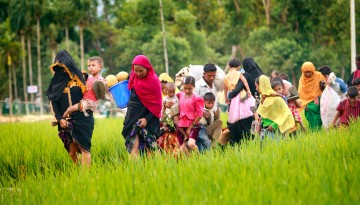
After an eight-month study, a task force of 16 faculty members has chosen “Migrations” as the theme of the first Cornell Global Grand Challenge, which will tackle the issue with resources from across the university.
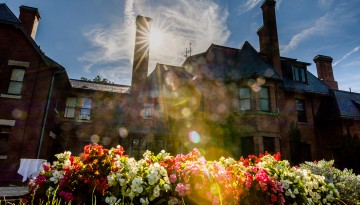
Poetry and performance, as well as more traditional presentations, were among the nine projects highlighted in the first Rural Humanities Showcase, held Sept. 6 in the A.D. White House.
Events this week include a climate rally, talks and films on climate change; a play depicting a soccer team’s coming of age; and a celebration of Korean language and culture.
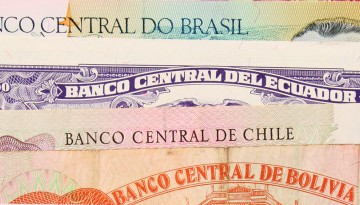
“The Political Economy of Taxation in Latin America,” a new book edited by associate professor Gustavo Flores-Macías, examines how decades of tax reform in Latin America have done little to stem the tide of widespread tax evasion there.