Cornell leaders traveled across China and Asia in early November to connect with alumni, deepen partnerships, celebrate academic milestones, and engage in discussions on a wide range of global challenges. The multistop trip included the sixth annual Cornell-China Forum in Shanghai.
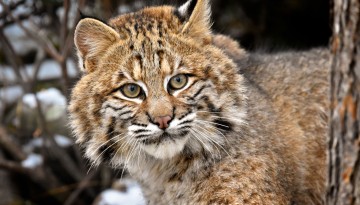
The New York Cooperative Fish and Wildlife Research Unit has been helping state and federal agencies manage fish and wildlife and protect ecosystems for over 60 years.
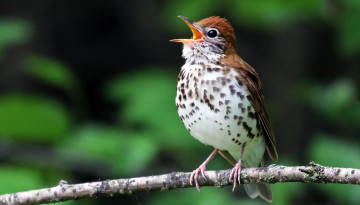
A new study using data from the Lab of Ornithology finds that five forests in Mesoamerica are indispensable lifelines for dozens of migratory bird species.
The Brooklyn-based startup building a biodegradable foam coating for crop protection, was awarded the $1 million grand prize in the 2025 Grow-NY Food and Agriculture business competition.
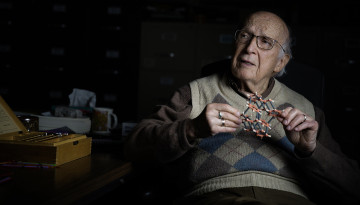
Eight Cornell faculty, including Provost Kavita Bala, are featured as “New Heroes” in a portrait series by Christopher Michel, the National Academies of Sciences, Engineering and Medicine’s inaugural artist-in-residence.
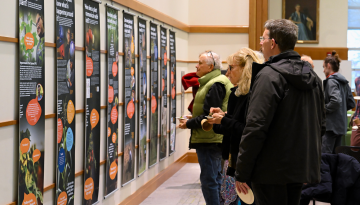
The opening of “Hello, Human! The Emerging Science of Plant Communication and Smart Agriculture” at Cornell’s Mann Library brought together researchers, students, and campus partners to showcase how plants communicate.
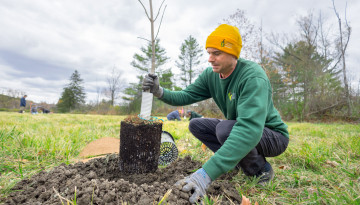
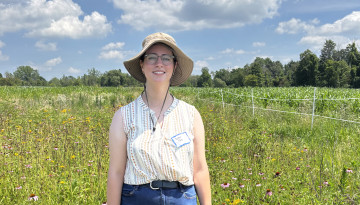
Rebecca Stup ’23, MS ’26, has been exploring planting wildflower strips along farmland as a strategy to increase biodiversity, attract pollinators and combat weeds.