Cornell AES manages farms and greenhouses that support research but are also unique teaching tools for over 40 courses. This is the fifth story in a series about on-farm teaching; summer internships offer undergraduates immersive learning experiences.
The process of combining agricultural production and solar panels on the same farmland, known as agrivoltaics, has seen a great leap in Cornell research activity.
Sixty-three graduate students completed international fieldwork last summer with the support of research travel grants from the Mario Einaudi Center for International Studies. Applications are open until March 7 for graduate students seeking support for summer 2025.
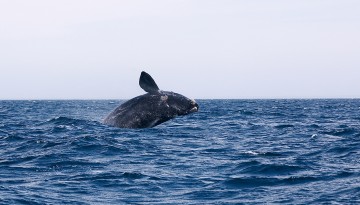
A Cornell-led team has developed a method to estimate North Atlantic right whale numbers using underwater microphones and machine learning, potentially offering a safer and more cost-effective way to monitor this endangered species.
An interdisciplinary team of Cornell researchers is developing HelioSkin, an aesthetically appealing solar-collection fabric that is inspired by the biological mechanisms that enable plants to bend toward the sun.
Teaching is a practice, and a craft. It’s also an art. And the art of teaching is the subject of a new workshop series, which debuts this February at the Center for Teaching Innovation, with “The Art of Discussion.”