Students who used immersive virtual reality did not learn significantly better than those who used two more traditional forms of learning, a new Cornell study has found.
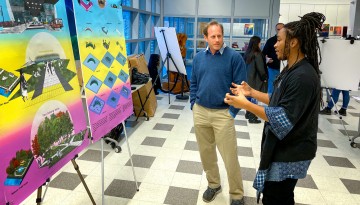
Cornell graduate students studying landscape architecture examined Ossining, New York – a town on the rising Hudson River last fall, and presented ideas for climate-change adaptation.
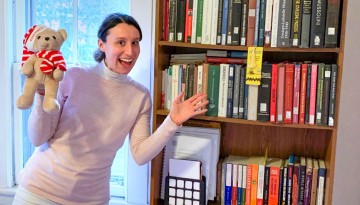
Doctoral student Benedetta Luciana Sara Carnaghi didn’t have to wait long to retrieve her research material and continue her work, thanks to a double-time effort by Cornell University Library staff.
Nick Admussen, associate professor of Asian studies in the College of Arts and Sciences, has translated into English selections of Ya Shi’s poetry in the newly published “Floral Mutter.”
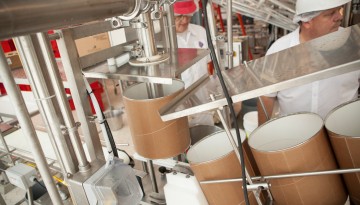
To keep New York’s food processing industry safe during the COVID-19 pandemic, Cornell has created a comprehensive website for commercial processors: Food Industry Resources for Coronavirus (COVID-19).
As Cornell puts noncritical research on hold, researchers on campus have found that everyone is making extra efforts to help each other through the transition.
New research by Sturt Manning, professor of classical archaeology, points to the need for refinements in radiocarbon dating, the standard method for determining the dates of artifacts in archaeology and other disciplines.
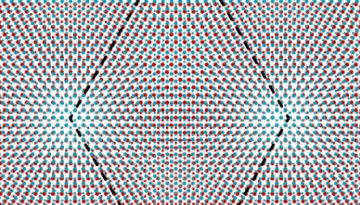
A Cornell-led collaboration has created a model simulator from overlapping ultrathin monolayers and have used it to map a longstanding conundrum in physics.