The Cornell Center for Materials Research JumpStart program, designed to help New York state small businesses develop and improve their products through university collaboration to grow revenue and create jobs, has funded 5 companies.
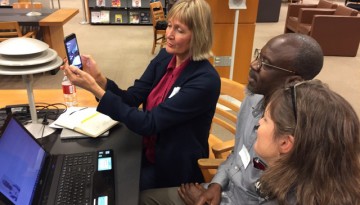
Knowledge Matters, a workshop series designed for Cornell faculty members and academic staff, is helping participants translate their research into a variety of digital media platforms.
Seven faculty members were honored with awards from the Louis H. Zalaznick Teaching Assistantship program, allowing them to expand their courses or add teaching assistants.
After 360 engine burns, 2.5 million executed commands, 635 gigabytes of gathered data, 162 moon flybys, 4.9 billion miles traveled, NASA’s 20-year Cassini mission ran the last lap of its historic scientific mission Sept. 15.
Scholar Stephanie W. Jamison will speak on “Adulterous Woman to Be Eaten by Dogs: Women and Law in Ancient India” as a part of the University Lecture Series. The talk, Sept. 21 at 4:30 p.m. in Cornell’s Rhodes-Rawlings Auditorium, Klarman Hall, is free and open to the public.
Noliwe Rooks' new book “Cutting School: Privatization, Segregation, and the End of Public Education” traces the financing of segregated education in America, beginning with Civil War reconstruction to today.