Rabbi Jonathan Sacks, international religious leader, philosopher, bestselling author and 2016 Templeton Prize Laureate, lectures on “Not in God’s Name: Confronting Religious Violence” April 20.
Women and underrepresented minority faculty members have been publishing opinion pieces and other articles in the mainstream media, thanks to support from the Public Voices Fellowship.
Theda Skocpol, Cornell's A.D. White Professor-at-Large, talk on "The Koch Effect: The Impact of a Cadre-Let Network on American Politics and Public Policy" April 12 on campus.
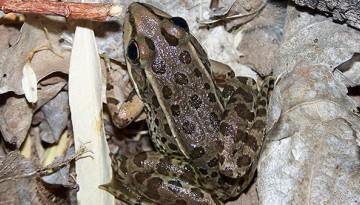
Some populations of frogs are rapidly adapting to a fungal pathogen that has decimated many populations for close to half a century and causes the disease chytridiomycosis, according to a new study.
The China and Asia-Pacific Studies (CAPS) Program at Cornell observed its 10th anniversary April 1, when Arts and Sciences Dean Gretchen Ritter and others visited Beijing.
The Institute for the Social Sciences recently concluded theme project tackled tried to learn how sociologists, psychologists, economists and others struggle to understand one another.
A memorial concert for composer and emeritus professor of music Steven Stucky will be held Monday, April 18, at 8 p.m. in Barnes Hall Auditorium, followed by a reception.