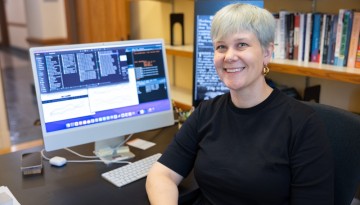
Using experiments with COVID-19 related queries, Cornell sociology and information science researchers found that in a public health emergency, most people pick out and click on accurate information.
In his new book, David Shoemaker, professor of philosophy, explores the need for spirited, sometimes prickly humor and the ethics that distinguish an innocent gibe from an offensive insult.
At a May 24 ceremony in Statler Auditorium, 21 graduating members of the Tri-Service Brigade received commissions as officers in the Army, Navy, Air Force, Marines and Space Force.
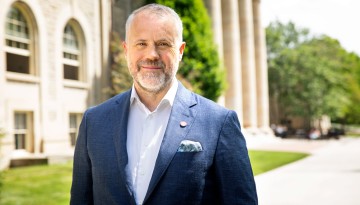
Peter John Loewen, director of the Munk School of Global Affairs and Public Policy at the University of Toronto, has been named the 23rd dean of the College of Arts and Sciences, Provost Michael I. Kotlikoff announced May 24.
As part of the award, Manne will engage in discussion this year on the theme “Dehumanization and its Discontents” with the prize co-recipient, David Livingston Smith, professor of philosophy at the University of New England.
The award recognizes Dong Lai’s “formidable and broad contributions to astrophysical dynamics, his outstanding mentoring record, and his wide-ranging professional service activities.”