A collaboration between five colleges and a provost’s office investment of $2 million has led to a major revitalization of Cornell’s capabilities in flow cytometry, a vital part of cell research.
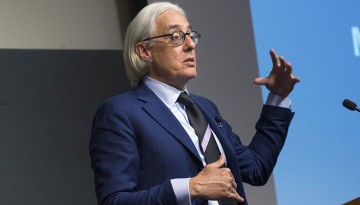
Avshalom Caspi ’83, Ph.D. ’86, gave the annual John Doris Memorial Lecture on charting mental disorders across a person’s life. The talk was sponsored by the Bronfenbrenner Center.
The Internet-First University Press has released a complete directory of all available material as it works to make new and archival content more easily accessible.
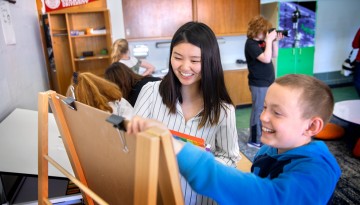
Cornell undergraduates redesigned a Groton auxiliary classroom to inspire and support older elementary students in practicing intellectual, interpersonal and planetary responsibility.
The Institute for the Social Sciences has awarded 12 small grants to social science researchers in six colleges and schools at Cornell. The awards assist scholars as they develop new research and seek external funding.
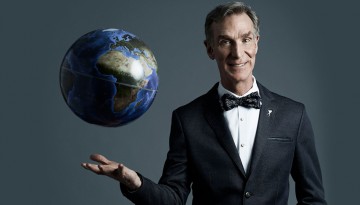
William S. Nye ’77 – known to millions as Bill Nye the Science Guy – will speak at Senior Convocation Saturday, May 25, at 12:30 p.m. at Schoellkopf Field during Cornell’s 2019 Graduation Weekend.
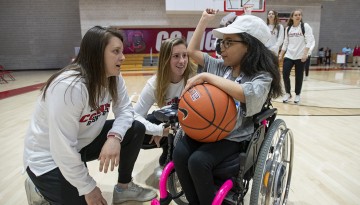
Karina Hill, a 7-year-old second-grader from South Hill Elementary School in Ithaca, has officially joined the Cornell women’s basketball team, a Division I program.
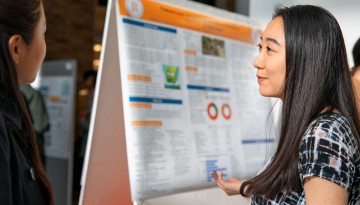
About three dozen Cornell seniors presented their undergraduate research at the 17th annual Hunter R. Rawlings III Research Scholars Senior Expo on April 17.