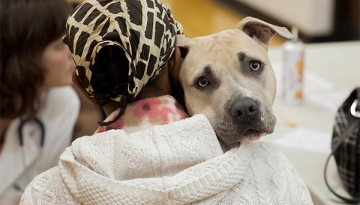
To help Southside Community Center/Cornell College of Veterinary Medicine Well Pet Clinic running into the future, a celebratory fundraiser featuring local artists will take place Nov. 15 at Ithaca's State Theatre.
Donald F. Smith, DVM, Austin O. Hooey Dean Emeritus of the Cornell University College of Veterinary Medicine, died Saturday, Oct. 29 following a serious illness. He was 66 years old.
The 2016 Cornell University One Health + Public Health + Global Health Symposium will take place Nov. 4, 8 a.m. to 4 p.m., in Biotech G10 and the lobby.
The Tetlow and Roy Park Veterinary Innovation Laboratory functions as a classroom and a workshop that will change the way veterinary medicine is taught at Cornell.
During his University Lecture, Jaak Panksepp discussed his life work to understand emotions in animals in scientific ways, and apply those findings to humans and treating depression.
Following a rumor that a 16th-century document, part of the Witchcraft Collection in Cornell University Library, was written in blood, a father and daughter investigated.
As faculty hiring seasons swings into full force, Provost Michael Kotlikoff has committed funding to help bring superior diverse talent to the faculty, allowing departments to recruit more aggressively.