Research on the role of hope in community work, online support groups and moderating online communities received awards at the 2023 Conference on Computer-Supported Cooperative Work And Social Computing.
Cornell Tech has announced a total of more than $10 million in gifts and grants from the Simons Foundation and the National Science Foundation, respectively, to support arXiv, a free distribution service and open-access archive for scholarly articles.
Entrepreneurs will gather to hear fireside chats with top business leaders, enjoy multiple networking and engagement opportunities and hear startup pitches at Entrepreneurship at Cornell’s Eclectic Convergence 2023.
Charles F. “Chuck” Feeney ’56, founding chairman of The Atlantic Philanthropies and Cornell University’s most generous donor, died Oct. 9 in San Francisco. He was 92.
Greg Morrisett has been appointed to a second term as the Jack and Rilla Neafsey Dean and Vice Provost of Cornell Tech, Provost Michael I. Kotlikoff announced Oct. 9.
Israel Cidon, former dean of the Andrew and Erna Viterbi Faculty of Electrical and Computer Engineering at Technion-Israel Institute of Technology, has joined Cornell Tech as director of the Joan and Irwin Jacobs Technion-Cornell Institute.
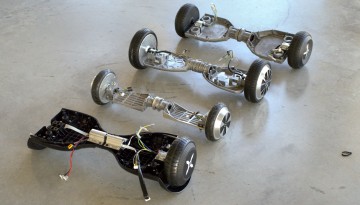
Incorporating sustainability into their field, Cornell information science researchers Ilan Mandel and Wendy Ju introduce “garbatrage,” a framework for prototype builders centered around repurposing underused devices.
Cornell University’s Life Sciences Technology Innovation Fellowship, formerly known as the BioEntrepreneurship Initiative, enters its second year in 2023-24 with a new cohort of 15 business students and 12 researchers.
The $1.7 million grant will help scientists with expertise in artificial intelligence and machine learning to address complex biomedical challenges in nutrition and health.