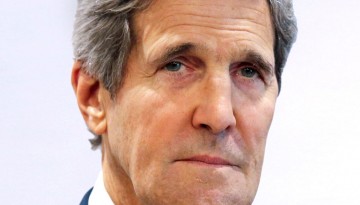
John Kerry, secretary of state in former President Barack Obama’s administration, will be the Belnick Family LaFeber/Lowi Presidential Forum speaker Oct. 29.
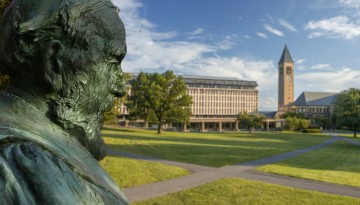
A new partnership will develop a digital-first alumni publication as part of an information “hub,” bringing the best of Cornell Alumni Magazine, Ezra magazine and much more to Cornell alumni and friends around the world beginning next summer.
More than 700 people attended “Ballots and Borders: Election 2020; What’s at Stake for International Students and Scholars,” a webinar on Oct. 19 featuring Cornell Law School immigration expert Stephen Yale-Loehr.
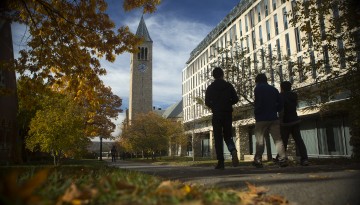
As Cornell students sheltered in place last April, many were were hit with yet another worry: COVID-19 was upending their summers. That's when Global Cornell decided to step in.
The Office of Engagement Initiatives recently awarded Engaged Curriculum Grants to 19 teams of faculty and community partners that are developing community-engaged learning courses, majors and minors across the university.
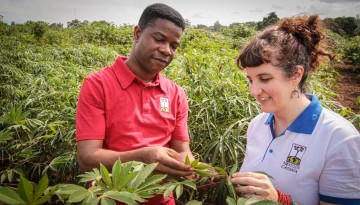
Ceres2030, headquartered at Cornell, aims to end world hunger by 2030. Harnessing machine learning and librarian savvy, the project identified the most effective ways to boost crops, empower farmers and protect the environment.
Small-scale farmers see a path to solving global hunger over the next decade, thanks to a Cornell-hosted project that used artificial intelligence to cull ideas from more than 500,000 scientific research articles.
A research team from Cornell’s Department of Earth and Atmospheric Sciences has received a $1.4 million grant from NASA to lead a study of how volcanic ash from past eruptions affected the Earth.
Cornell’s Adult University is hosting free and pay-to-view live online seminars open to the public this fall, beginning with “The 2020 Presidential Election – an Online Seminar.”