Three New York state companies have been chosen to participate in the Cornell Center for Materials Research JumpStart Program, through which they will collaborate with faculty members to develop and improve their products.
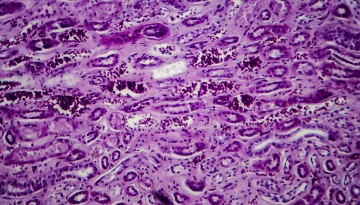
Researchers led by Hening Lin have found a new way to potentially treat inflammatory bowel disease, as well as other autoimmune disorders, by targeting a mechanism that regulates the signaling pathway that enables inflammation to occur.
Voteology, a site helping students assess where their vote will have the most impact, won the inaugural Pitch for the People, a virtual competition focused on the humanities and social sciences.
Shu-Bing Qian, a professor of molecular nutrition whose work explores how genetic information gets translated in order to make proteins in cells, has won a National Institutes of Health Director’s Pioneer Award.
Jeff Pleiss has been studying RNA in large-batch tests for decades, analyzing things like yeast. With COVID-19 testing in full-swing on the Ithaca campus, Pleiss and his lab are contributing their expertise.
Researchers led by Nicholas Abbott, a Tisch University Professor in the Robert F. Smith School of Chemical and Biomolecular Engineering, created a way of using synthetic liquid crystals to squeeze red blood cells and gain new insight into individual cells’ mechanical properties.
Cornell and the Cayuga Health System are donating COVID-19 testing and analysis to the Ithaca City School District, testing more than 1,200 students this week as the district prepares to reopen for in-person instruction Oct. 5.
A new study in mice identifies a gene that is critical for short-term memory but functions in a part of the brain not traditionally associated with memory.
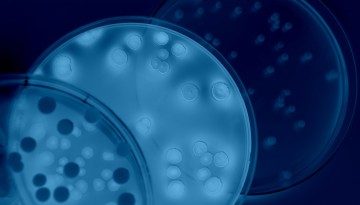
Researchers successfully engineered E. coli bacteria to produce O-linked glycoproteins – research that will illuminate the complex process of glycosylation and the role that protein-linked glycans play in health and disease.