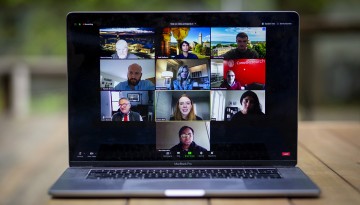
Voteology, a site helping students assess where their vote will have the most impact, won the inaugural Pitch for the People, a virtual competition focused on the humanities and social sciences.
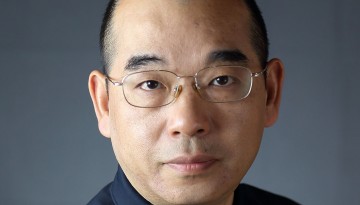
Shu-Bing Qian, a professor of molecular nutrition whose work explores how genetic information gets translated in order to make proteins in cells, has won a National Institutes of Health Director’s Pioneer Award.
Jeff Pleiss has been studying RNA in large-batch tests for decades, analyzing things like yeast. With COVID-19 testing in full-swing on the Ithaca campus, Pleiss and his lab are contributing their expertise.
Researchers led by Nicholas Abbott, a Tisch University Professor in the Robert F. Smith School of Chemical and Biomolecular Engineering, created a way of using synthetic liquid crystals to squeeze red blood cells and gain new insight into individual cells’ mechanical properties.
Cornell and the Cayuga Health System are donating COVID-19 testing and analysis to the Ithaca City School District, testing more than 1,200 students this week as the district prepares to reopen for in-person instruction Oct. 5.
A new study in mice identifies a gene that is critical for short-term memory but functions in a part of the brain not traditionally associated with memory.
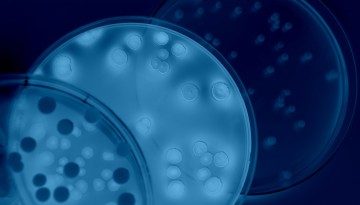
Researchers successfully engineered E. coli bacteria to produce O-linked glycoproteins – research that will illuminate the complex process of glycosylation and the role that protein-linked glycans play in health and disease.
Cornell researchers’ concept for a mobile phone-based system to detect infectious diseases and nutritional deficiencies in saliva was awarded a $100,000 NIH Technology Accelerator Challenge prize.
Cornell food scientists show in animal studies that a mother’s high-fat diet may lead to more sweet-taste receptors in taste buds resulting in poor feeding behavior, obesity in adulthood.