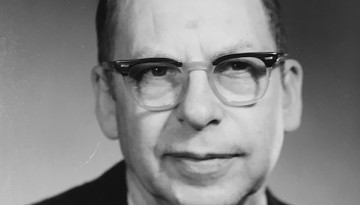
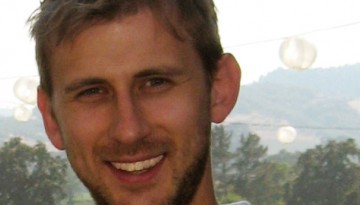
Five Cornell faculty members have been elected fellows of the American Association for the Advancement of Science, the world’s largest general scientific society.
Dorothy Roberts, a scholar from the University of Pennsylvania, talked about race and racism and a more ethical way to study them Nov. 15 at the 2017 Institute for the Social Sciences' Annual Lecture.
Reducing antibiotic resistance in animals and developing a lubricating formula in joints for people suffering from arthritis are two of seven projects that received Center for Advanced Technology annual grants.
Olaf F. Larson, a pioneer in rural sociology research in the 1930s and a Cornell faculty member for 71 years, died Nov. 14 in Mount Dora, Florida. He was 107 years old and had been Cornell’s oldest living emeritus professor.
Toby Ault, assistant professor of earth and atmospheric sciences, suggested strong carbon-tracking improvements be included in a proposed New York State Senate bill to mitigate greenhouse gas emissions.
Peter Cetale’s Religio software, which helps religious organizations boost engagement with their members, won first prize, $3,000 and bragging rights at the Hospitality Pitch Deck Competition Nov. 13 at Statler Hall.
“Criminalizing Immigrants: Border Controls, Enforcement and Resistance,” Nov. 9-10, brought researchers and academics from a range of disciplines together.
Due to an outage on fiber-optic lines, calls from outside have not been reaching campus phones since Nov. 15. Verizon estimates coverage will be restored by the morning of Nov. 17.