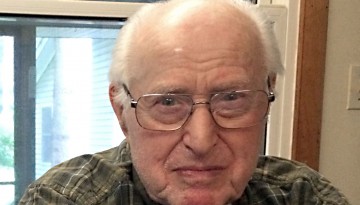
Nathan Hiram Peck Sr. ’51, Ph.D. ’56, professor emeritus of plant and soil science, died Aug. 24 at the Geneva Living Center North in Geneva, New York. He was 94.
The annual National Run/Walk to School/Work event, open to the entire Cornell community, will be held Sept. 15, with the opportunity for participants to win prizes.
To honor Cornell’s research role in the Cassini spacecraft’s achievements, the Department of Astronomy will hold a community farewell celebration Sept. 15.
Cornell is leading the largest single deployment of seismometers along the Alaskan Peninsula – a $4.5 million endeavor to solve long-standing mysteries about the region.
The United Way of Tompkins County will celebrate its 21st annual Stephen E. Garner Day of Caring and kick off its 2017-18 Community Campaign Sept. 13, 9 a.m. to 4 p.m., at Stewart Park’s large pavilion.
Historian María Cristina García examines the challenges and history of refugee and asylum policy in the United States in her new book, "The Refugee Challenge in Post-Cold War America."
Vijay Pendakur, who became Cornell’s Robert W. and Elizabeth C. Staley Dean of Students in January, discusses his role, student life, diversity and transformative college experiences.
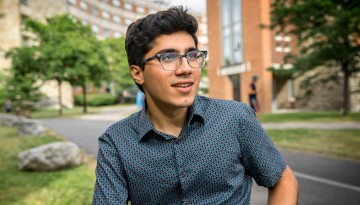
Freshman Abu Qader is running a company, GliaLab, which is developing software that can improve the accuracy of breast cancer diagnoses, especially in developing countries.