Headline-grabbing die-offs of sea life could be just the tip of the iceberg as global warming and pollution allow old diseases to find new hosts, 13 biologists predict in this week's issue (Sept. 3, 1999) of the journal Science.
Apolo Nsibambi, prime minister of the Republic of Uganda, will speak at Cornell on Sept. 7, at 7:30 p.m. in Anabel Taylor Hall auditorium. His talk is titled "Political Conditions for Economic Reform and Successful Adjustment in Africa."
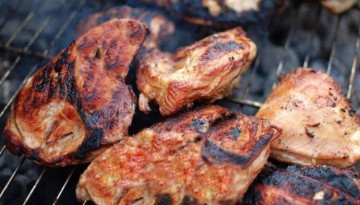
The Clintons, their daughter Chelsea, who toured the New York State Fair in nearby Syracuse. There they visited the Bakers' Chicken Coop eatery, specifically to savor a taste of the famous Cornell barbecued chicken. Robert Baker, Cornell professor of animal science, created the recipe.
Cornell University professors Muawia Barazangi of geological sciences and Thomas D. O'Rourke of civil engineering are available to comment on the recent earthquake in Turkey.
Horticulturists, authors and landscape designers - plus one ecologist, one mycologist and one literary critic - are in the lineup for the Fall '99 Cornell Plantations Seminar Series with 10 Wednesday evening lectures, starting Sept. 8 at Cornell.
Retirees who volunteer or participate in community organizations enjoy significantly higher levels of psychological and physical well-being than other retirees and older workers.
Science educators at Cornell University's College of Agriculture and Life Sciences hope dog-lovers can sit-and-stay by their computers for six weeks. That's how long it takes to complete a new home-study course on canine genetics via the Internet.
Just one firefly, with its poisonous lucibufagin chemicals, is enough to kill a lizard, a lesson that American zookeepers and pet owners are learning the hard way. Some of the most popular lizards in zoos and private collections are from parts of the world without poisonous fireflies.
Scientists may soon be able to quickly produce genetically modified crops without transferring genes across species, providing a novel approach to modifying plant characteristics to generate new traits. The new technique could be applied to improving the nutritional value and productivity of foods without the involvement of foreign DNA.