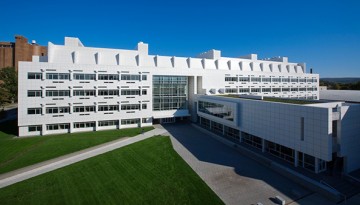
Cornell’s Center for Life Science Ventures (CLSV) has been nominated for a Prix Galien USA Award in the “Best Incubators, Accelerators and Equity” category.
Song Lin and collaborators use electrochemistry to selectively synthesize chiral compounds – important in pharmaceuticals – using the reaction’s electrolytes, a completely new strategy.
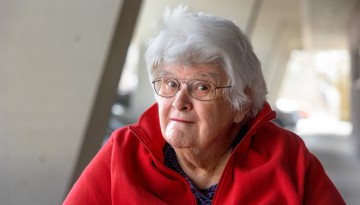
Margaret Rossiter, the Marie Underhill Noll Emerita Professor of the History of Science in the College of Arts and Sciences (A&S) and known worldwide for her studies of the history of women in science, died Aug. 3. She was 81.
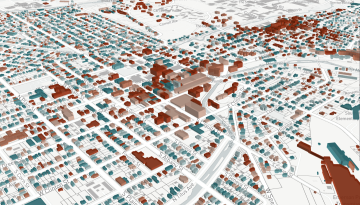
Using Ithaca as a case study, researchers have demonstrated a software tool that can quickly model building energy use and simulate the most cost-effective strategies for improving efficiency and reducing emissions.
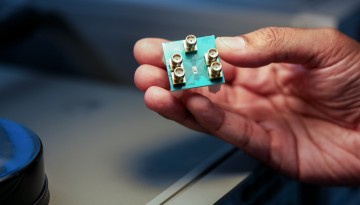
Cornell Engineering researchers have developed a low-power microchip they call a “microwave brain,” the first processor to compute on both ultrafast data signals and wireless communication signals by harnessing the physics of microwaves.
A Cornell research group has developed software that could let anyone with a camera-equipped mobile phone capture subtle changes over time – of, say, a construction site or the changing seasons – and turn them into a panoramic time-lapse video.
Cornell chemistry researchers have designed a light-powered, reusable catalyst that’s pre-charged by electricity and capable of driving challenging reactions, with applications including drug development and environmental clean-up.
A new $5 million initiative, funded by the Astera Institute with experimental work conducted at the Cornell High Energy Synchrotron Source, aims to make diffuse scattering accessible to the public and the broader scientific community.